Securing the Value Chain in Research and Development Following Mass Production
Organoids, Track Record, and Collaboration with Samsung Medical Center
Samsung Biologics Sets Itself Apart in the CRO Field
Samsung Biologics has officially launched its preclinical contract research organization (CRO) services, taking steps to expand the value chain in biopharmaceutical development and manufacturing. Building on its existing strengths in cell line and process development (CDO), as well as large-scale drug substance and drug product manufacturing (CMO), the company now has the foundation to support every stage from new drug candidate discovery to commercial production.
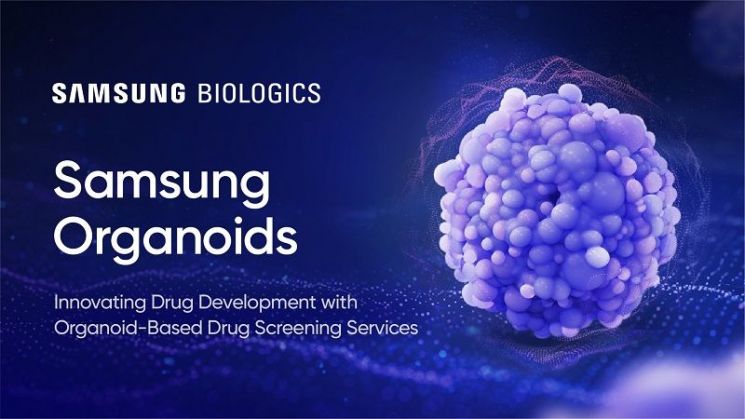
According to industry sources on June 25, Samsung Biologics announced the expansion of its CRO business at the 2025 BIO International Convention (Bio USA), the world's largest biotechnology exhibition, which concluded in Boston on June 19 (local time). The company is developing a clinical trial platform using organoids?miniature organ models formed by aggregating and culturing stem cells or tissue-derived cells in three dimensions?which can replace animal testing, thus addressing ethical concerns. This method not only reduces costs compared to traditional experimental approaches but also demonstrates a high patient similarity rate of up to 85%. Through this, Samsung Biologics aims to expand its touchpoints with clients in the early stages of drug discovery and strengthen customer lock-in effects by initiating collaboration from the earliest phases.
Lee Sangmyung, Head of Business Strategy at Samsung Biologics, stated at a local press conference in Boston on June 17, "Entering the organoid business means expanding our portfolio from manufacturing to technology-driven services," and added, "By entering the CRO business, we will deepen our understanding of drug development and provide customer-centric end-to-end contract research, development, and manufacturing organization (CRDMO) services."
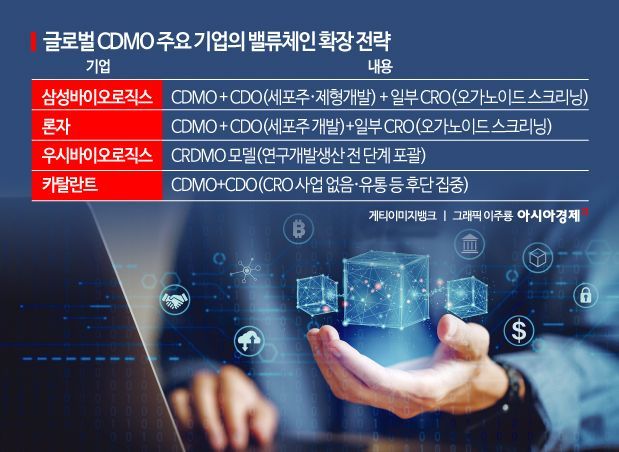
Traditionally, CDMOs have focused on clinical sample and commercial production, but recently, both big pharma and biotech ventures have shown a clear preference for 'integrated partners' that cover every stage of product development, from early to late phases. Global CDMO companies such as Lonza, WuXi Biologics, and Catalent have already established in-house cell line platforms and formulation development (CDO) capabilities as a standard, and some have internalized CRO functions to further expand their value chains. Compared to these competitors, Samsung Biologics is a latecomer in the CRO business.
Lonza, the world's largest CDMO by revenue, not only provides customized end-to-end services for drug development but also operates in the organoid-related business area that Samsung Biologics is targeting. However, Lonza focuses more on providing advanced technologies and high-quality artificial cells needed for research, rather than on organoid cultivation itself.
Catalent offers customized services throughout all preclinical trial stages, starting from supply chain consulting, risk assessment, and demand forecasting at the clinical planning stage, to manufacturing, packaging, logistics, and post-management. With innovative drug delivery platforms such as softgel capsules and cell line engineering, Catalent can address a wide range of therapeutic modalities.
The company pursuing the most aggressive vertical integration strategy is China's WuXi Biologics. With its 'CRDMO' model, WuXi Biologics has already established a service model covering the entire cycle?from antibody candidate discovery, nonclinical testing, process development, and clinical sample production, to commercial manufacturing. The company is rapidly expanding its global manufacturing bases across the United States and Europe to secure more clients.
While competitors have already entered the CRO business, Samsung Biologics plans to build competitiveness through customized organoid services based on its track record.
Regarding future business expansion, a Samsung Biologics representative stated, "Most existing organoid companies do not base their operations on Good Manufacturing Practice (GMP) standards," and added, "Samsung Biologics aims to leverage its track record to provide high-quality, customized organoid services and enhance its market share." The partnership with Samsung Medical Center is therefore attracting attention. The representative said, "We are currently securing organoids through our partnership with Samsung Medical Center, the world's third-ranked hospital in oncology in 2025," and added, "We also plan to collaborate with various global hospitals in the future."
© The Asia Business Daily(www.asiae.co.kr). All rights reserved.
![Clutching a Stolen Dior Bag, Saying "I Hate Being Poor but Real"... The Grotesque Con of a "Human Knockoff" [Slate]](https://cwcontent.asiae.co.kr/asiaresize/183/2026021902243444107_1771435474.jpg)
















