'Sugar Tax Awareness' Survey by Seoul National University Health Culture Project Group
80% Support Warning Labels
"Effectiveness Already Confirmed in the UK"
Six out of ten people in South Korea support imposing a sugar tax on foods high in sugar content. In addition, about 82% responded that there should be warning labels about the dangers of sugar.
According to a survey conducted by the Seoul National University Health Culture Project Group, which commissioned Korea Research to survey 1,000 members of the general public, 58.9% of respondents supported the idea of imposing a sugar tax in the form of a health improvement levy on companies producing sugar-containing products.
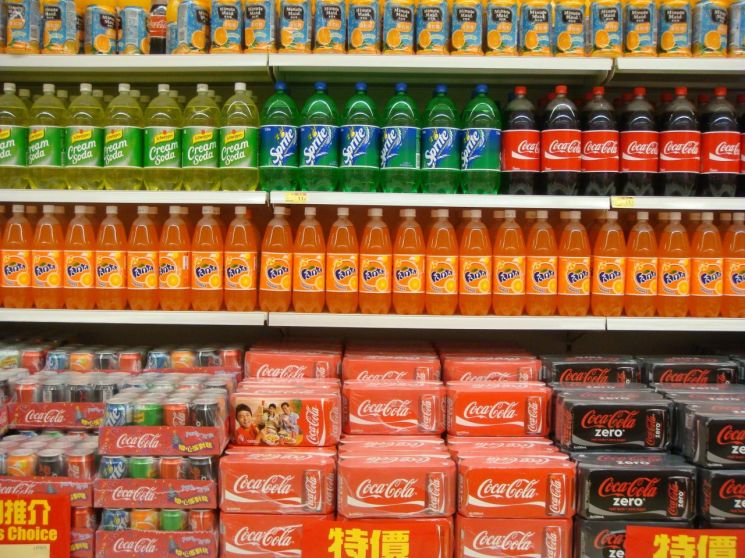
Furthermore, 82.3% agreed that, similar to the warning labels about the risks of smoking on cigarette packs, it is necessary to include warning statements about the dangers of sugar, along with sugar content, on soft drink products.
Research findings have already been published showing that the so-called "sugar tax" is effective. In June 2023, a research team led by Dr. Jas Just at the University of Cambridge's Metabolic Science Institute in the UK published a study in the international journal Nature, reporting that hospitalizations for childhood asthma decreased after the implementation of the Soft Drinks Industry Levy in 2018.
The UK government has been implementing the Soft Drinks Industry Levy since 2018, which taxes soft drinks containing monosaccharides. The goal is to reduce the childhood obesity population and associated healthcare burdens. Under this system, soft drinks containing 8 grams or more of sugar per 100ml are taxed at 0.24 euros per liter, while those containing 5 grams or more of sugar per 100ml are taxed at 0.18 euros per liter.
According to a 2020 report by the Big Data Institute at the University of Oxford, which analyzed over 200,000 observational data points on soft drinks from major UK supermarket websites, the proportion of beverages containing 5 grams or more of sugar per 100ml fell from 49% in 2015 (before the sugar tax announcement) to 15% one year after implementation.
Yoon Ji-hyun, Deputy Director of the Seoul National University Health Culture Project Group and Professor of Food and Nutrition, stated, "Looking at cases in the UK and elsewhere, the introduction of a health levy on foods high in sugar led to a 33% decrease in consumer sales due to price increases, resulting in reduced sugar intake." She added, "Research has shown decreases in various metabolic disorders, chronic diseases, cancer, and childhood asthma associated with excessive sugar consumption."
Lee Jinsoo, Professor at the Graduate School of Public Administration at Seoul National University, said, "The policy effects have already been observed in 117 countries, including the UK, Mexico, France, and Norway. In South Korea, both the public and companies have shown positive opinions about the health levy, so there is a strong need to consider introducing a health improvement levy on foods high in sugar."
Yoon Youngho, Director of the Seoul National University Health Culture Project Group and Professor at Seoul National University College of Medicine, stated, "Although the Ministry of Food and Drug Safety is pursuing low-sugar policies, adult diseases such as obesity and diabetes have not decreased. Therefore, it is necessary to introduce a sugar tax on foods high in sugar to reduce sugar intake and the prevalence of adult diseases."
© The Asia Business Daily(www.asiae.co.kr). All rights reserved.

















