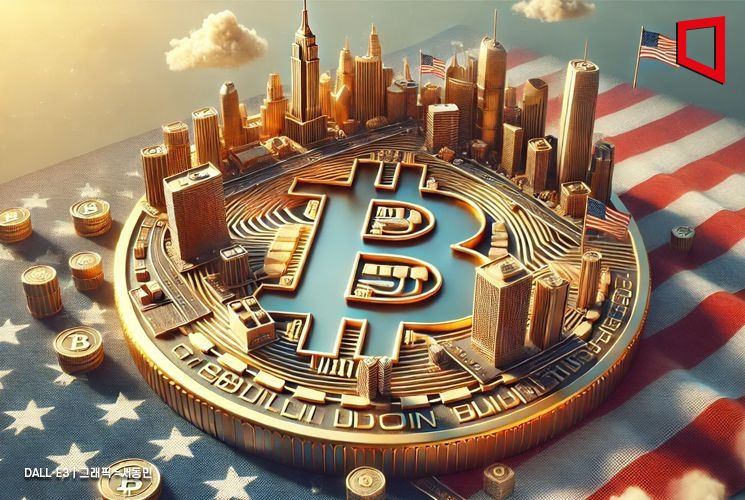
On June 24, Hana Securities released a report titled "From Stablecoin Theme to Trend," analyzing that the global financial market has already embraced stablecoins not just as a 'theme' but as a core 'trend.' In South Korea, the country is also at a significant turning point that is breaking down the boundaries between finance, the real economy, and asset management, through measures such as the Digital Asset Basic Act, expanded participation by institutional investors, and the introduction of a won-based stablecoin.
The most common criticism of cryptocurrencies is that they "lack intrinsic value." Stablecoins serve to complement this lack of intrinsic value in cryptocurrencies. They provide a stable value benchmark that can express the intrinsic value of cryptocurrencies as market value. Depending on the type of collateral asset used as a value benchmark, stablecoins vary widely, including fiat-collateralized, crypto-collateralized, algorithmic uncollateralized, and yield-generating structures.
Previously, on June 17, the United States passed the "GENIUS" bill related to stablecoins as part of its hegemony strategy. Although coordination with the existing STABLE ACT remains, there is a high likelihood that the new law will be implemented within the year. The stock price of Coinbase, a cryptocurrency exchange, has risen by 48% since its inclusion in the S&P 500, and Circle Internet, a stablecoin issuer, has seen its stock price rise by 188%.
In South Korea, Democratic Party lawmaker Min Byungdeok has proposed the Digital Asset Basic Act as a continuation of President Lee Jaemyung's digital asset pledge. Bank of Korea Governor Rhee Changyong, who had previously maintained a negative stance, has now indicated that he does not oppose the issuance of a won-based stablecoin.
The scale of stablecoin transactions is already significant. Last year, the total amount of stablecoin transfers reached $27.6 trillion, exceeding the combined transaction volume of Visa and Mastercard by 7.6%. Citigroup forecasts that by 2030, the stablecoin market capitalization could grow 15-fold to as much as $3.7 trillion. In the first quarter of this year, the number of users registered with the five major virtual asset exchanges in South Korea reached 16 million, accounting for 31% of the total population.
Hana Securities assessed that the introduction of a won-based stablecoin would be positive for the Korean stock market. Based on the example of the dollar stablecoin, demand for Korean government bonds as reserve assets is expected to increase. An increase in demand for government bonds leads to lower interest rates (higher prices), which in turn lowers discount rates (raising valuations). Ultimately, this is favorable for the stock market.
From a stock investment perspective, attention should be paid to the digital asset value chain. Now is the time to identify Korean companies by referring to the full spectrum of dollar stablecoin operations, from issuance to platforms, as well as payment, custody, and distribution. In the early stages, companies related to issuance (KB Financial, Shinhan Financial Group, ITCen Global) and payment (Kakao Pay, Danal) are likely to attract attention, with interest gradually shifting to companies specializing in distribution, custody (Kakao), and security services.
Kim Dooun, an analyst at Hana Securities, commented, "The history of finance has been a process in which centralization and decentralization have alternated, and now we are entering a transitional period where traditional finance and digital finance coexist. Although it is uncertain which way the balance of power will tip, experience shows that this period has always been an opportunity, and stablecoins are the new trend in finance."
© The Asia Business Daily(www.asiae.co.kr). All rights reserved.

















