French Agency for Food, Environmental and Occupational Health & Safety Study
Microplastic Count in Glass Bottles Up to 50 Times Higher Than in PET Bottles
"Paint from Bottle Cap Friction Enters Beverages"
Contrary to the common belief that glass bottles are more hygienic than PET bottles, a surprising study from France has found that beverages in glass bottles contain 5 to 50 times more microplastic particles than those in PET (plastic) bottles.
The French Agency for Food, Environmental and Occupational Health & Safety (ANSES) measured the amount of microplastics found in lemonade, iced tea, soft drinks, and beer contained in both glass and plastic bottles. The results showed that beverages in glass bottles contained about 100 microplastic particles per liter. This is 5 to 50 times higher than the amount found in beverages packaged in plastic bottles or metal cans.
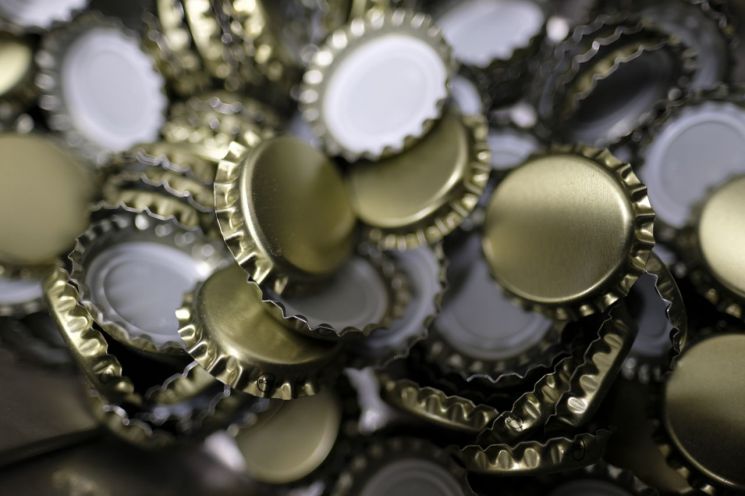
Iseline Schaive, a doctoral student who led the research, told AFP, "We expected the exact opposite result." The research team estimated that the microplastic particles found in glass-bottled beverages did not come from the glass itself, but rather from the paint on the bottle caps. Schaive explained, "We confirmed that the microplastic particles found in samples from glass-bottled beverages matched the shape, color, and polymer composition of the paint on the outside of the bottle caps used to seal the bottles." ANSES stated, "There were tiny scratches on the paint of the bottle caps that were invisible to the naked eye, likely caused by friction between caps during storage," and concluded that these scratches caused microplastic particles to separate from the cap surface and dissolve into the beverage.
The amount of microplastics varied depending on the type of beverage. Both carbonated water and mineral water had the lowest microplastic content, with about 4.5 particles per liter detected in glass bottles and 1.6 particles per liter in plastic bottles. In contrast, the number of microplastic particles detected in sweetened beverages was much higher. Carbonated drinks in glass bottles contained about 30 particles per liter, lemonade in glass bottles had about 40 particles per liter, and beer contained 60 microplastic particles per liter. Interestingly, wine showed almost no detectable microplastics, regardless of the type of bottle. Guillaume Duplois, the lead researcher at ANSES, stated, "The reason for this is still unknown." ANSES also explained that since there is currently no established toxicity threshold for microplastics, it is not possible to determine what health risks these numbers may pose.
The researchers also suggested a simple way to reduce the amount of microplastics coming from bottle caps. When air was blown onto the bottle caps to remove dust, followed by rinsing with water or alcohol, the amount of microplastics decreased by as much as 60%. This means that washing the caps before sealing the bottles can significantly reduce the entry of microplastics into beverages.
© The Asia Business Daily(www.asiae.co.kr). All rights reserved.

















