"A New Starting Point for Bilateral Relations"
"Need to Review Experiences and Lessons in China-South Korea Relations"
Dong Xiangrong, a scholar affiliated with China's top government think tank, predicted that the Asia-Pacific Economic Cooperation (APEC) summits to be held consecutively by South Korea and China this year and next year could serve as opportunities to enhance bilateral friendship.
In a column published in the state-run Guangming Daily on June 21, Researcher Dong referred to the second phone conversation between President Xi Jinping and President Lee Jaemyung, stating, "This meeting has injected strong momentum into China-South Korea friendly cooperation. It will become a new starting point in the relationship between the two countries."
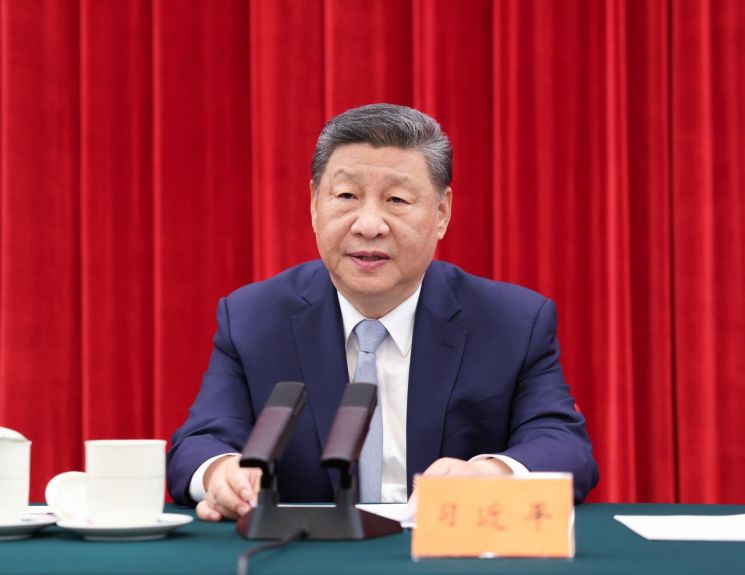
He said, "For China-South Korea relations to develop stably in the future, both sides must jointly consider and cooperate on several key issues," and listed five such points.
He stated that adhering to the original intent at the time of diplomatic normalization is the fundamental premise for the steady development of China-South Korea relations. He added, "Since the establishment of diplomatic ties, South Korea and China have abided by the joint communiqu?, and the relationship has continued to develop, bringing significant benefits to the peoples of both countries. The 30-plus years of history prove that the decisions made by the governments at that time were entirely correct and aligned with the general trend of historical development."
Researcher Dong also emphasized that "mutual benefit and co-prosperity are an important foundation for the development of China-South Korea relations." Over the 33 years since normalization, the industrial and supply chains of the two countries have been closely connected, and economic, trade, and investment relations have substantially improved the welfare of both peoples. He continued, "Mutual realization is a key principle in bilateral relations," adding, "The development of China-South Korea relations over the past 33 years has greatly contributed to enhancing the international standing of both countries."
Researcher Dong also highlighted the importance of building personal ties. He said, "Recently, due to the influence of international politics, populism, and COVID-19, mutual favorability between the peoples of China and South Korea has somewhat declined," and argued, "South Korea should recognize and respect the reality that some aspects of Korean history and culture share the same roots as those of China."
He further stressed that China-South Korea relations are at a crucial juncture, requiring a review of past experiences and lessons, and a reorganization (zhongzhengqigu, meaning to make a fresh start after failure) for a new beginning. He added, "Seizing the opportunity to face each other and elevate the China-South Korea strategic cooperative partnership to a higher level undoubtedly serves the fundamental interests of both countries and their peoples."
In his column, Researcher Dong sequentially mentioned former President Kim Dae-jung's 1998 visit to China, during which the 'Korea-China Partnership for the 21st Century' was declared; former President Roh Moo-hyun's 2003 visit and former President Lee Myung-bak's 2008 visit, during which the 'Comprehensive Cooperative Partnership' and 'Strategic Cooperative Partnership' between Korea and China were declared, respectively. He also referenced President Xi Jinping's visit to South Korea in 2014 and former President Park Geun-hye's attendance at China's Victory Day military parade the following year. He stated, "In 1991, when South Korea chaired APEC, it successfully led diplomatic negotiations with China on the occasion of the summit," and added, "This year and next year, South Korea and China will consecutively host the APEC summits, and I believe the two countries will have another opportunity to enhance bilateral friendship and cooperation through the APEC multilateral stage."
Meanwhile, President Xi Jinping of China conveyed to National Assembly Speaker Woo Wonshik, who visited China last February amid a political crisis involving martial law and impeachment, that he is considering visiting South Korea on the occasion of the APEC summit in Gyeongju this November. If President Xi visits South Korea, it will be his first visit in 11 years since 2014 during the Park Geun-hye administration. China will host the APEC summit next year.
© The Asia Business Daily(www.asiae.co.kr). All rights reserved.
![Clutching a Stolen Dior Bag, Saying "I Hate Being Poor but Real"... The Grotesque Con of a "Human Knockoff" [Slate]](https://cwcontent.asiae.co.kr/asiaresize/183/2026021902243444107_1771435474.jpg)















