Similar in Appearance to Ordinary Branches or Fallen Leaves
Difficult to Identify with the Naked Eye
Potential Risk of Casualties
As this year's summer rainy season is expected to bring higher-than-average precipitation, military authorities have issued a warning that landmines planted by North Korea in border areas could be carried southward during heavy rainfall. In particular, it has been reported that North Korea, which focused on border fortification work around the Military Demarcation Line (MDL) last year, planted a large number of additional landmines during the construction process.
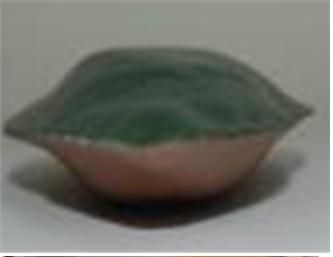 Landmines hidden by North Korea in border areas, carried away by heavy rain along with leaves. Provided by the Joint Chiefs of Staff
On June 22, Yonhap News reported, citing an announcement from the Joint Chiefs of Staff, that landmines planted by North Korea could flow into the South along rivers during heavy downpours, urging the public to exercise special caution. According to the Joint Chiefs of Staff, the North Korean military conducted large-scale landmine planting operations last year in areas north of the Demilitarized Zone (DMZ). Some of these areas are connected to rivers shared by the two Koreas, including the Imjin River, Hantan River, Hwa River, Bukhan River, and Inbukcheon, as well as the Han River estuary. Therefore, in the event of heavy rainfall, there is a possibility that landmines could be washed away and drift into South Korean territory. The Joint Chiefs of Staff stated, "If torrential rains hit the northern region, the water level could rise rapidly due to the opening of the Hwanggang Dam floodgates, and landmines planted without protective measures could be swept away and carried downstream."
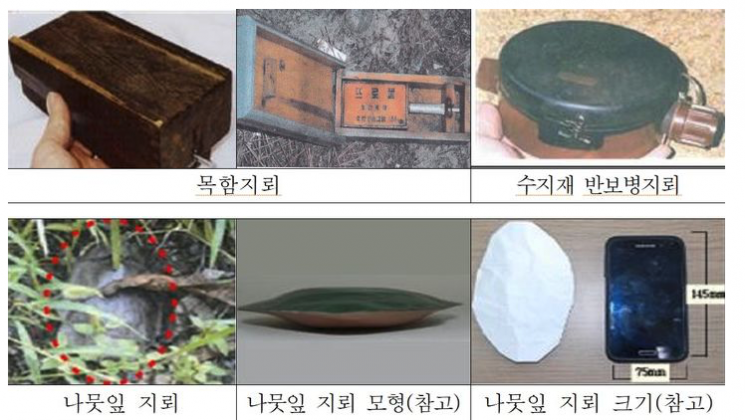
The landmines planted by North Korea include wooden box mines and so-called "leaf mines," which resemble ordinary branches or fallen leaves in appearance, making them difficult to identify with the naked eye. Some of these mines are also difficult to detect with military mine detectors, raising concerns about potential casualties. In particular, the leaf mines, which look like leaves on the outside, are especially dangerous because they are hard to distinguish from real leaves at a glance.
The Joint Chiefs of Staff emphasized, "When operating near rivers shared by North and South Korea, people should be mindful of North Korean landmines that may have been washed away," and added, "If you discover any unidentified objects suspected to be landmines in these areas, do not touch them under any circumstances, and report them immediately to the nearest military unit or police station." Meanwhile, in 2015, an Army sergeant who stepped on a wooden box mine planted by the North Korean military had to have both legs amputated at the knees. Another Army sergeant who was conducting a search operation at the same time also lost his right ankle due to the explosion of a wooden box mine. There have also been reports of civilians being killed or injured after touching wooden box mines out of curiosity.
© The Asia Business Daily(www.asiae.co.kr). All rights reserved.
![Clutching a Stolen Dior Bag, Saying "I Hate Being Poor but Real"... The Grotesque Con of a "Human Knockoff" [Slate]](https://cwcontent.asiae.co.kr/asiaresize/183/2026021902243444107_1771435474.jpg)
















