"Rising Instability in the Middle East... Closer Cooperation with Allies Is Crucial"
"Missed Practical Gains Such as Defense Exports and South Korea-U.S. Tariff Negotiations"
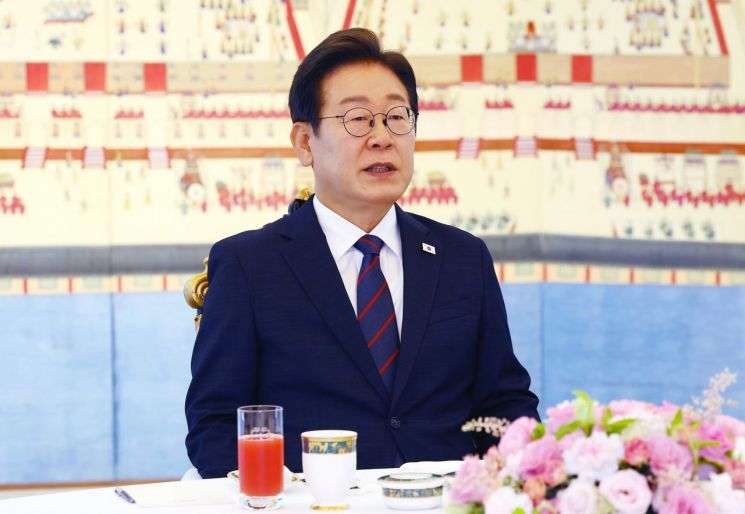
After President Lee Jaemyung decided not to attend the North Atlantic Treaty Organization (NATO) summit scheduled for the 24th (local time) in the Netherlands, the People Power Party criticized the move, arguing that he was choosing diplomatic isolation at the expense of both security and economic interests.
On the 23rd, Kim Gun, an opposition secretary of the National Assembly Foreign Affairs and Unification Committee, said in a phone interview, "The more unstable the situation in the Middle East becomes, the more crucial it is to maintain close cooperation with allies and partner countries," and added, "It is hard to understand what domestic issue is so urgent that it justifies skipping such an important diplomatic stage."
The presidential office announced the previous day via a written briefing that President Lee had made a final decision not to attend the NATO summit. Wi Sunglak, Chief of the National Security Office, explained, "We took into comprehensive consideration various domestic issues and uncertainties arising from the situation in the Middle East."
Tensions in the Middle East have reached their peak after the United States attacked Iranian nuclear facilities on the 21st (local time). Against this backdrop, critics argue that South Korea has missed an opportunity to gauge the intentions of the Trump administration and the responses of NATO member states to the current international situation.
Some point out that, since U.S. involvement could be directly linked to South Korea-U.S. security issues, reviewing these matters should be the top priority. Lim Jongdeuk, a member of the National Assembly Defense Committee from the People Power Party, said in a phone interview, "There are pressing issues such as the Russia-Ukraine war, the dispatch of troops to North Korea, and defense cost-sharing," and added, "Multilateral meetings are the best venue to discuss these matters in advance, but this opportunity has been rejected."
There are also concerns that the decision could negatively impact economic interests. The NATO summit is seen as an opportunity to expand defense exports to European countries that are increasing their defense budgets. Kim pointed out, "As working-level officials from South Korea and the United States are entering full-scale tariff negotiations, we have missed a chance to gauge President Trump's intentions in advance and use this information in the negotiations."
There are concerns that skipping the NATO summit, even at the expense of such practical benefits, could ultimately be interpreted as a political move. This could raise suspicions that the Lee Jaemyung administration is prioritizing relations with China and Russia over those with allied countries. From the perspectives of China and Russia, South Korea could be seen as the weak link among U.S. allies, potentially increasing the intensity of diplomatic pressure.
Na Kyungwon, a member of the People Power Party, wrote on social media, "If South Korea skips the NATO summit after the South Korea-U.S. summit at the G7 was canceled, the international community may view South Korea not as a strategic partner but as a country on hold in terms of trust," and added, "Avoiding such venues could end up bringing security and economic burdens back to us."
© The Asia Business Daily(www.asiae.co.kr). All rights reserved.

















