U.S.: "No Intention of Regime Change in Iran"
Stresses Room for Negotiation Amid Risk of Escalation
Iranian Parliament Approves Blockade of Strait of Hormuz
"$130 Per Barrel Oil"... Oil Shock Expected
Trump Faces a Political Test... U.S. Public Opinion Also a Variable
U.S. President Donald Trump has launched a surprise airstrike on Iran's nuclear facilities, effectively entering the Middle East war. The United States claims the strike targeted Iran's nuclear program, not its regime, and has left the door open for negotiations. However, Iran, declaring retaliation, has raised tensions by threatening to blockade the Strait of Hormuz, a critical oil shipping route in the Middle East. There is growing concern that if Iran follows through with the blockade?which the U.S. has warned would be an "act of suicide"?global oil prices could surge and economic uncertainty worldwide could escalate to extreme levels.
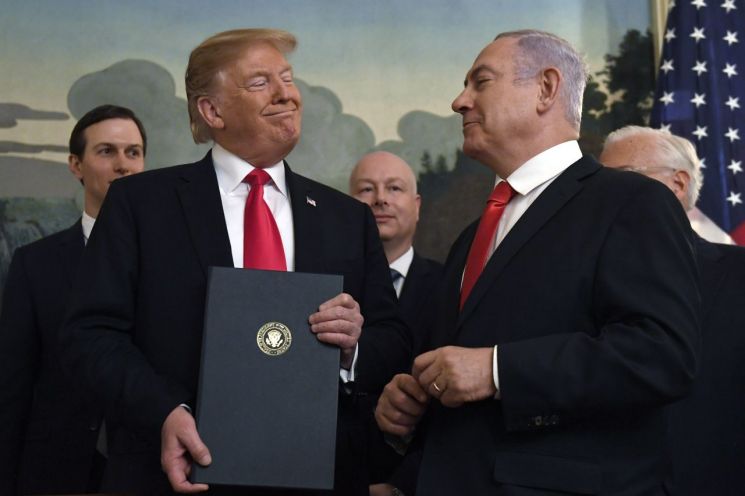
U.S.: "No Intention of Regime Change in Iran"... Stresses Room for Negotiation Amid Risk of Escalation
On the night of the 21st (local time), after the surprise strike on Iran's nuclear facilities, President Trump addressed the nation, stating, "Iran's core uranium enrichment facilities have been completely and thoroughly destroyed," and warned, "If Iran does not choose peace, future attacks will be even stronger and swifter."
The U.S. named this operation "Midnight Hammer" and targeted three major Iranian nuclear facilities?Fordow, Natanz, and Isfahan. This marks the first time the U.S. has directly struck Iranian territory, just eight days after Israel's attack on Iran on the 13th. Notably, the U.S. military deployed the stealth B-2 bomber, using bunker busters in combat for the first time.
While warning that Iranian retaliation would be a grave mistake, the U.S. emphasized that the purpose of the airstrike was to deter Iran's nuclear threat, not to pursue regime change. The U.S. has also consistently conveyed that diplomatic channels for negotiation remain open.
U.S. Secretary of Defense Pete Hegseth stated at a briefing, "Iran's nuclear ambitions have been crushed," and "We have destroyed their uranium enrichment capabilities." He added, "This airstrike is unrelated to regime change, and we are sending both official and unofficial messages to Iran through multiple channels," stressing, "We are giving Iran every opportunity to come to the negotiating table."
U.S. Secretary of State Marco Rubio also reiterated, "What we want is to ensure Iran never possesses nuclear weapons," emphasizing again that regime change is not the goal. Vice President JD Vance stated, "The United States is not at war with Iran, but is fighting Iran's nuclear program," clarifying that the U.S. does not seek to deploy ground troops or pursue regime change, but wants peace with a nuclear-free Iran.
The Biggest Variable: Strait of Hormuz Blockade... Will Iran Play Its Last Card?
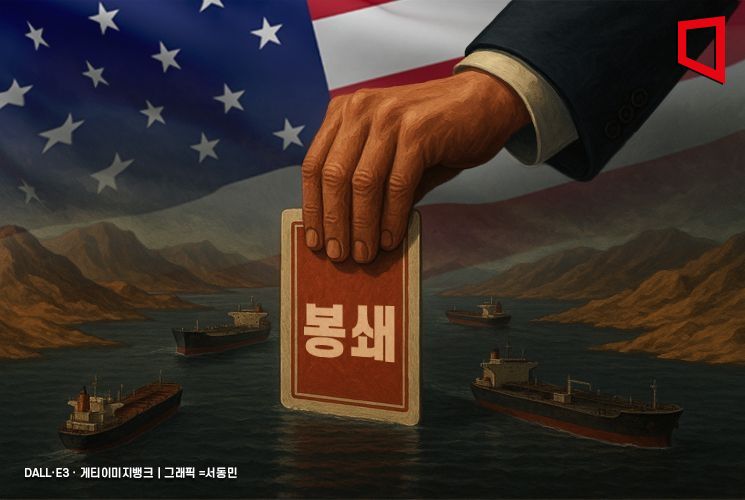
While the U.S. keeps the door open for negotiations, the international community is focused on the level of Iran's retaliatory response. If Iran intensifies attacks on U.S. bases in the Middle East or launches more missiles at Israel, the current military clash could escalate into a full-scale war. In particular, Iran is reportedly considering the drastic measure of blockading the Strait of Hormuz?through ship attacks or mine deployment?in response to the U.S. airstrikes.
On this day, the Iranian parliament officially approved the blockade of the Strait of Hormuz. According to Iran's state-run Press TV, Esmail Kousari, chairman of the Iranian parliament's National Security Committee, stated, "The final decision rests with the Supreme National Security Council (SNSC)." In effect, only the final decision remains.
The Strait of Hormuz is a vital oil shipping route in the Middle East, with about 20% of the world's daily oil supply passing through it. Iran previously restricted passage through the strait during the 1980s war with Iraq by attacking oil tankers and laying mines, but has never imposed a full blockade. However, given the unprecedented situation of direct U.S. airstrikes on Iranian territory following recent clashes with Israel, some observers believe Iran could actually carry out a blockade.
If the Strait of Hormuz is blockaded, it could severely disrupt global oil supplies. Bloomberg Economics, JP Morgan, and Oxford Economics have warned that international oil prices could soar to $130 per barrel?nearly double the current mid-$70s price. If the Middle East conflict worsens and oil supply instability triggers a global stock market shock, there is speculation that the U.S. may seek a diplomatic solution.
Senior U.S. officials have also issued repeated warnings against a blockade of the Strait of Hormuz. Secretary Rubio and Vice President Vance both warned that Iran's blockade of the Strait would amount to an "act of suicide." Secretary Rubio, in particular, urged diplomatic intervention from China, which is highly dependent on the Strait of Hormuz.
Ultimately, analysts say the outcome of the situation depends on the level of Iran's response and whether the U.S. takes further military action. If Iran does blockade the Strait of Hormuz, there is growing concern that the Middle East could spiral into an irreversible conflict.
Trump Faces a Political Test... U.S. Public Opinion Also a Variable
This crisis is also becoming a significant political test for President Trump. Having advocated "America First" and restrained foreign intervention, President Trump has now directly involved the U.S. in the Middle East war through this airstrike. If Iran responds aggressively and the situation drags on, President Trump could find himself trapped in a "quagmire of war," unable to either continue or withdraw from involvement.
In particular, U.S. public opinion could become a major variable in the unfolding Middle East conflict. Even within Trump's core "MAGA" support base, there are signs of criticism. Steve Bannon, who served as chief strategist in Trump's first administration, criticized, "The vast majority of Americans do not want to be involved in all of this."
Furthermore, if a blockade of the Strait of Hormuz pushes oil prices above $100 per barrel and causes major turmoil in financial markets, public opinion in the U.S. could deteriorate further, adding to the political burden.
Aaron David Miller, a current fellow at the Carnegie Endowment for International Peace and former Middle East negotiator at the U.S. State Department, commented, "If Iran retaliates, President Trump has some political leeway to continue the war, but if the conflict escalates or an energy crisis occurs, it will be difficult to hold out for long." He added, "How public opinion will react if Americans are killed and oil prices exceed $100 per barrel is another matter entirely."
© The Asia Business Daily(www.asiae.co.kr). All rights reserved.
![Clutching a Stolen Dior Bag, Saying "I Hate Being Poor but Real"... The Grotesque Con of a "Human Knockoff" [Slate]](https://cwcontent.asiae.co.kr/asiaresize/183/2026021902243444107_1771435474.jpg)
















