NATO Summit to Be Held in The Hague, Netherlands, June 24-25
President Lee Decides Not to Attend After U.S. Airstrike on Iran
"Consultations with NATO on Sending a Representative"
Trump's Early Return from G7 Cancels Summit Meeting... Issue Remains
Low Probability of South Korea-U.S. Summit Also a Factor... Focus on Domestic Issues
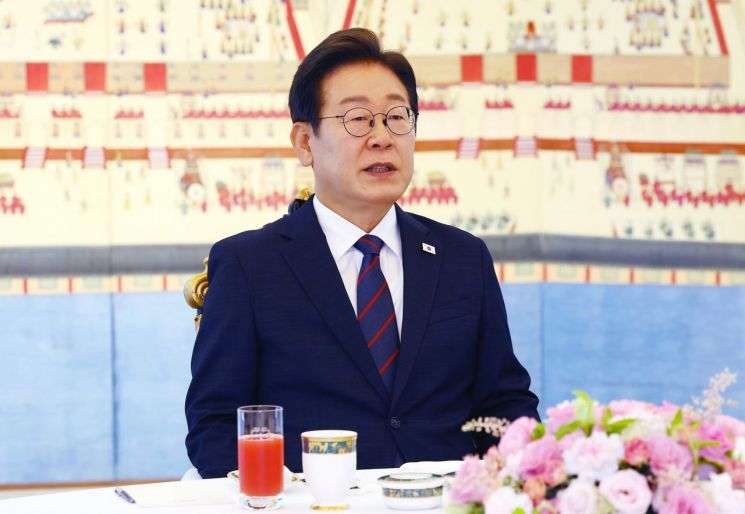
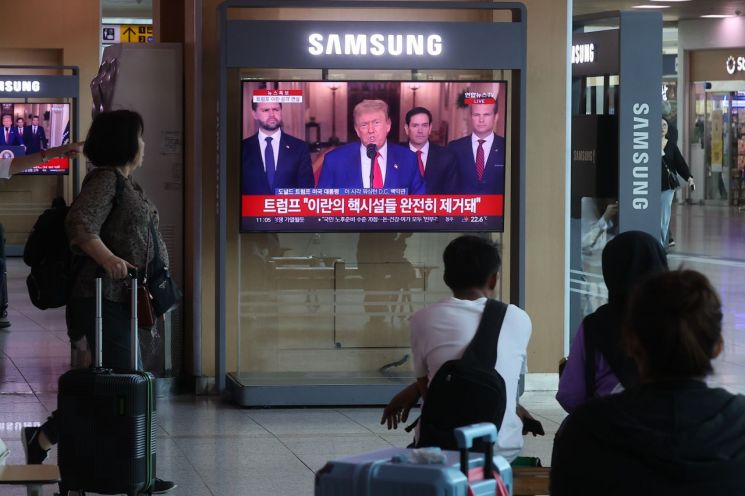
President Lee Jaemyung has decided not to attend the North Atlantic Treaty Organization (NATO) summit, which is scheduled to take place in The Hague, Netherlands, from June 24 to 25 (local time). The presidential office explained that while President Lee had been actively considering attending the NATO summit, he ultimately judged that it was impossible for him to participate in person, given domestic issues and the uncertainty caused by the Middle East situation. The international situation has become significantly more complicated after the United States launched a surprise airstrike on Iran's nuclear facilities, effectively joining the conflict between Israel and Iran. As a result of President Lee’s decision not to attend this summit, a bilateral meeting with U.S. President Donald Trump remains an unresolved issue.
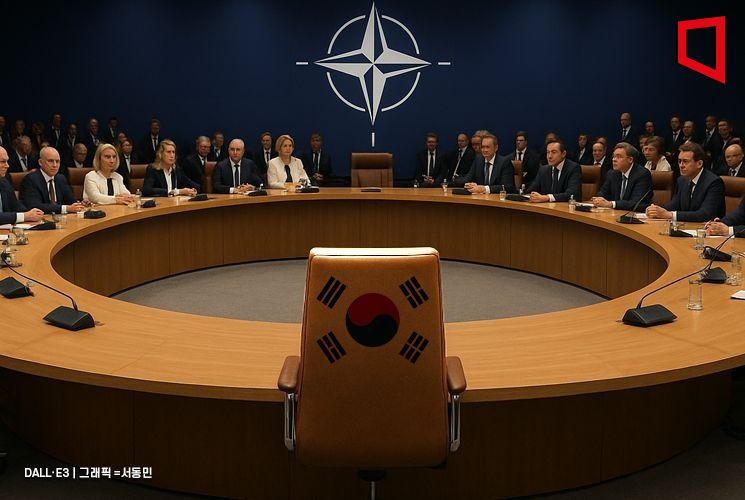
Kang Yujeong, spokesperson for the presidential office, stated in a written briefing on the afternoon of the 22nd, "Considering various domestic issues and the uncertainty stemming from the Middle East crisis, it was determined that the President is simply unable to attend in person," adding, "The government will consult with NATO regarding the dispatch of a representative." Initially, National Security Office Director Wi Sunglak had been scheduled to give a briefing on the summit at 3 p.m. on the same day. As a result, there was widespread speculation within and outside the presidential office that an announcement would be made regarding President Lee’s attendance at the NATO summit. However, the briefing was canceled just before the scheduled time, and at around 6:20 p.m., a written briefing was released announcing the decision not to attend the summit.
This decision by President Lee is analyzed as the result of considering both domestic political and economic conditions, as well as the recent rapid deterioration of the Middle East situation. In particular, the escalation of conflict between the United States and Israel on one side and Iran on the other, following the attack on Iran’s nuclear facilities, has significantly increased international uncertainty, which is seen as a decisive factor. Diplomatic circles have also raised concerns that, as NATO is likely to become more actively involved in Middle East issues at this summit, South Korea, as an invited country, could find itself in an awkward position. NATO consists of 32 member states, which have maintained the stance that they must jointly contain Russia, as well as China and North Korea. Since Russia’s invasion of Ukraine in 2022, NATO has annually invited the four Indo-Pacific countries (IP4) ? South Korea, Japan, Australia, and New Zealand ? to participate.
Recent unpredictable actions by U.S. President Donald Trump are also believed to have played a role. During the recent Group of Seven (G7) summit, President Trump abruptly returned to the United States due to the Middle East crisis, resulting in the cancellation of a planned South Korea-U.S. summit, further highlighting his unpredictability. Against this backdrop, it is interpreted that President Lee also considered that the practical benefits of attending the NATO summit could be reduced, given the likelihood that he would be asked to express support related to the current situation. The instability in the Middle East and President Trump’s unpredictable responses have also likely lowered the chances of a South Korea-U.S. summit taking place on the sidelines of the NATO meeting, which may have influenced this decision. South Korea is also in a position where it needs to strengthen its bargaining power in ongoing trade negotiations, such as the so-called "July package" (a comprehensive tariff agreement).
Another major factor is that President Lee has consistently expressed his intention to focus on resolving domestic issues since the beginning of his term. The presidential office has recently set the stabilization of people's livelihoods and economic recovery as top policy priorities, reflecting internal opinions that overseas engagements could distract from effective governance. Following President Lee’s decision not to attend, the presidential office plans to consult with NATO to dispatch an appropriate representative. Through this, South Korea aims to maintain its cooperation and role in the international community and to continue delivering its messages globally.
However, there are concerns that this decision could be interpreted by Western allies as a negative signal regarding South Korea’s willingness to cooperate internationally. In particular, as NATO has recently been strengthening cooperation with Asian countries, some point out that South Korea’s decision not to attend could lead to misunderstandings within the international community. There are worries that this could become a "conspicuous absence." Therefore, minimizing diplomatic gaps through consultations with NATO and maintaining trust in the international community will be important tasks for South Korea going forward.
Ultimately, this decision is being evaluated as a strategic judgment to prioritize domestic issues while managing and balancing international messaging. Depending on how the Lee administration organizes its delegation in consultation with NATO and how the international community responds, South Korea's diplomatic standing could be affected. There is also interest in what outcomes President Lee’s pragmatic diplomatic strategy, aimed at responding to complex domestic and international crises, will yield.
One diplomatic expert commented, "President Lee's decision appears to be an unavoidable choice, but careful follow-up diplomacy will be necessary to restore trust with allied countries in the future." Another expert added, "Since this decision aligns with the principle of pragmatic diplomacy, it will be important to maintain and expand channels of cooperation with NATO going forward."
© The Asia Business Daily(www.asiae.co.kr). All rights reserved.
![Clutching a Stolen Dior Bag, Saying "I Hate Being Poor but Real"... The Grotesque Con of a "Human Knockoff" [Slate]](https://cwcontent.asiae.co.kr/asiaresize/183/2026021902243444107_1771435474.jpg)

















