Democratic Party, Now the Ruling Party, Signals Amendment of the Personnel Hearing Act
16 Amendment Bills Proposed... Heralding Comprehensive Overhaul of the System
Jin Sungjoon: "Restoring the Original Purpose" vs. Checks from the People Power Party
After winning the presidential election, the Democratic Party of Korea, now the ruling party, has announced plans to amend the Personnel Hearing Act. Attention is focused on how the debate over amending the act will be affected, as the positions of the Democratic Party?which had previously advocated for expanding the scope and applicability of personnel hearings?and the People Power Party?which had argued for limiting the powers of such hearings?have completely reversed. There is growing interest in whether the Democratic Party’s longstanding calls to improve the personnel hearing system will gain momentum.
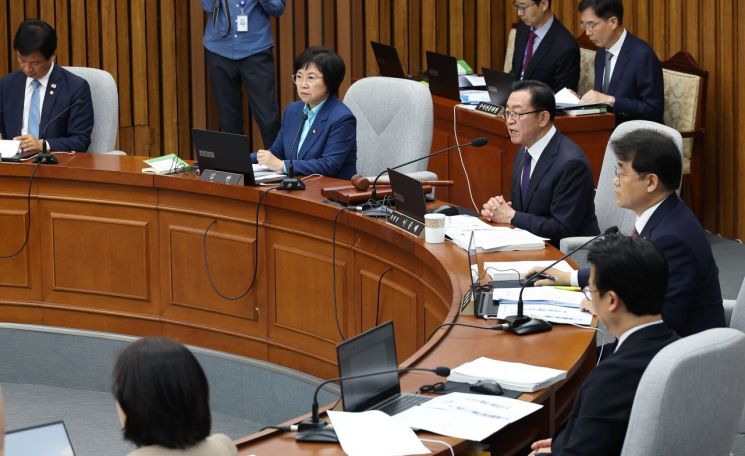
According to the National Assembly Bill Information System on June 21, a total of 16 amendments to the Personnel Hearing Act have been proposed since the start of the 22nd National Assembly. In summary, the Democratic Party, which until recently was the opposition party, has submitted bills to expand the scope of personnel hearings, strengthen requirements for document submission, and introduce penalties for false testimony. The People Power Party, on the other hand, has proposed amendments emphasizing that personnel hearings should focus on evaluating candidates’ job performance capabilities, which is the original purpose of the hearings.
Previously, Jin Sungjoon, the Democratic Party’s Policy Committee Chair, stated at a policy coordination meeting on June 19, “Personnel hearings are meant to assess a candidate’s ability to manage state affairs; they are not venues for personal attacks or attempts to gain political advantage by tarnishing a nominee’s reputation. We must restore the original purpose and function of personnel hearings. The Democratic Party will move quickly to amend the Personnel Hearing Act.” This signals the party’s intention to revise the act to focus on competency evaluation.
Within the Democratic Party, lawmaker Kwon Chilsung has already proposed an amendment to the Personnel Hearing Act that distinguishes between a closed ‘Public Ethics Hearing’ for vetting morality and an ‘Official Competency Hearing’ for assessing expertise and policy capabilities. Similar proposals have been made in the past, but with additional legislation now being introduced, the push to amend the Personnel Hearing Act is expected to gain further traction.
However, attention is also being paid to whether the Democratic Party’s previous direction for amending personnel hearings will be addressed. The amendments to the Personnel Hearing Act introduced by the Democratic Party in the 22nd National Assembly have mainly focused on strengthening the system. Kwon Chilsung’s proposal, for example, extends the period for completing hearings from the current 15 days after a nomination is referred to 30 days, limits the hearing period itself to within 5 days, and strengthens the authority to request documents. These measures are intended to reinforce the personnel hearing process and address chronic weaknesses such as the duration of hearings and the submission of documents.
In addition, many of the Democratic Party lawmakers’ bills related to personnel hearings focus on strengthening the vetting process. Park Kyuntaek’s amendment introduces penalties for making false statements during hearings. Kim Yongman’s bill stipulates penalties for public office candidates who refuse to answer questions or submit documents without valid reason. Heo Young’s amendment allows for an extension of the hearing period if a candidate submits documents late. Kim Jeongho’s bill allows committee members to request documents directly from candidates for public office without requiring a committee resolution.
Other proposals also aim to expand the range of positions subject to hearings. For example, bills have been introduced to include the Chiefs of Staff of each military branch (proposed separately by Wi Seongrak and Lee Kangil), the Chair of the National Education Commission (proposed separately by Kim Moonsoo and Ko Minjung), the Standing Commissioner of the National Human Rights Commission (Park Sungjoon), the Chair of the Truth and Reconciliation Commission (Han Byungdo), and the Chair of the Korea Communications Standards Commission (Kim Hyun). Additionally, Cho Eunhee of the People Power Party has proposed a bill to include the Secretary-General of the National Election Commission as a subject of personnel hearings.
Conversely, Lee Sanghwi of the People Power Party has proposed a bill stipulating that “personnel hearings should be conducted only to the extent necessary to achieve their intended purpose.” Notably, Jeong Eulho of the Democratic Party, during his time in the opposition, proposed a bill to guarantee the right of nominees to speak during hearings. Jeong Eulho’s bill ensures that the time a nominee spends answering questions is not counted against the time allotted for lawmakers’ questions during personnel hearings.
© The Asia Business Daily(www.asiae.co.kr). All rights reserved.
![Clutching a Stolen Dior Bag, Saying "I Hate Being Poor but Real"... The Grotesque Con of a "Human Knockoff" [Slate]](https://cwcontent.asiae.co.kr/asiaresize/183/2026021902243444107_1771435474.jpg)















