Simultaneous "Too Hot" and "Too Cold" Complaints
Check Congestion and Use Mild Cooling Cars
"Please Refrain from Excessive Heating and Cooling Complaints"
Seoul Metro is currently engaged in a "war" against a flood of complaints related to heating and cooling in subway trains amid the early summer heat.
As of May this year, a total of 283,972 complaints regarding heating and cooling discomfort ("too hot" or "too cold") were filed with Seoul Metro, accounting for 75.5% of all customer complaints received by the customer center. In particular, more than 110,000 complaints were filed in May alone, causing the company to struggle with handling the surge in urgent cases.
According to Seoul Metro on June 20, complaints about subway heating and cooling have been increasing every year since 2020, with a sharp rise starting in May as the weather gets hotter. Over the past five years, the number of complaints related to heating and cooling has shown a steady upward trend.
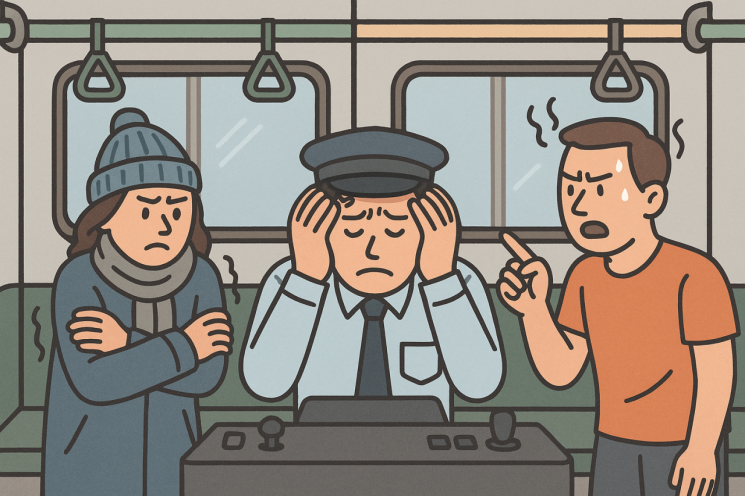
Concentrated During Rush Hours... "Too Hot" and "Too Cold" Complaints Occur Simultaneously
An analysis of last year's heating and cooling complaints by time of day showed that most "too hot" complaints occurred during rush hours (7-9 a.m. and 6-8 p.m.). At the same time, "too cold" complaints were also concentrated in these periods.
Specifically, "too hot" complaints filed during rush hours amounted to 71.9% of the annual total, reaching 623,969 cases. Of these, 229,846 cases (26.5%) were concentrated at 8 a.m., the peak time for passenger volume. Similarly, "too cold" complaints during rush hours accounted for 61.1% (35,538 cases) of the total.
With both "too hot" and "too cold" complaints pouring in during the same time slots, customer service representatives often find themselves in a difficult position. A Seoul Metro official explained, "During rush hours, the number of passengers surges, and increased physical activity, such as running to board trains, makes many people feel hot. However, perceived temperature varies from person to person, and depending on what passengers are wearing, there can be significant differences in how the temperature feels even within the same train car."
By subway line, Line 2, which has the highest passenger volume, accounted for 35.0% of all heating and cooling complaints, followed by Line 7 (20.6%) and Line 5 (12.6%).
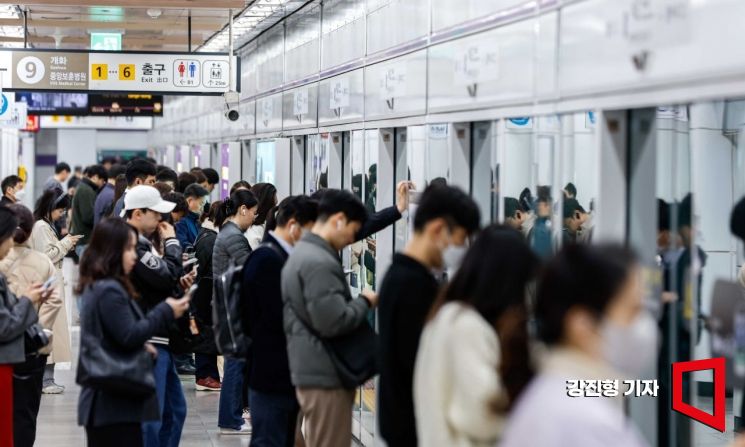
Automatic Temperature Control and Ventilation... Seoul Metro Strives for a Comfortable Environment
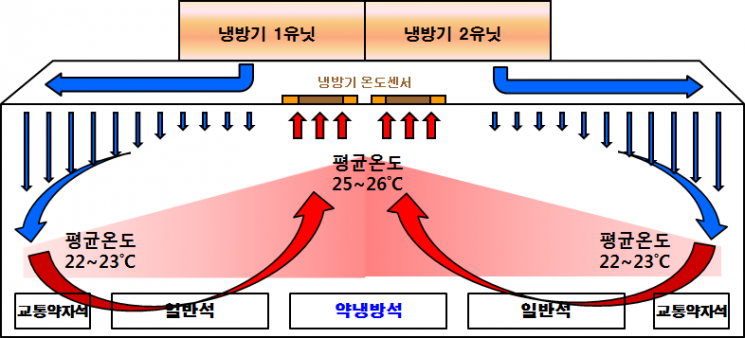
The temperature inside subway cars is automatically regulated by individual temperature sensors. According to Ministry of Environment guidelines, regular cars are set at 24°C, while mild cooling cars are set at 25°C. During summer rush hours, Seoul Metro operates air conditioning and ventilation systems at maximum capacity and adjusts cabin temperatures according to passenger congestion at different times. The company also actively broadcasts announcements to inform passengers about the situation and minimize inconvenience when complaints about cooling are received.
Going forward, Seoul Metro plans to maintain temperatures within the Ministry of Environment's standard range and to inform passengers through various channels that perceived temperature may vary depending on congestion and other factors.
When trains are crowded, cabin temperatures can rise. Therefore, it is advisable to check congestion information via the official Seoul Metro app, "Ttota Subway," and use less crowded cars. Real-time congestion data is available for Lines 2 and 3, while average congestion statistics by day of the week and 10-minute intervals for the past three months are provided for Lines 1-9 (excluding Lines 2 and 3).
Cabin temperature can also vary by location. Due to the flow of cool air, the ends of the cabin near the priority seating for the transportation vulnerable are the coolest, while the center is relatively less cool. Passengers who feel cold can use the mild cooling cars, which are operated at 1°C higher than regular cars. Mild cooling cars are located in the 4th and 7th cars on Lines 1, 3, and 4; the 4th and 5th cars on Lines 5, 6, and 7; and the 3rd and 4th cars on Line 8. However, due to high congestion, Line 2 does not operate separate mild cooling cars.
Use Chatbot and App for Urgent Complaints
Last year, complaints related to heating and cooling accounted for 80.6% of all customer center complaints, to the extent that they interfered with the handling of urgent cases such as medical emergencies. Seoul Metro recommends that passengers who feel too hot or cold while riding the train submit their complaints through the "Ttota Subway" app or the official chatbot "Ttota24" (https://chat.seoulmetro.co.kr).
Baek Ho, CEO of Seoul Metro, stated, "We ask passengers to refrain from excessive complaints about heating and cooling so that we can respond quickly to urgent issues, including emergencies inside trains and other various complaints such as disorderly conduct. We are working hard to create a comfortable subway environment and ask for your understanding and cooperation."
© The Asia Business Daily(www.asiae.co.kr). All rights reserved.
![Clutching a Stolen Dior Bag, Saying "I Hate Being Poor but Real"... The Grotesque Con of a "Human Knockoff" [Slate]](https://cwcontent.asiae.co.kr/asiaresize/183/2026021902243444107_1771435474.jpg)

















