Eight Years After Shutdown in 2017
Expectations for Securing Nuclear Decommissioning Technology and Experience
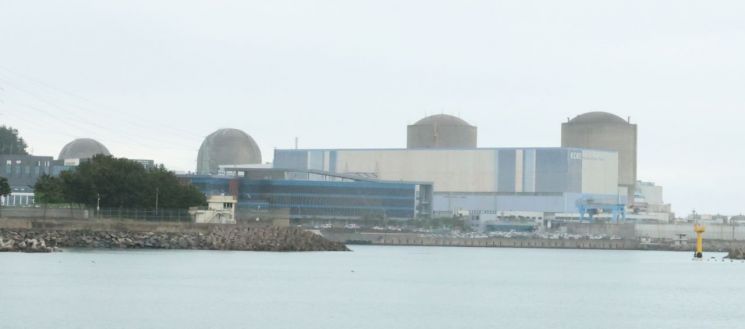
The decommissioning review of Kori Unit 1, the first nuclear power plant in South Korea to begin commercial operation, will take place on June 26. As this is the first case of decommissioning in the country, it is drawing significant attention from the nuclear power industry. If the decommissioning of Kori Unit 1 is successfully completed, South Korea will gain experience across the entire nuclear power plant lifecycle, from operation to decommissioning. The country will also be able to secure the technological capabilities necessary to enter the overseas nuclear decommissioning market.
The Nuclear Safety and Security Commission plans to review the decommissioning approval application for Kori Unit 1, submitted by Korea Hydro & Nuclear Power, at its meeting on June 26. This review comes four years after Korea Hydro & Nuclear Power submitted the decommissioning approval application in May 2021, and eight years after Kori Unit 1 was permanently shut down in 2017.
Prior to the review, the Nuclear Safety and Security Commission provided an explanation of the Kori Unit 1 decommissioning approval process at a press academy on June 19. The commission stated that the agenda was brought forward after a series of steps, including a document compliance review by the Korea Institute of Nuclear Safety (KINS), a review of the final decommissioning plan, and an assessment by the Nuclear Safety Expert Committee.
Kori Unit 1, a pressurized water reactor built by Westinghouse, received its construction and operation license on May 31, 1972, and began commercial operation on April 29, 1978. After an extended period of continued operation, it was permanently shut down on June 18, 2017.
According to the Nuclear Safety Act, the commission reviews whether the applicant has secured the necessary technical capabilities for decommissioning and whether the decommissioning plan meets the standards set by commission regulations. It also examines whether the radiation exposure during decommissioning will remain within the prescribed dose limits.
Even after receiving decommissioning approval, operators are required to report on the progress and status of decommissioning to the commission every six months. After decommissioning is completed, the commission reviews the decommissioning completion report and the final site status report. If the results are deemed satisfactory, the commission notifies the operator of the final termination of the operating license. Only after this series of procedures is completed are the facility and site released from regulatory oversight under the Nuclear Safety Act.
Nuclear decommissioning involves several stages: preparation, decontamination to remove contamination within the plant, dismantling and demolition, waste processing, and site restoration. Building demolition is carried out in order, starting with non-radioactive structures and followed by radioactive structures.
According to the commission, as of May 2025, a total of 214 nuclear power plants have been permanently shut down in 22 countries worldwide. Of these, only 25 plants have completed decommissioning. By country, the United States accounts for the largest share, with 20 plants. In the United States, most decommissioned nuclear sites are converted to green spaces, while some are repurposed for coal and gas turbine power generation or wind power generation.
The number of decommissioned plants is smaller than the number of permanently shut-down plants because each country has a different nuclear decommissioning strategy. A commission official explained, "Some countries opt for immediate decommissioning, while others adopt a delayed strategy, waiting until a certain period has passed for the radioactivity to decay before proceeding."
Korea Hydro & Nuclear Power and other domestic nuclear industry players expect that, through the accumulation of decommissioning technology and experience, they will be able to secure competitiveness in the global nuclear decommissioning market. Korea Hydro & Nuclear Power currently possesses 58 commercialized decommissioning technologies. In addition, the Korea Atomic Energy Research Institute reportedly holds 38 core nuclear decommissioning technologies.
© The Asia Business Daily(www.asiae.co.kr). All rights reserved.