How Was Conflict Resolved During the Coal Phase-Out?
Ratcliffe-on-Soar, Britain's Last Coal-Fired Power Plant
Reemployment Discussions Continued Until the End
Ample Time Devoted to Advance Consultation with Residents During the Transition Process
After a 1 hour and 30 minute train ride from St. Pancras Station in London, you arrive at East Midlands Parkway Station. As the train enters the platform, the massive concrete cooling towers gradually come into view through the windows, lined up in formation. This is Ratcliffe-on-Soar, the last coal-fired power plant in the UK, located in Nottinghamshire, which was closed on September 30 of last year. When the plant was operational, the sight of steam rising simultaneously from the eight 114-meter-high cooling towers was famous.
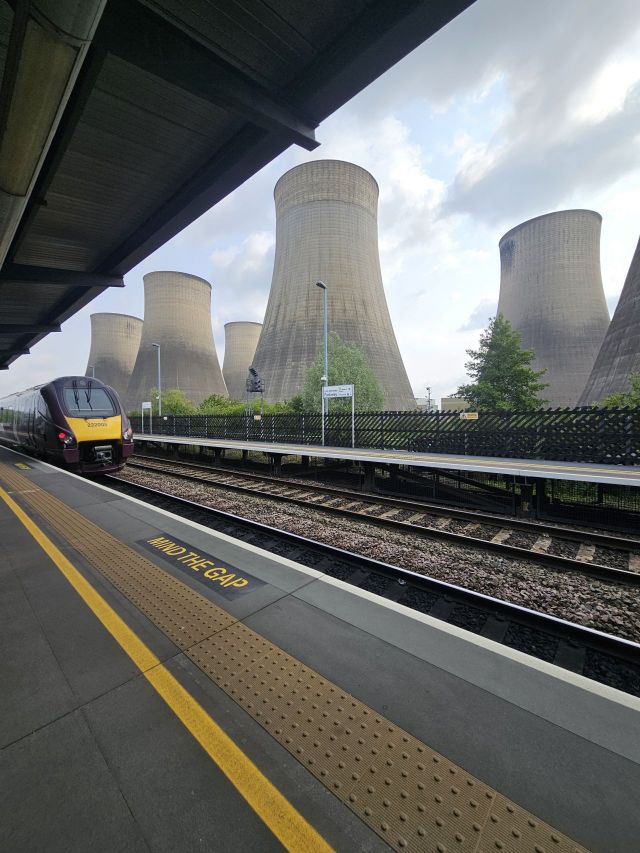 The view of Ratcliffe on Soar Power Station from the platform at East Midlands Parkway Station in Nottinghamshire, England. Photo by Jinyoung Jeon.
With its abundant coal and many open-pit mines, Britain led the Industrial Revolution. Towns developed around mines in various regions, and coal-fired power generation supplied electricity from the capital to the provinces. Now, Britain has set a goal to decarbonize the power sector by 2030 and achieve national carbon neutrality by 2050, and has begun closing the coal-fired power plants that formed the backbone of its industry. Ratcliffe-on-Soar was originally scheduled to cease operations in 2022, but the closure was delayed due to power supply shortages caused by the war in Ukraine.
When the reporter visited the area near the now-closed power plant on the 9th of last month, the village was desolate and quiet. Despite it not being late in the afternoon, there was not a single person passing by in front of the station. Normally, the area in front of a station would be bustling with taxis and buses, but here, only a small shared bus stop remains, where buses stop only when called by passengers. It felt like a dead village where time had stopped.
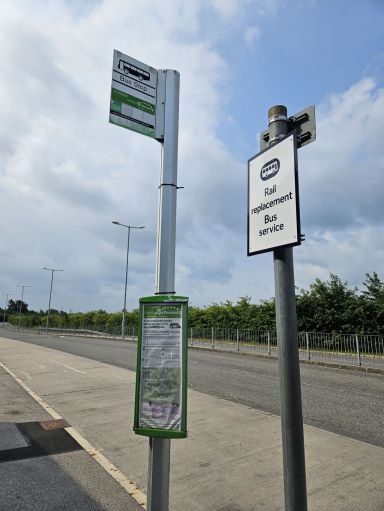 Bus stop in front of East Midlands Parkway Station. At this usually passenger-free location, only buses called via an application (app) arrive at the stop. Photo by Jeon Jinyoung.
After walking about 20 minutes along the road, the entrance to Ratcliffe-on-Soar Power Station came into view. The site is managed by the German energy company Uniper, which has fenced off the area and prohibits outsiders from entering, citing the ongoing decommissioning of the plant. There were no people passing by here either, except for the occasional cyclist on a long-distance ride.
A village that has lost its vitality, with everything coming to a halt due to the closure of the power plant. However, the residents here welcomed this change. There was also a sense of anticipation for the soon-to-be-established renewable energy hub.
Uniper explained that the village only appears stagnant due to the decommissioning of the power plant, but the transition is proceeding smoothly without local conflict or dissatisfaction caused by the closure. A Uniper representative shared plans for the power plant site to soon be transformed into a renewable energy hub, expressing confidence that the quiet village will regain its vitality once the transition work is complete. The Uniper representative stated, "Ratcliffe-on-Soar will be reborn as a hub for low-carbon energy, battery production, and research and development by 2030," and emphasized, "The transition process is proceeding smoothly without conflict."
This is a stark contrast to the atmosphere in villages near the Dogye Mining Office in Samcheok, Gangwon Province, where mine workers and small business owners have been struggling with livelihood issues after losing their jobs following the mine closure last month. The Korean government has drawn up plans to attract a designated duty-free shop and establish a medical industry cluster based on a heavy ion accelerator to replace the coal industry in the Dogye mining area, but has not been able to make progress, making it difficult to revitalize the mining village.
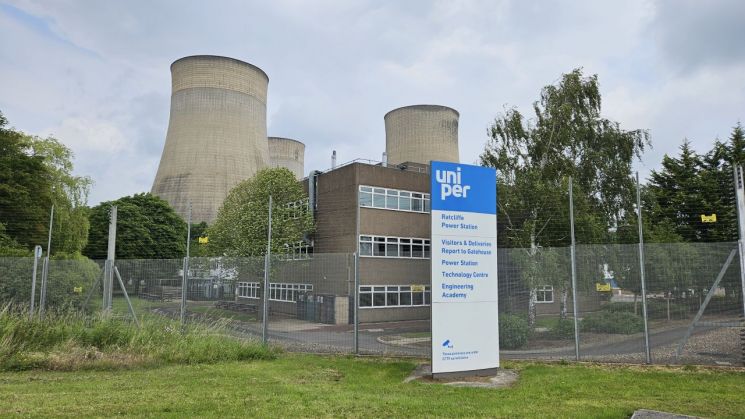
The reason Uniper was able to implement the transition plan with minimal conflict with workers who previously worked at the coal-fired power plant was because labor and management jointly considered and found solutions for reemployment and retraining of workers.
Uniper had maintained ongoing pre-closure cooperation with local stakeholders regarding future redevelopment plans for the site, starting several years before the plant's closure. The company involved the union and local site representatives in discussions ahead of layoffs to prepare direct measures to support departing colleagues. Through this, Uniper created programs such as providing opportunities for internal redeployment, support for connecting with other external companies seeking to hire, and assistance for future career changes.
Although there were protests and opposition from workers in the early days after the closure plan was announced, Uniper explained that prioritizing reemployment measures quickly resolved conflicts. After transforming the site into a renewable energy hub, Uniper plans to bring local workers back to revitalize the area.
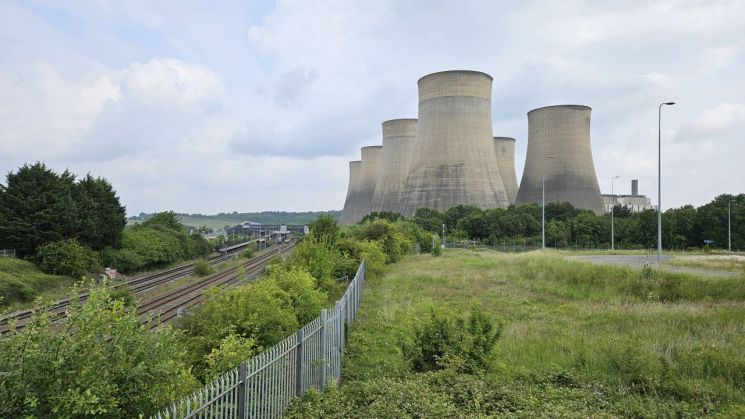
The residents welcomed the temporary quietness. They also had a positive outlook on the transition to a renewable energy hub.
Paul Moore, who has lived in Clifton, the neighborhood adjacent to the power plant, for 35 years, said, "When the power plant was operational, this place was bustling with people coming and going. Many people from nearby areas like Leicester came here to work, and even foreign engineers from countries like Saudi Arabia worked here. Although the village is much quieter now than it was back then, we can now breathe clean air without coal dust. I am also happy to see flat land instead of piles of coal."
He added, "Uniper is making various efforts to bring people back. Because the transition plans have been fully shared with residents, I am confident that this place will regain its vibrancy. People will gather again, and the site of the former coal-fired power plant will become a renewable energy hub, which is truly fortunate."
"A Just Transition Means No One Is Left Behind in the Shift of Energy Sources"

"A just transition is not simply about changing the way energy is produced. It also includes finding solutions to address the side effects that accompany the transition process."
Lisa Fisher, Deputy Director of Energy Transition at the UK climate change think tank E3G (3rd Generation Environmentalism), made these remarks in an interview with Asia Economy regarding the conflicts experienced by countries transitioning from coal to renewable energy.
Deputy Director Fisher explained, "Workers experience the most significant direct and indirect changes during the transition of energy sources," and, "The core challenge of the energy transition is how to ensure job continuity for existing workers." She emphasized that the government's role is crucial to ensure that workers engaged in coal-fired energy production are not excluded during the energy transition. Because solving the problems of job transitions for workers and the risk of depopulation as workers leave requires significant initial costs, the government holds the key to resolving these issues.
In this regard, she said it is important for Korea's energy transition policy, which has been criticized for changing with each administration, to maintain consistency, at least for the sake of cost reduction. She noted, "To build even a single renewable energy production facility, many companies such as trading and construction firms must be involved in contracts and negotiations, and accompanying conflicts must be resolved. If policies keep changing without consistency, it will inevitably lead to waste in financial aspects as well."
Deputy Director Fisher also advised that the efforts of environmental and civic organizations are essential to address potential conflicts with local residents during the energy transition process.
She said, "There must be constant communication between the government and residents, and efforts to find ways to coexist," and added, "For example, in the UK, civic organizations have participated in communication for a long time, and when profits are generated from electricity produced from renewable energy sources, policies have been created so that local residents can share in those profits." She also said, "In Germany, regional balance development funds provide workers in energy transition areas with new job-seeking opportunities," and emphasized, "A high-quality working environment must be ensured."
She further stated, "Just because new renewable energy facilities are established does not mean that residents should lose their livelihoods," and, "Efforts are needed to increase the availability of quality job opportunities in areas where existing industries have left."
Deputy Director Fisher stressed that, according to E3G, a just transition means recognizing that everyone has the right to choose fair and clean energy, and that we must work together to find ways to ensure continuity and connectivity. She said, "It is important to establish a system that guarantees job security and freedom of occupational choice for existing industry workers."
This feature was supported by the Press Promotion Fund, financed by government advertising fees.

© The Asia Business Daily(www.asiae.co.kr). All rights reserved.



















