"Hardliners on Nuclear Issue Prevail Within the U.S."
As U.S. President Donald Trump demanded Iran's "unconditional surrender," Park Hyundo, a professor at the Euro-MENA Institute of Sogang University, assessed that "President Trump seems to have been swayed by various persuasions from Israel."
On CBS Radio's "Kim Hyunjung's News Show" on the 19th, Professor Park said, "President Trump was known as someone who disliked war, and at first, he seemed to allow Iran's uranium enrichment during negotiations, but then his stance suddenly changed completely." He continued, "At the beginning of the nuclear negotiations, there were moderates in the U.S. who supported 'allowing Iran to enrich uranium at low levels,' and hardliners who insisted that 'Iran's uranium enrichment must never be allowed.' While weighing these two positions, the atmosphere shifted toward the hardliners, which ultimately led to the current situation."
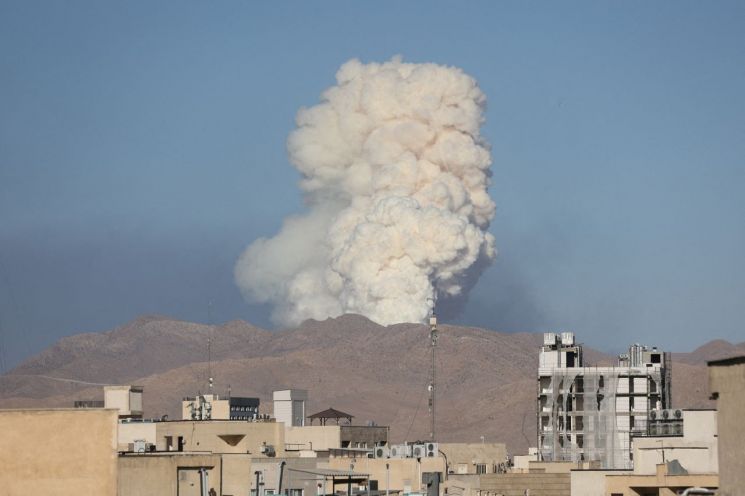
He explained, "President Trump had already stated, 'If everything is not resolved within two months, there will be retaliation.' Iran, on the other hand, took the position that the details could be worked out gradually after a provisional agreement. However, as the two-month deadline passed, it should be seen that the U.S. also began military pressure in the direction Israel favored." Last March, President Trump sent a letter to Iran's Supreme Leader Ayatollah Ali Khamenei, urging nuclear negotiations and presenting a "two-month deadline."
When asked, "Does the U.S. want a pro-American regime to take power in Iran?" Professor Park expressed concern, saying, "If the current regime is replaced, Iran will become 'Syria 2.0.' Just as the Syrian civil war lasted 13 years, Iran could also face a civil war." He added, "If an external force topples the regime and a new government is installed, it will only lead to chaos. Only 60% of Iran's population speaks Persian as their mother tongue, while 40% speak non-Persian languages in this multi-ethnic country. Independence movements are ongoing among this 40%, and if these groups all rise up, Iran will inevitably fall into civil war."
He went on to say, "First, attacks must be halted, and then nuclear negotiations should proceed." Professor Park emphasized, "To lead negotiations in the direction the U.S. wants, attacks must first be stopped. Iran also argues that it makes no sense to negotiate while bombings are ongoing. The situation must be set so that Iran can come to the negotiating table without appearing to have surrendered."
© The Asia Business Daily(www.asiae.co.kr). All rights reserved.
![Clutching a Stolen Dior Bag, Saying "I Hate Being Poor but Real"... The Grotesque Con of a "Human Knockoff" [Slate]](https://cwcontent.asiae.co.kr/asiaresize/183/2026021902243444107_1771435474.jpg)
















