First Case Identified Among Blood Donors in Ethnic Minority Region
Difficult to Detect with ABO and Rh Systems
An extremely rare 'p type' blood type holder has been identified in an ethnic minority autonomous prefecture in Yunnan Province, China.
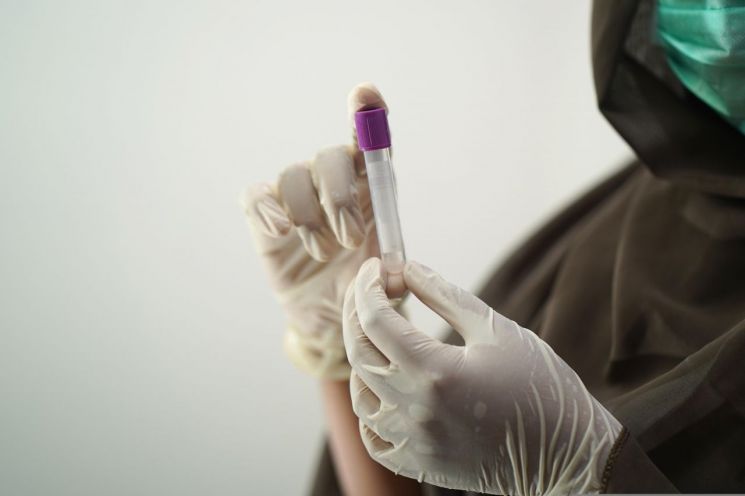
According to Chinese local media outlets such as Hongxing News and Jimu News on June 18, the Blood Center of the Wenshan Zhuang and Miao Autonomous Prefecture in Yunnan Province recently announced that it had identified this blood type for the first time during a routine antibody screening. The center has recorded approximately 570,000 blood donors over its 22-year history, but this is the first time a p type has been confirmed.
The P blood type was first reported to the academic community in 1927 by Karl Landsteiner, an Austrian-born American pathologist. It cannot be distinguished by the standard ABO and Rh classification systems, and can only be detected through specialized testing methods. The P type is further divided into P1, P2, P1k, P2k, and p, with the p type known to be so rare that only one in several million people may have it.
In China, a patient with the p type blood was also discovered last year at a hospital in Taizhou, Jiangsu Province. At that time, only 12 people with the p type had been identified nationwide. In some cases, new genetic information that had not previously been reported was also found. In fact, when a genetic sample from one patient was analyzed by the U.S. National Center for Biotechnology Information (NCBI), it was confirmed to have a unique genetic sequence not found anywhere else in the world.
Individuals with the p type blood must receive transfusions from donors with the same blood type; otherwise, they may experience serious problems such as immune reactions. In particular, women face a higher risk of miscarriage during pregnancy, requiring additional caution.
According to a study conducted by Yonsei University College of Medicine, p type blood holders in South Korea are estimated to make up only about 0.000004% of the total population, making it extremely rare.
© The Asia Business Daily(www.asiae.co.kr). All rights reserved.
![Clutching a Stolen Dior Bag, Saying "I Hate Being Poor but Real"... The Grotesque Con of a "Human Knockoff" [Slate]](https://cwcontent.asiae.co.kr/asiaresize/183/2026021902243444107_1771435474.jpg)















