Survival Rate Reaches 9.2% and Neurological Recovery Rate 6.4% in First Half of Last Year, Reports KDCA
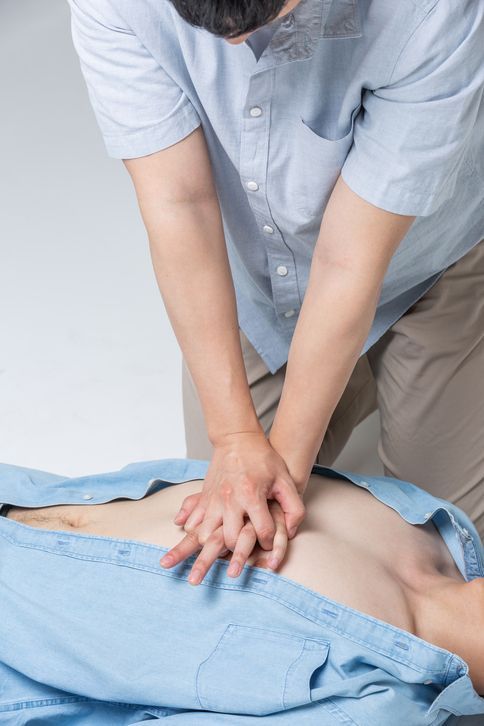
When a bystander performs cardiopulmonary resuscitation (CPR) on a patient experiencing sudden cardiac arrest, the patient's survival rate is 2.2 times higher and the rate of neurological recovery is 3.2 times higher compared to cases where CPR is not performed.
The Korea Disease Control and Prevention Agency (KDCA) announced on June 18 that it had completed an investigation into 16,578 out of 16,782 cases (98.8%) of sudden cardiac arrest reported in the first half of last year (January to June).
Sudden cardiac arrest is a condition in which heart activity rapidly deteriorates or stops, and it can lead to sudden death, requiring immediate emergency treatment. Since 2008, the KDCA has been conducting the "Sudden Cardiac Arrest Survey," reviewing medical records of patients transported to medical institutions by 119 emergency services, and releasing the findings every six months.
In the first half of 2024, 77.8% of sudden cardiac arrest cases were caused by cardiac origins such as myocardial infarction or arrhythmia, or by diseases such as stroke. Meanwhile, 21.8% were due to non-disease causes such as falls or traffic accidents. The majority of cases occurred in non-public places such as homes or care facilities (64.0%), compared to public places like roads or commercial facilities (17.8%). Notably, 45.1% of all cases occurred at home, making it the most common location among non-public settings.
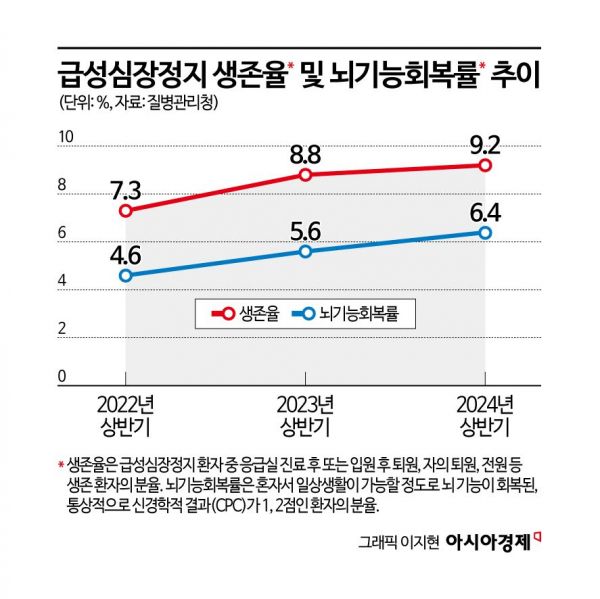
The number of patients who were discharged alive after sudden cardiac arrest (survivors) was 1,527, with a survival rate of 9.2%, up 0.4 percentage points from 8.8% in the first half of the previous year. Additionally, the number of patients who were discharged with sufficient neurological recovery to live independently (neurological recovery cases) was 1,053, with a neurological recovery rate of 6.4%, an increase of 0.8 percentage points compared to 5.6% in the first half of the previous year.
The KDCA explained that the recent upward trend in both survival and neurological recovery rates can be attributed to the increased emphasis on the importance of bystander CPR and emergency care provided by paramedics.
The rate of bystander CPR performed by non-medical personnel and non-paramedics was 30.2% (4,307 cases) in the first half of last year, up 0.4 percentage points from 29.8% in the first half of 2023. When a bystander performed CPR, the patient survival rate was 14.3% (616 survivors) and the neurological recovery rate was 11.4% (493 cases).
In contrast, among the 1,393 cases where bystander CPR was not performed, the survival rate was only 6.4% (89 survivors) and the neurological recovery rate was 3.6% (50 cases). Even among bystanders, when CPR was performed, the survival rate was 2.2 times higher and the neurological recovery rate was 3.2 times higher than when CPR was not performed, once again confirming the critical importance of CPR.
Ji Youngmi, Commissioner of the KDCA, stated, "The upward trend in survival and neurological recovery rates among sudden cardiac arrest patients is an encouraging result associated with increased bystander CPR. CPR plays a decisive role in patient survival and recovery, and the role of bystanders at the scene is extremely important. We will continue to make various efforts, including developing educational materials and promoting awareness, to further expand bystander CPR among the general public."
© The Asia Business Daily(www.asiae.co.kr). All rights reserved.
![Clutching a Stolen Dior Bag, Saying "I Hate Being Poor but Real"... The Grotesque Con of a "Human Knockoff" [Slate]](https://cwcontent.asiae.co.kr/asiaresize/183/2026021902243444107_1771435474.jpg)

















