Japanese-German Pianist Alice Sara Ott to Hold Solo Recitals in Seoul and Daegu
Nine Nocturnes by John Field and Three Beethoven Sonatas to Be Performed
Nocturne means "music suited for the night." The most famous composer of nocturnes is Fr?d?ric Chopin (1810?1849). Chopin composed as many as 25 nocturnes, and especially his Nocturne No. 2 (Op. 9-2) is so iconic that it could be considered the most famous piano piece in history.
When people think of a nocturne recital, Chopin usually comes to mind. However, Japanese-German pianist Alice Sarah Otte will perform a nocturne by John Field (1782?1837) at her solo recital at the Seoul Arts Center Concert Hall on July 8. Irish composer John Field was the founder of the nocturne as a musical genre. Field was the first to name this genre, and Chopin also composed nocturnes under Field's influence. Nevertheless, Field remains relatively unknown.
In a virtual interview ahead of her recital, Otte said, "I first encountered Field's music during the COVID-19 pandemic," adding, "I don't think many people grew up listening to Field's music."
However, she said that her first experience with Field's music was astonishing. "Even though it was my first time hearing it, it felt strangely familiar and evoked a sense of nostalgia."
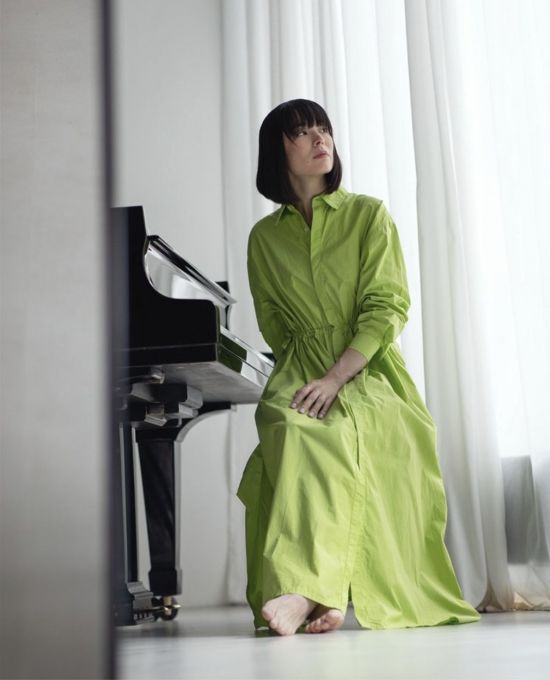
Otte remarked, "Above all, what surprised me most was that listening to Field's nocturnes reminded me of Beethoven." She continued, "There is no record that Beethoven and Field ever met in person, but it is known that they studied under the same teacher. There are several similarities between Field and Beethoven, and I want to showcase those aspects directly on stage."
Otte described Beethoven as the "immortal composer" known to everyone, while Field, though historically significant, is a forgotten figure. For this reason, she said she actually wanted to avoid associating Field with Chopin, who is most famous for his nocturnes.
At her recital, Otte will perform three of Beethoven's piano sonatas and nine nocturnes by John Field.
Beethoven did not compose any nocturnes. This is because the period when John Field established the nocturne as a genre coincided with the latter years of Beethoven's life. However, among Beethoven's 32 piano sonatas, there are pieces that evoke the feeling of a nocturne.
Otte said, "I sensed a similarity between Beethoven's 'Moonlight Sonata' and John Field's 'Nocturne No. 9,'" and explained, "I structured the program around the similarities between those two pieces."
Beethoven's Piano Sonata No. 14, known as the "Moonlight Sonata," is one of the most famous among his piano sonatas. Otte will perform Moonlight as the final piece of her recital. Before Moonlight, she will play four of Field's nocturnes, placing Nocturne No. 9 as the third piece so that it can be compared with Moonlight.
Otte explained that Field's nocturnes possess a colorful array of charms, not only reminiscent of Beethoven but also diverse in character.
"Some of Field's nocturnes are reminiscent of Mozart's slow movements, while others sound like early Haydn or Beethoven sonatas. In certain works, one can feel the color of Chopin's later period. It is truly difficult to describe these pieces as belonging to a single genre. There are endless possibilities for interpretation, and I think that is what keeps these works alive."
Otte described Field's nocturnes as "a sound world that reveals more and more," containing "infinite possibilities, surprises, and beauty."
"One of the most striking features of Field's nocturnes is that they always begin simply and quietly, gradually layering delicate emotions such as sadness, pain, and joy. There are many ornate embellishments and an improvisational feel. While expressing various emotions in subtle ways, the pieces always end in a curious, light manner rather than heavy. After listening, you actually feel your heart become lighter."
Otte also said that her interpretation of Field's nocturnes has changed considerably since she first recorded them.
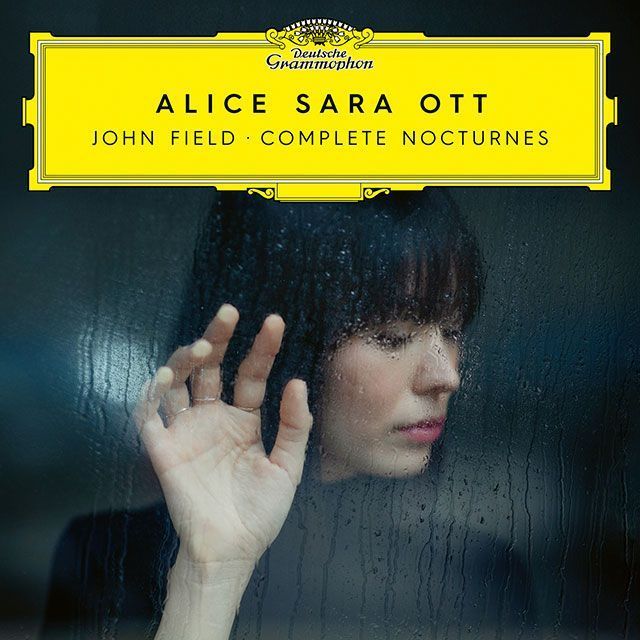
Born to a German father and a Japanese mother, Otte has been an exclusive artist with the German classical label Deutsche Grammophon (DG) since 2008. In February, she released a complete recording of John Field's nocturnes under Universal Music, a DG subsidiary. This was the first time in DG's history, since its founding in 1898, that all 18 of Field's nocturnes were recorded in their entirety.
Otte said she wants to pursue the value of inclusivity through music.
"Music is the only thing in our world that truly puts 'inclusivity' at its core. Rather than highlighting differences, it is an art that focuses on being together. Music must embrace diversity. I hope there will be more inclusivity in everything, not just in music. We need to make more effort to listen to and understand each other's stories. These days, people often insist on their own opinions without really listening to or trying to understand others. I believe that 'listening' and being conscious of and considerate toward each other are among the most important elements in music."
Following her performance at the Seoul Arts Center on July 8, Otte will perform at the Dalseo Art Center in Daegu on July 9.
© The Asia Business Daily(www.asiae.co.kr). All rights reserved.
![Clutching a Stolen Dior Bag, Saying "I Hate Being Poor but Real"... The Grotesque Con of a "Human Knockoff" [Slate]](https://cwcontent.asiae.co.kr/asiaresize/183/2026021902243444107_1771435474.jpg)
















