Housing and Jobs Identified as Main Causes of Youth Outflow
Calls for Practical Solutions Such as Startup Ecosystem and Youth Fund
The Economic Welfare Committee of the Jinju City Council in South Gyeongsang Province defined the outflow of the youth population as a structural crisis during the 2025 administrative audit and emphasized the need for fundamental solutions from the city administration, including the implementation of new policies.
In particular, committee members in charge of youth population policies agreed that there is an urgent need to establish residential and employment infrastructure that would encourage young people to stay. They called for the development of highly practical, tailored policies, securing of budgets, and effective implementation.
Support for housing and jobs was identified as a key solution to reverse the outflow of young people, who are the main driving force of local regeneration.
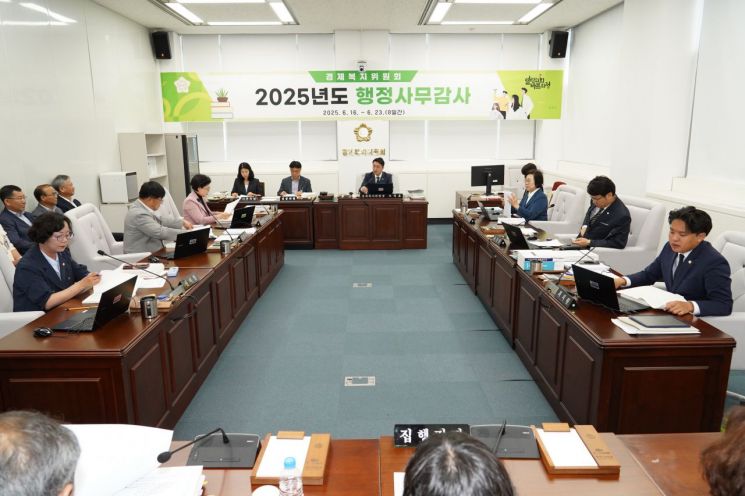
Representative Yoon Seonggwan pointed out the seriousness of the issue, stating, "About 10,000 young people have left the city over the past five years," and suggested the creation of a systematic startup ecosystem centered on the old downtown as a solution. He also referenced the case of Gwanak District in Seoul, emphasizing, "Jinju should also strive to become a 'youth-friendly city' that fosters talent and is attractive for young people to live in."
Representative Kim Hyungseok also stated, "The city should boldly support youth rental housing and take the lead in creating a startup ecosystem in the old downtown," and urged, "Please cooperate organically with departments such as Urban Regeneration, Employment and Economy, and Corporate Trade." The issue of allocating limited resources to the right places was also highlighted as an important budgetary concern.
Representative Yang Haeyoung pointed out, "Population policies remain at the level of top-down national and provincial matching projects," and stressed the need to establish and implement a 'Jinju-style youth population policy' at the level of a comprehensive response to the population crisis in South Gyeongsang, based on professional and in-depth research.
Representative Shin Seokyung noted, "The budget for jobs and income in 2025 has been drastically reduced," and indicated, "As a region at risk of local extinction, bold fiscal investment is now required." She also proposed the creation of preferred jobs for young people, such as digital public sector jobs, through the establishment of a youth fund.
In addition, Representative Choi Hoyoun emphasized the need to improve the childcare environment for newlyweds, including promoting gender-equal parenting participation, organizing family play experience events, and supporting rental housing. Representative Choi Jiweon stated that the outflow of young people is a matter of regional survival, and suggested that Jinju should benchmark policies from other local governments, such as military service injury insurance for young people and administrative internship programs, to encourage them to stay.
According to Jinju's population statistics over the past five years, the elderly population aged 65 and over increased from 59,000 to 70,000, while the population aged 19 to 39 decreased by about 9,000 and those aged 18 and under decreased by about 7,000, resulting in a total population decline of well over 10,000.
Furthermore, from 2022 to April 2025, the population outflow centered on young people amounted to 5,968, with the main reasons being housing, employment, family, and education, in that order.
Economic Welfare Committee Chair Oh Kyunghoon described youth and population issues as critical challenges directly linked to Jinju's future, and requested, "As a newly established department responsible for comprehensive tasks, please ensure perfect cooperation with other departments."
Meanwhile, the Population and Youth Policy Office, newly established at the beginning of this year through organizational restructuring, is serving as the city's control tower for responding to low birth rates and population decline, and this is its first administrative audit.
© The Asia Business Daily(www.asiae.co.kr). All rights reserved.
![Clutching a Stolen Dior Bag, Saying "I Hate Being Poor but Real"... The Grotesque Con of a "Human Knockoff" [Slate]](https://cwcontent.asiae.co.kr/asiaresize/183/2026021902243444107_1771435474.jpg)















