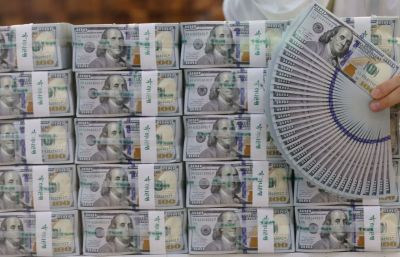
On June 18, iM Securities released a report titled "Conflict Economy and Liquidity," predicting that, even amid the global "conflict economy" phase?characterized by the Russia-Ukraine war, the Israel-Iraq war, and the tariff war initiated by Trump?the trend of major powers increasing liquidity to stimulate their economies will remain favorable for asset markets such as equities.
In the case of the United States, the country is facing external conflicts such as tariff disputes with major countries, the Russia-Ukraine war, and the Israel-Iraq war, as well as internal conflicts including economic policy disputes (tax cuts vs. fiscal deficits), social policy conflicts surrounding illegal immigration, and monetary policy conflicts between President Trump and the Federal Reserve. The more pronounced "America First" policy stance of Trump’s second term is intensifying both domestic and international conflicts, making it unlikely that these tensions will be resolved easily. This will place a burden on the U.S. economy and at the same time increase volatility in the financial markets.
Park Sanghyun, an economist at iM Securities, stated, "The risk of the U.S. economy falling into a recession is not significant, but there is a high probability that a 'lukewarm economic trend' will persist for the time being." He added, "While countries other than the United States are pursuing accommodative fiscal and monetary policies based on price stability, in the case of the U.S., various conflicts are fueling concerns over fiscal risks, making it difficult to implement fiscal and monetary stimulus policies."
It is difficult to expect a rapid rebound in the global trade cycle. This is because the U.S. economy remains stuck in the "conflict economy" phase, and the Chinese economy continues to experience a deflationary phase, characterized by sluggish domestic demand. However, global liquidity is steadily expanding, and there is a high probability that it will continue to increase for the time being.
As for the U.S. Federal Reserve (Fed), there is a strong possibility that it will join the interest rate cut cycle in the second half of the year. The Fed is expected to not only resume the rate cut cycle, but also suspend its quantitative tightening policy, thereby contributing to an expansion of global liquidity. The Bank of Japan announced that it will delay the timing of additional rate hikes and adjust the pace of tapering in order to calm the surge in ultra-long-term government bond yields, particularly the 30-year bond, and to address volatility in interest rates.
Signals of global liquidity expansion can be observed in the rising money supply growth rates of the G3 currencies (U.S., Eurozone, China) and in the recovery trend of the U.S. velocity of money. Global exchange rates, including the dollar, are also contributing to the global liquidity trend. Currently, the exchange rates of major countries are at neutral levels, neither favoring nor disadvantaging any particular country, and this neutral exchange rate environment is reinforcing risk asset preference. Expectations for the activation of the stablecoin market are also seen as a positive factor for global liquidity.
One notable feature of the recent liquidity trend is that, despite the expansion of liquidity, there has not been a significant inflow of funds into the commodity markets?excluding gold and other precious metals. This is attributed to the sluggish Chinese economy, which is a major commodity consumer, as well as the fact that global growth momentum currently lies in technology innovation cycles such as AI. He noted, "There is also a tendency for global funds to favor the stock market relatively more, indicating a selective preference for equities." He summarized, "Although the economic trend is admittedly unsatisfactory, the strengthening of liquidity policies by major countries to stimulate their economies means that the global liquidity trend remains favorable for asset markets."
© The Asia Business Daily(www.asiae.co.kr). All rights reserved.
![Clutching a Stolen Dior Bag, Saying "I Hate Being Poor but Real"... The Grotesque Con of a "Human Knockoff" [Slate]](https://cwcontent.asiae.co.kr/asiaresize/183/2026021902243444107_1771435474.jpg)
















