LG Display Shifts Business Structure to OLED
A Test for Government and Private Sector Investment Sentiment
Will It Become a Catalyst for Revitalizing the Industrial Ecosystem?
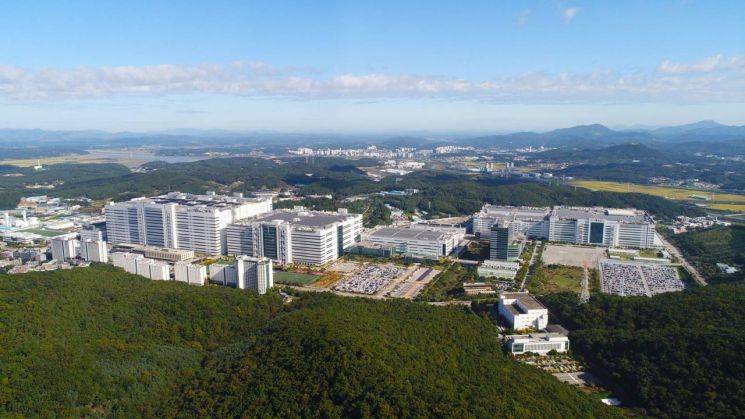
LG Display is investing 1.26 trillion won in its Paju plant to advance next-generation OLED technology. This marks the first trillion-won investment from the private sector since the inauguration of the Lee Jaemyung administration, and it is also a rare large-scale facility investment in the display industry, which has been stagnant for years due to declining profitability. Analysts note that this move goes beyond a single company's strategic decision and is expected to have a significant ripple effect across the domestic manufacturing and electronic components industries.
On June 17, LG Display held a board meeting and decided to invest 1.26 trillion won in OLED facilities at its Paju plant by June 2027. Officially, the purpose is to secure competitiveness in next-generation OLED technology and lay the foundation for premium product manufacturing. However, the core of this investment is closer to a strategic declaration to clearly shift its new growth axis to OLED after moving away from LCDs.
LG Display was once the world's largest LCD manufacturer, but it rapidly reduced its LCD business after 2020 due to price competition from Chinese companies and underwent restructuring. Last year, the company officially signaled its exit from LCDs by selling its Guangzhou LCD plant in China. Since then, the key challenge has been to maintain its technological edge and secure a foundation to respond to growing OLED demand.
This investment in Paju aims not only to advance technology, but also to improve production efficiency and yield, thereby enhancing the cost competitiveness of OLEDs. Notably, it is understood that the investment will also strengthen the company’s ability to produce not only large OLED panels but also small and medium-sized OLEDs for vehicles and IT devices.
Will This Investment Ignite Industry-Wide Activity?
The reason the industry is paying close attention to this decision is that it goes beyond simple facility expansion. The display industry has faced a combination of crises, including cost competitiveness pressures, stagnant demand, and global supply chain disruptions, which have led to reduced investment and shrinking employment. This investment is expected to trigger a series of orders for equipment, parts, and materials companies, and may have a direct impact on employment and related industry revitalization in the Paju region.
Above all, it is symbolic that this is the first trillion-won private investment under the Lee Jaemyung administration. While the government has set industrial advancement and fostering high-tech manufacturing as national policy goals, actual large-scale investments by private conglomerates have stalled amid global uncertainty and high interest rates. LG Display's decision is seen as a case where the private sector has taken the initiative in industrial transformation, and it could serve as a signal for other electronics, materials, and equipment companies to regain investment confidence.
An industry official commented, "It is highly symbolic that a meaningful large-scale investment has emerged in the display sector, which has received relatively less policy attention compared to semiconductors and secondary batteries," adding, "This decision could serve as a catalyst to spur high-value investment across the entire industry."
OLED Growth Is Clear... Securing Technological Superiority Is Key
Some analysts suggest that this investment is rooted in LG Group Chairman Koo Kwangmo's 'selection and concentration' strategy. LG Display has recently undergone workforce restructuring, reallocating some employees to more profitable affiliates such as LG Innotek. At the same time, the company is boldly investing capital in core technology areas like OLED, where future profits are expected, accelerating a business restructuring approach that focuses resources on promising sectors. The 1.26 trillion won investment by LG Display is seen as a symbolic step showing this strategy has entered the implementation phase.
According to market research firm Omdia, the global OLED market is expected to grow from about 76 trillion won in 2023 to over 100 trillion won by 2028. In contrast, the LCD market is forecast to see only minimal annual growth of around 1% during the same period. OLED demand is expanding beyond large TVs to include laptops, tablets, and automotive displays.
However, the clear growth trend does not automatically guarantee profitability. OLEDs still have high manufacturing costs and complex production processes, making yield improvement and cost reduction key challenges. The significance of this investment lies not just in expanding capacity to meet demand, but in initiating a structural transformation that pursues both technological superiority and production efficiency. LG Display is striving for differentiation through high-brightness, low-power OLEDs and innovative form-factor displays, aiming to expand its share in high-value markets based on premium technological competitiveness.
The display industry has been relatively neglected compared to national core industries such as semiconductors and secondary batteries. After LCD-centric production shifted to China, the domestic share of manufacturing continued to decline, and the industry ecosystem gradually eroded as a result.
This investment in Paju could strengthen the function of domestic production bases and serve as an opportunity to restore a technology-centered manufacturing ecosystem. There is a growing need for the government to clearly define displays as an advanced industry and to specify its support policies. Especially as the convergence of semiconductor and display technologies accelerates at this point in time, the strategic value of display technology is being re-evaluated.
LG Display CEO Jeong Cheoldong stated, "This year will be a year of not just recovery, but of taking a leap forward," adding, "We will lead the market with LG Display's differentiated technology." Attention is now focused on whether LG Display's latest move will become the first step toward restoring balance and dynamism across the entire industrial ecosystem, beyond simply achieving short-term business recovery.
© The Asia Business Daily(www.asiae.co.kr). All rights reserved.
![Clutching a Stolen Dior Bag, Saying "I Hate Being Poor but Real"... The Grotesque Con of a "Human Knockoff" [Slate]](https://cwcontent.asiae.co.kr/asiaresize/183/2026021902243444107_1771435474.jpg)















