Reviewing Export Restrictions on Semiconductor Equipment for Smartphones and Automobiles
The Wall Street Journal (WSJ) reported on June 16 (local time) that the U.S. Department of Commerce had considered new semiconductor export restrictions against China ahead of the U.S.-China trade talks held in London, United Kingdom, on June 9-10.
According to sources familiar with the matter, the measures reviewed by the Commerce Department at that time included broad restrictions on the sale of semiconductor manufacturing equipment. If the negotiations had failed, the export ban would have extended beyond advanced chip production equipment to include even routine semiconductor manufacturing equipment.
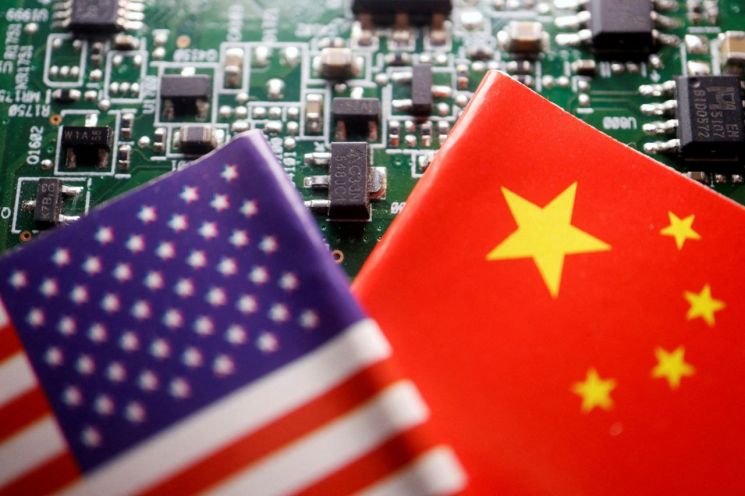
WSJ explained that such a decision could impact the semiconductor supply chain necessary for the production of all products from smartphones to automobiles, and could affect billions of dollars in revenue for major equipment companies such as Applied Materials, Lam Research, and KLA. Approximately 40% of the most recent fiscal year revenues for Applied Materials, Lam Research, and KLA came from China.
The United States and China held their second round of high-level trade talks in London, United Kingdom, on June 9-10. While the specific details of the agreement were not disclosed, both countries agreed to develop a framework to implement the agreements reached at the first Geneva meeting. President Trump announced that agreements had been reached regarding China's supply of rare earth elements to the United States and the admission of Chinese students to the United States.
However, trade tensions between the U.S. and China have not been fully resolved. China has imposed a six-month limit on the sale of rare earth elements to U.S. automobile manufacturers. This measure is intended to secure bargaining power in the event that trade conflicts resurface.
A White House official told WSJ that such restrictions were discussed as an option in case trade negotiations with China did not proceed smoothly. The official did not comment on whether these measures would remain an option in the future.
Semiconductor regulations are one of the core issues in U.S.-China trade negotiations. Most semiconductor manufacturing equipment is produced by companies in the United States, the Netherlands, and Japan, giving the West significant leverage. Dmitri Alperovitch, CEO of the U.S. think tank Silverado Policy Accelerator, stated, "This is the most powerful weapon we have in the economic war with China," and added, "If we are going to play this card, now is the right time."
The previous administration under President Joe Biden considered broad restrictions on semiconductor manufacturing equipment but ultimately decided to focus on advanced chip sanctions, according to sources. The second Trump administration is introducing new measures to hinder China's artificial intelligence (AI) industry, following the Biden administration's regulatory actions. However, there are differing opinions within the Trump administration, with some advocating for stricter measures and others emphasizing the need to encourage U.S. exports.
At a recent U.S. House Foreign Affairs Committee hearing, Jeffrey Kessler, Director of the Bureau of Industry and Security (BIS) at the Commerce Department, stated that they are conducting a comprehensive review of strategically important products. In response to questions from lawmakers calling for additional measures on China's semiconductor industry, he said, "We are confident that we will continue to act in that area," and added, "We must ensure that our controls remain effective."
Semiconductor equipment companies argue that if the United States were to unilaterally implement stringent export restrictions without the consent of other countries, their capacity to invest in research and development (R&D) would be reduced, and overseas competitors could benefit instead. According to sources, since the start of the second Trump administration, BIS has tightened export license approval procedures and has issued very few new licenses. According to the industry, without new export licenses, U.S. companies cannot continue to sell products overseas once existing licenses expire, and foreign customers may turn to manufacturers in other countries.
© The Asia Business Daily(www.asiae.co.kr). All rights reserved.
![Clutching a Stolen Dior Bag, Saying "I Hate Being Poor but Real"... The Grotesque Con of a "Human Knockoff" [Slate]](https://cwcontent.asiae.co.kr/asiaresize/183/2026021902243444107_1771435474.jpg)















