If Israel-Iran Conflict Escalates,
Oil Prices Could Exceed $80 per Barrel
Inflationary Pressure from Rising Oil Prices
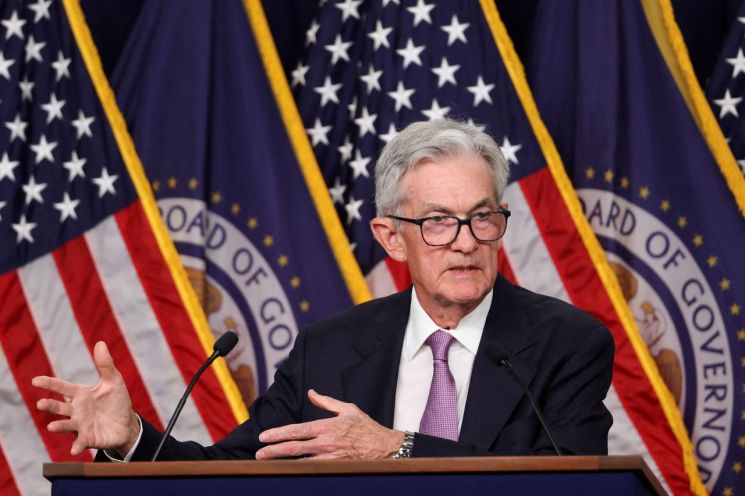
As concerns mount over the potential economic shock from military clashes between Israel and Iran, there are growing expectations that central banks around the world will take a more cautious approach to lowering benchmark interest rates. This is because the uncertainty surrounding global economic growth and inflation trends has increased further, due to the combined effects of the trade war initiated by U.S. President Donald Trump and Israel's airstrikes on Iran. With monetary policy meetings scheduled this week, both the U.S. Federal Reserve (Fed) and the Bank of England (BOE) are widely expected to keep their policy rates unchanged in light of these external risks.
The Financial Times reported on June 16 (local time) that after Israel's attack on Iran, the price of Brent crude, the global benchmark, temporarily rose to $78.5 per barrel before adjusting back to the $73 range. However, the inflationary pressures stemming from higher oil prices are constraining central banks' decisions to cut rates.
CNN also reported, "Now, there is another factor that could delay rate cuts: the conflict between Israel and Iran."
Analysts predict that if hostilities between the two countries intensify, oil prices could surpass $80 per barrel. They noted that this could provide grounds for the Fed to postpone rate cuts, even though inflation has recently eased somewhat. The Bank of England, which lowered its policy rate by 0.25 percentage points in May, is also likely to keep rates unchanged at the current level of 4.25% at this meeting.
This is due to concerns about inflation. Oil prices are a key variable influencing inflation, as a significant portion of the U.S. Consumer Price Index (CPI) is linked to energy and transportation costs. Therefore, if oil prices surge, the Fed may have no choice but to hold off on rate cuts until price stability is confirmed. Previously, economic indicators related to prices and employment released in May signaled that if the Fed were to adjust rates, it should lean toward a cut. This is because the May inflation index unexpectedly stabilized and the U.S. job market showed signs of slowing.
Torsten Slok, Chief Economist at Apollo Global Management, said, "The trade war raises prices and reduces sales. What has offset this so far has been falling oil prices," adding, "However, if oil prices rise, the impact on the economy could become similar to that of the trade war."
From another perspective, rising oil prices could reignite inflation and increase production costs for companies, leading to reduced investment and hiring, and ultimately causing an economic slowdown. For the Fed, this creates a policy dilemma: even if it wants to lower rates to stimulate the economy, inflationary pressures make it difficult to decide on a rate cut.
The Financial Times assessed, "The conflict between Israel and Iran will make it even harder for the Fed to balance its dual mandate of pursuing price stability while also supporting employment."
However, some economists pointed out that Brent crude prices are still lower than at the beginning of the year, and predicted that the Fed and the Bank of England are likely to place more weight on domestic economic indicators such as employment and inflation than on oil price movements. They expect the Fed to make cautious decisions after continuously monitoring inflation and employment data, rather than rushing into a rate cut. As a result, additional rate cuts are now expected to be possible only toward the end of the year.
Robert Sockin, Chief Global Economist at Citigroup, told CNN, "Fed officials are not rushing to cut rates yet, as they are uncertain about the impact of tariffs on the economy," adding, "However, if the upside risks to inflation increase, rate cuts may ultimately only happen toward the end of the year."
© The Asia Business Daily(www.asiae.co.kr). All rights reserved.
![Clutching a Stolen Dior Bag, Saying "I Hate Being Poor but Real"... The Grotesque Con of a "Human Knockoff" [Slate]](https://cwcontent.asiae.co.kr/asiaresize/183/2026021902243444107_1771435474.jpg)















