According to a survey by the Korean Dementia Association, 90% of Koreans say they "fear dementia"
Rising social costs of dementia... Early treatment needed to prevent progression to severe dementia
As South Korea enters a super-aged society, it has been found that 9 out of 10 Koreans strongly empathize with the burden and fear of dementia. There have also been calls for the new government to actively pursue policies for the early treatment of dementia in order to delay the progression to severe dementia.
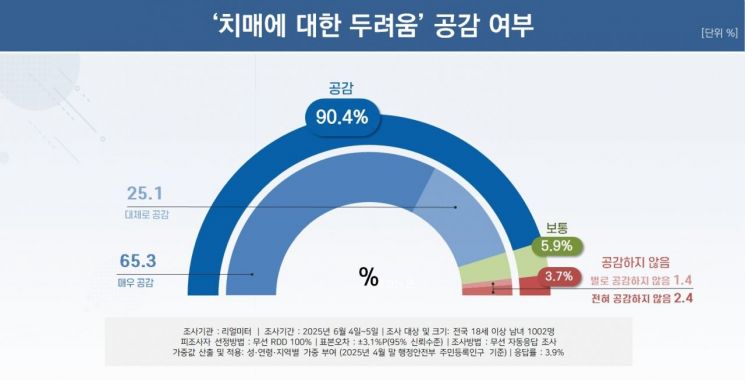
On June 16, the Korean Dementia Association, together with Realmeter, surveyed 1,002 men and women aged 18 and older nationwide on "Awareness of Dementia and Policy Demand for Early Dementia Treatment in a Super-Aged Society." The results showed that 90.4% of respondents expressed empathy with the fear and burden of dementia. By age group, those in their 40s and 60s showed the highest rates at 94.9% and 94.0%, respectively.
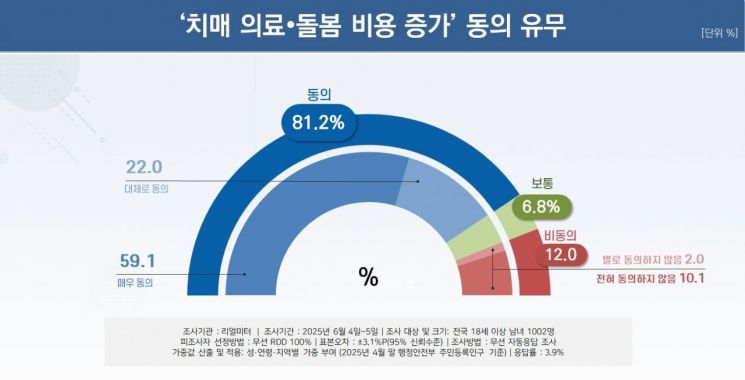
As Korea has entered a super-aged society, 81.2% of respondents agreed that "social medical and care costs due to severe dementia are increasing." According to the Health Insurance Review and Assessment Service's statistics on frequently occurring diseases, Alzheimer's dementia accounted for the highest health insurance medical expenses for inpatient treatment last year, with a total of 1.8694 trillion won spent. About half of the families of dementia patients cited the economic burden of care as their greatest difficulty.
Despite the high level of fear regarding dementia, only 27.7% of respondents said they were "well aware" of "mild cognitive impairment," the precursor to Alzheimer's dementia, which accounts for the majority of dementia cases. Awareness of the term "mild cognitive impairment" itself was 77.9%. Compared to a similar survey three years ago, when 41.3% responded that they had "heard of it," this suggests that social awareness and understanding are gradually spreading.
Mild cognitive impairment refers to a "high-risk group for dementia" in which some cognitive impairment, a symptom of dementia, has already occurred. While about 1-2% of healthy individuals progress to dementia each year, 10-15% of those with mild cognitive impairment progress to dementia. Mild cognitive impairment is a stage in which cognitive decline, such as memory loss, is confirmed through testing, but most individuals can still carry out independent daily activities. Intervention at this stage is known to be a critical period for delaying or preventing progression to severe dementia.
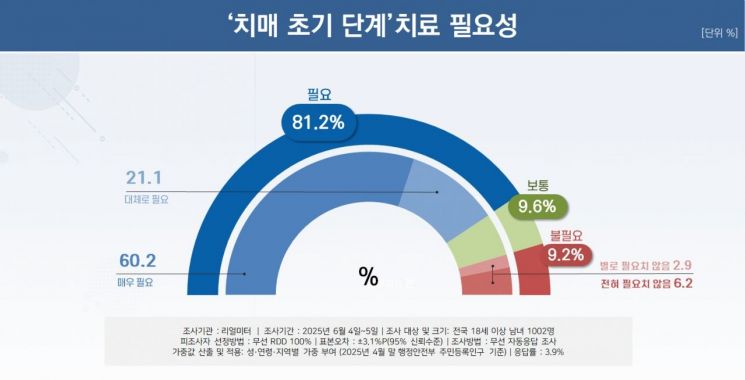
Regarding the need for treatment to prevent progression from early stages such as mild cognitive impairment to severe dementia, 81.2% of survey respondents agreed. In particular, 85.5% of those with a family member or acquaintance with dementia agreed on the need for early-stage treatment, showing a relatively higher level of empathy compared to respondents without a dementia patient among their family or acquaintances (77.9%). In addition, 81.5% of respondents answered that "active government support, such as coverage by national health insurance, is necessary for such new dementia drug treatments."
As the number of dementia patients rapidly increases, the growing social burden of medical and care costs has led to differences in perceptions regarding the need for health insurance coverage for new dementia drugs. Among respondents who empathized with the issue of social burden, 83.7% agreed on the need for health insurance coverage for new dementia drugs, while 75.1% of those who did not empathize with the social burden issue agreed, showing a relatively lower rate.
Additionally, 78.3% of respondents agreed with the goal of reducing national suffering and care costs caused by severe dementia, and said that "the new government should pursue more proactive dementia management policies focused on supporting diagnostic tests and new drug treatments at the early stages, such as mild cognitive impairment."
Choi Sunghye, president of the Korean Dementia Association and professor of neurology at Inha University Hospital, said, "Based on the various policy recommendations that have been discussed in society so far, the new government's national agenda and the 5th Comprehensive Dementia Management Plan will dramatically shift the paradigm of dementia policy. We will actively cooperate to ensure that these become practical policies that the public can truly feel in their daily lives."
© The Asia Business Daily(www.asiae.co.kr). All rights reserved.
![Clutching a Stolen Dior Bag, Saying "I Hate Being Poor but Real"... The Grotesque Con of a "Human Knockoff" [Slate]](https://cwcontent.asiae.co.kr/asiaresize/183/2026021902243444107_1771435474.jpg)

















