Israeli Airports and Iranian Foreign Ministry Building Also Hit
Head of Iranian Intelligence Confirmed Dead Amid Widespread Clashes
Israel and Iran have continued their armed conflict for a third consecutive day, launching airstrikes on each other's key regions, including their respective capitals. As sirens and explosions persist in cities across both countries, military actions are increasingly resulting in civilian casualties. Although U.S. President Donald Trump has urged both sides to refrain from further escalation, Israeli Prime Minister Benjamin Netanyahu has made it clear that he has no intention of halting the hostilities, raising international concerns that the crisis could be prolonged.
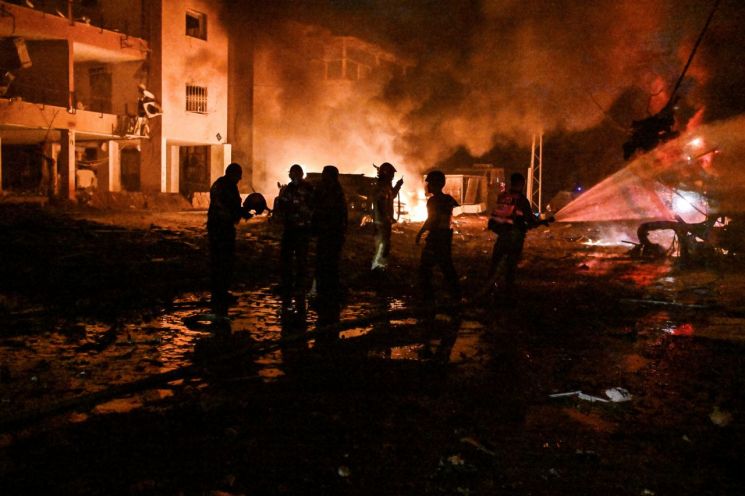
According to Iranian local media on June 15 (local time), explosions were heard around Valiasr Square in central Tehran at around noon Tehran time, and a series of explosions occurred again in northern Tehran at about 3:30 p.m. Witnesses reported that "projectiles, such as missiles, fell in the area."
Local media reported that the Tehran police headquarters was targeted in the airstrikes, along with buildings related to the intelligence ministry. No casualties have been reported yet. The Iranian foreign ministry building was also attacked. Saeed Khatibzadeh, Iran's Deputy Foreign Minister, stated on social media platform X in the evening that Israel attacked one of the Iranian foreign ministry buildings, injuring several civilians, including diplomats.
About an hour after Israel's airstrike on central Tehran, Iran's state-run IRNA news agency reported that "a new large-scale missile attack has been launched targeting Tel Aviv, Ashkelon, and Haifa in Israel." Air raid sirens sounded in these Israeli cities, and the Israeli military claimed to have intercepted most of Iran's ballistic missiles, resulting in no damage. This was the first time Iran has attacked Israel during daylight hours.
The exchange of attacks continued into the night. Iran's Islamic Revolutionary Guard Corps announced in the evening that it had launched missiles toward Israel, according to Iran's Fars News Agency. The Iranian military issued a warning on state television, advising Israeli citizens to "stay in or avoid important areas."
AFP and Reuters reported that explosions and sirens were heard in Tel Aviv and Jerusalem during the evening. Northern Haifa was also hit by airstrikes, causing fires in several buildings.
The Israeli military stated that its defense systems were activated after identifying missiles launched from Iran in the evening, and that "citizens were instructed to enter protected spaces and remain there until further notice as the alarms sounded."
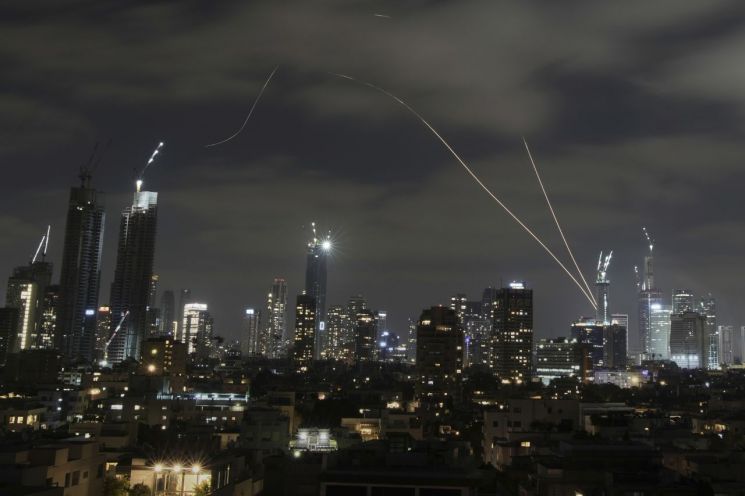
The Israeli military announced that it had conducted extensive airstrikes on various Iranian military and nuclear facilities, attacking more than 150 targets over a 40-hour period. According to CNN, Israel also struck key Iranian energy infrastructure, including the South Pars and Shahran oil storage facilities.
The Israeli military targeted not only Tehran but also Mashhad Airport in northeastern Iran. Satellite images confirmed that a Boeing 707 tanker stationed in the Mashhad military zone was destroyed. The New York Times reported that this demonstrates Israel's ability to conduct operations deep inside Iranian territory. The Israeli military stated, "We have secured air superiority over a significant portion of Iranian airspace."
As clashes between the two sides continued, casualties have sharply increased. Iranian health authorities announced that 224 people have died from Israeli attacks over the past three days, including senior security officials, nuclear scientists, and civilians. In particular, airstrikes on residential areas in central Tehran have resulted in numerous injuries among women and children. Tasnim News Agency reported that Mohammad Kazemi, head of the Revolutionary Guard's intelligence unit, and two of his aides were among three people killed in Israel's attack on Tehran that day.
In Israel, at least 13 civilians have died as a result of Iran's retaliatory attacks, with five Ukrainian nationals among the victims in Bat Yam, according to the Wall Street Journal. Magen David Adom, Israel's civilian rescue agency, reported that seven injured people were transported to hospitals in the northern region immediately after recent airstrikes, with some being treated for anxiety symptoms and smoke inhalation.
In the Iranian capital Tehran, mass evacuations continued. According to traffic police chiefs and residents, roads leading out of Tehran were packed with vehicles, long lines formed at gas stations, and citizens carrying suitcases were seen struggling to hail taxis, the New York Times reported.
As military clashes escalated, U.S. President Donald Trump stated that "calls and meetings are ongoing," urging both sides to engage in negotiations.
However, Israeli Prime Minister Benjamin Netanyahu stressed, "What is needed now is not de-escalation, but to prevent Iran from developing nuclear weapons," making it clear that Israel has no intention of stopping or withdrawing from the hostilities.
Meanwhile, Ursula von der Leyen, President of the European Commission, after a phone call with Israeli Prime Minister Netanyahu, pointed to Iran as responsible for regional instability and stated, "Israel has the right to defend itself." She reiterated concerns about Iran's nuclear and ballistic missile programs, emphasizing that "the same missiles are falling not only on Israel but also on Ukraine," and called for an urgent negotiated solution. According to Reuters, EU High Representative for Foreign Affairs and Security Policy Kaja Kallas has urgently convened a virtual meeting of EU foreign ministers on June 17 to discuss the Middle East crisis.
© The Asia Business Daily(www.asiae.co.kr). All rights reserved.


















