Luxury Liquor Consumption Declines as Government Entertainment Expenses Are Restricted
Prices Halved... Sales Growth Stalls
As Chinese authorities tighten control over government spending, Guizhou Maotai, the world's largest liquor company known as the "King of Famous Liquors," has been directly hit.
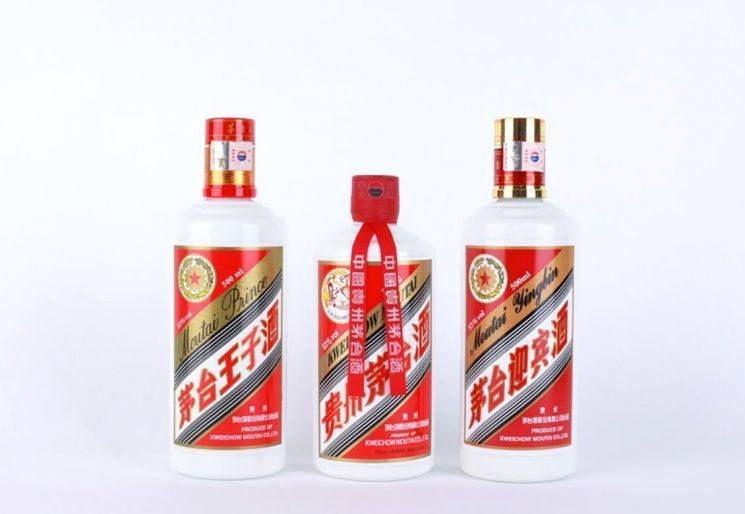 Guizhou Maotai, the world's largest liquor company, was directly hit by the Chinese authorities' stringent tightening measures.
On June 13, the South China Morning Post (SCMP) reported that Maotai's sales are inevitably being directly impacted after the Chinese government banned luxury liquor entertainment in a revised "Regulation on Practicing Thrift and Opposing Waste in Party and Government Institutions" announced last month.
The amended regulation strictly prohibits the provision of luxury cuisine, cigarettes, and liquor at official banquets, meetings, and business trips, and also strictly limits expense spending based on market prices. Official vehicles are restricted to domestic and new energy vehicles, and overseas business trips are only allowed within budget limits.
Maotai has traditionally been a premium liquor favored by senior Chinese Communist Party officials, becoming a symbol of power and a means of flaunting wealth after Mao Zedong and Zhou Enlai used it to entertain foreign guests. In particular, 20- to 25-year-aged products, which are worth several million won, have also been used as bribes.
However, following President Xi Jinping's anti-corruption campaign, Maotai was identified as a symbol of corruption, leading to a decline in demand. The price of 25-year-old Maotai recently fell below 2,000 yuan (about 380,000 won), which is only half the level seen during its boom period.
Soochow Securities has forecast that Maotai's double-digit sales growth, which has continued for several years, will come to a halt this year. In response, Maotai Chairman Zhang Deqin stated at an internal meeting on June 10 that, "As a state-owned enterprise, we will thoroughly implement the policy of eradicating waste," indicating the company's intention to strictly follow the government's direction.
SCMP analyzed that, as Chinese local governments suffering from fiscal difficulties enter an era of austerity, Maotai has no choice but to shed its past image of luxury and work on restructuring its business. Maotai's current market capitalization stands at about 1.86 trillion yuan (approximately 353 trillion won).
Foreign media have evaluated the new "Regulation on Practicing Thrift and Opposing Waste in Party and Government Institutions" as a reaffirmation of President Xi Jinping's campaign to reduce government spending. Currently, China is facing a reduction in central government budget due to decreased land sale revenues, while local governments are burdened with massive debt.
© The Asia Business Daily(www.asiae.co.kr). All rights reserved.
![Clutching a Stolen Dior Bag, Saying "I Hate Being Poor but Real"... The Grotesque Con of a "Human Knockoff" [Slate]](https://cwcontent.asiae.co.kr/asiaresize/183/2026021902243444107_1771435474.jpg)















