Raccoons Spotted Throughout Gwangju's Apartments and Alleys
"High Risk of Infection... Never Touch Them"
Raccoons have been repeatedly spotted in downtown Gwangju. As they can transmit various infectious diseases such as rabies, caution is advised.
According to Yonhap News on June 12, at around 5:20 a.m. on June 10, a raccoon was captured on CCTV in the middle of Chungjangro, Dong-gu, Gwangju.
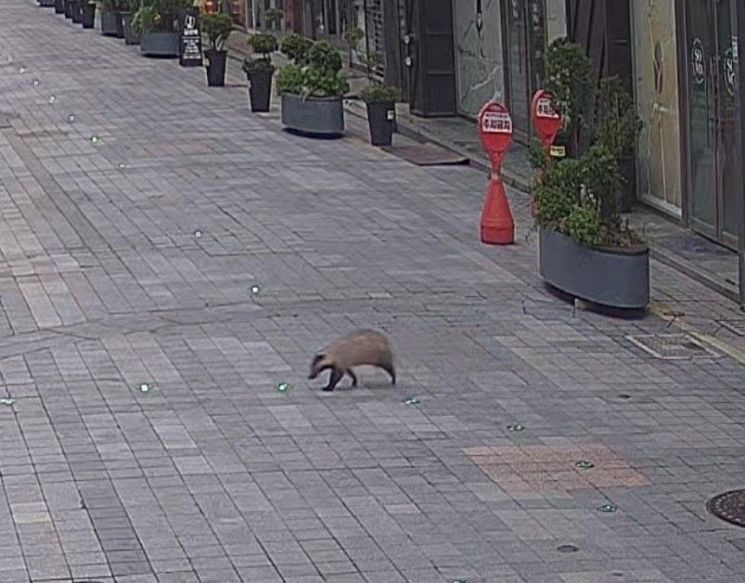
The raccoon wandered along the street for some time, rummaged through trash placed in front of a nearby restaurant, and then disappeared. It is presumed that the raccoon usually lives in Gwangjucheon and Gwangju Park, which are near Chungjangro, and briefly roamed Chungjangro in search of food.
This is not the first time a raccoon has appeared in the city center. On June 1, a raccoon was found in the emergency stairwell on the 10th floor of an apartment building in Gwangsan-gu, prompting a rescue operation by the fire department. There have also been reports of people spotting raccoon families in the apartment complexes of Jangdeok-dong, Gwangsan-gu, an area with many parks.
Wild raccoons typically inhabit the border areas between forests and cities, but as urbanization progresses rapidly and their natural habitats are destroyed, cases of raccoons entering urban areas are increasing. Cities like Gwangju, which have many rivers and parks, are particularly likely to become main travel routes for raccoons. Raccoons are omnivorous, feeding on insects, fish, birds, and even garbage, and are known to be quickly adapting to urban environments.
The problem is that raccoons are high-risk wild animals that can transmit infectious diseases such as rabies and mange. An official from the Gwangju Wildlife Rescue and Management Center said, "Since last year, the number of raccoons reported for rescue has increased rapidly. Because wild animals can carry many parasites, you should never touch them, even out of curiosity. If you find a raccoon that appears injured or in urgent need of treatment, please report it immediately."
© The Asia Business Daily(www.asiae.co.kr). All rights reserved.
![Clutching a Stolen Dior Bag, Saying "I Hate Being Poor but Real"... The Grotesque Con of a "Human Knockoff" [Slate]](https://cwcontent.asiae.co.kr/asiaresize/183/2026021902243444107_1771435474.jpg)















