Total Budget Reaches 8.085 Trillion Won, Up 6.3% from Original
Strategic Fiscal Investment to Support Citizens' Lives and Prepare for the Future
Accelerating Four Key Initiatives: Livelihood Economy, Future Investment, and More
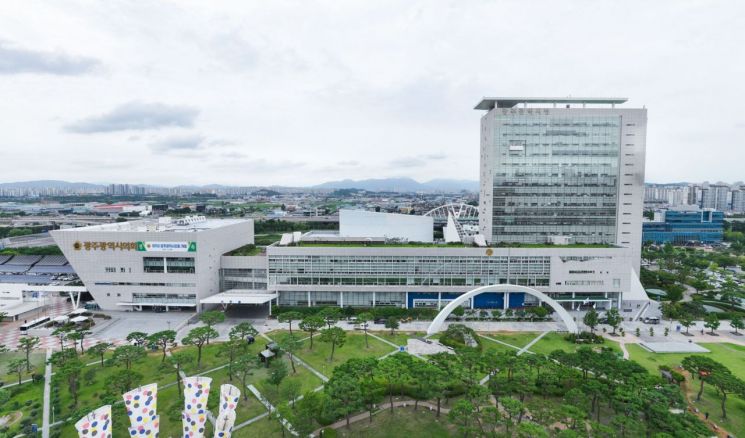
On June 13, Gwangju City announced that it has allocated 480.7 billion won for its first supplementary budget of 2025 and submitted it to the Gwangju City Council. With this supplementary budget, the city's total annual budget has increased by 6.3% from the original 7.6043 trillion won to 8.085 trillion won.
The city explained that this supplementary budget has been precisely allocated to four key areas: a warmer livelihood economy, more prepared future investments, more comprehensive care and community, and a more prosperous Gwangju. Through these allocations, the city aims to accelerate the implementation of municipal policies in the second half of the year.
Taking into account the challenging local economic conditions, the city is focusing on alleviating the burden on major economic players and stimulating consumption through measures such as: mutual benefit card discounts (13.4 billion won), interest support for special guarantees for small business owners (2.4 billion won), management stabilization funds for SMEs (4 billion won), industrial restructuring funds (10 billion won), export promotion funds (2 billion won), temporary special support for youth monthly rent (2.1 billion won), deposit return guarantee fees (500 million won), and revitalization of traditional markets (1.5 billion won).
To foster AI (artificial intelligence) industries and companies, which are key future growth engines, the city has allocated funds for: computing resource support for the AI convergence complex (980 million won), establishment of K-Health national medical AI services and industrial ecosystem (1.11 billion won), establishment of an AI-converged intelligent agriculture ecosystem in the Honam region (370 million won), and hosting of a global AI conference (260 million won).
For more comprehensive care and community, the budget includes: maternal and newborn health management (540 million won), additional support for Nuri curriculum childcare fees (1.1 billion won), infant and toddler childcare fees (21.7 billion won), provision of part-time childcare services (150 million won), Gwangju-style postpartum care support (20 million won), and support for high-risk groups of youth living in isolation (40 million won).
Additional funding will also be invested in core transportation and environmental infrastructure to realize a carbon-neutral city. The city has allocated an additional 4.9 billion won for the 'G-Pass' public transportation fare reimbursement service, which plays a major role in shifting from a car-centered city to one focused on public transportation, bicycles, and walking. A budget of 200 million won has also been set aside for a pilot project to establish bicycle villages near the Yeongsan River.
In preparing this supplementary budget, the city focused on enhancing fiscal efficiency and soundness. Each department thoroughly reviewed all projects from scratch, boldly adjusting budgets for unnecessary or underperforming projects to improve fiscal management efficiency. In addition, the city secured extra resources by increasing revenue and restructuring expenditures.
In particular, the city reduced its fiscal burden by refinancing high-interest local bonds at lower interest rates. By refinancing 215.5 billion won in local bonds with an average interest rate in the 3% range to lower rates in the 2% range, the city was able to save 38.1 billion won in interest costs.
Lee Byungcheol, Director of Planning and Coordination, said, "This first supplementary budget focuses on the recovery of the local economy and securing essential expenses, even in a difficult fiscal situation, by utilizing some increased revenue, expenditure reductions, and local bond issuance. We will also pursue strong expenditure restructuring in each department to minimize costs wherever possible and ensure that the budget is used efficiently where it is most needed."
© The Asia Business Daily(www.asiae.co.kr). All rights reserved.
![Clutching a Stolen Dior Bag, Saying "I Hate Being Poor but Real"... The Grotesque Con of a "Human Knockoff" [Slate]](https://cwcontent.asiae.co.kr/asiaresize/183/2026021902243444107_1771435474.jpg)
















