Neulbom School Policy Sparked Controversy from the Start Due to Aggressive Implementation
Reebak School Incident Triggers Calls for Abolition
Policy Outcomes Such as Addressing Care Gaps Must Also Be Considered
In the wake of the Reebak School incident, calls have emerged for the abolition of the Neulbom School program. Since its inception, the policy has faced controversy over "excessive administrative burdens" and "shifting responsibility onto schools and teachers." This latest incident has prompted arguments for a fundamental review of the system itself. However, some voices are urging caution, noting that the policy has begun to yield tangible results, such as a reduction in the number of students waiting for after-school care, and questioning whether unconditional abolition is the right approach.

According to the education sector on June 13, demands for the abolition of Neulbom School are spreading, particularly among certain teachers' organizations. The Korean Teachers and Education Workers Union (KTU) stated, "Neulbom School is a failed policy that has lost both professionalism and public value," and called for "the complete abolition of the Neulbom School policy."
From the beginning, Neulbom School was implemented amid concerns from teachers. There were ongoing complaints about the Ministry of Education’s aggressive push to expand the program and the increased administrative burdens placed on teachers outside of regular classes. The program has also been criticized for its haphazard operation. The Seoul Teachers’ Union discovered that one elementary school used Neulbom classroom funds to purchase artwork and sofas, and hired a local cafe owner as an instructor for baking classes. This indicates that problems with instructor recruitment in Neulbom School existed even before the Reebak School incident. The Reebak School incident, which raised suspicions of indoctrinating students with far-right ideology and manipulating public opinion during the presidential election, further fueled the controversy and intensified calls for the abolition of Neulbom School.
The Ministry of Education, along with 17 metropolitan and provincial offices of education nationwide, began investigating the connection between Reebak School and Neulbom School as of June 13. However, the ministry remains cautious about abolishing the policy. The Ministry of Education stated, "We will conduct a comprehensive investigation and make improvements regarding inappropriate instructor recruitment." The ministry emphasized that Neulbom School was introduced not simply as an "after-school program," but as a means to expand the public care system, aiming to "narrow educational gaps" and "reduce the childcare burden on parents." There are also arguments that the policy’s outcomes should be objectively assessed.
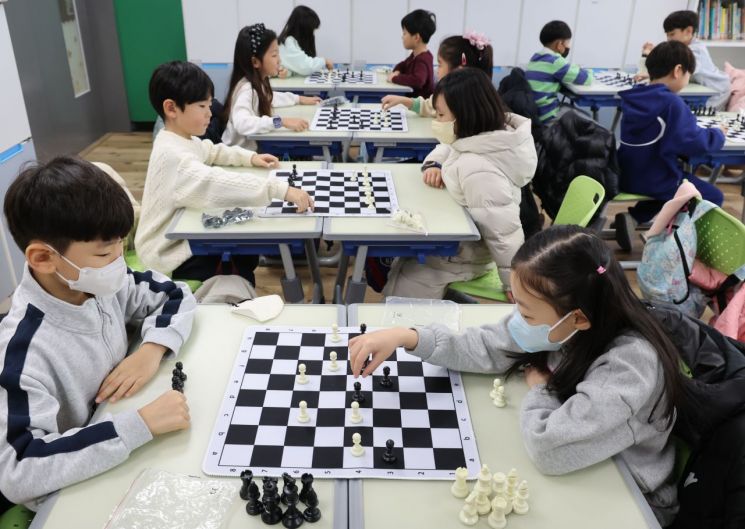
The Korea Educational Development Institute recently reported in its "Neulbom School Outcomes and Challenges" report that, following the implementation of Neulbom School, the number of students on waiting lists for after-school care dropped dramatically from 5,674 in the first semester of 2023 to 8 in March 2024 (with 2,741 schools participating). The report also highlighted positive effects, stating, "In terms of reducing the childcare burden, parental satisfaction was high at 4.1 out of 5 points, and the childcare burden for parents of first-grade elementary students, in particular, was significantly reduced."
© The Asia Business Daily(www.asiae.co.kr). All rights reserved.
![Clutching a Stolen Dior Bag, Saying "I Hate Being Poor but Real"... The Grotesque Con of a "Human Knockoff" [Slate]](https://cwcontent.asiae.co.kr/asiaresize/183/2026021902243444107_1771435474.jpg)

















