Gwangju City Strengthens Strategic Cooperation with Domestic and International Partner Cities
Accelerating Global Advancement through International Exchange in Culture, Economy, and Youth
Gyeonggi Gwangju City is taking a leap toward becoming a sustainable global future city based on practical and strategic cooperation with domestic and international partner cities.
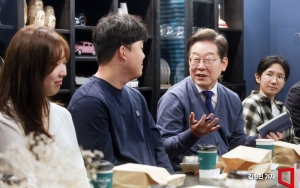
 Gwangju City is taking a leap toward becoming a sustainable global future city based on practical and strategic cooperation with domestic and international partner cities. Photo by Gyeonggi Gwangju City
According to Gwangju City on June 12, the city has steadily promoted exchange and cooperation in various fields such as education, sports, arts, and agriculture with a total of 10 partner cities, including Zibo in China (since establishing a sister-city relationship in 2003), Ha Long in Vietnam, and domestic cities such as Donghae, Goheung, Gangnam, Taebaek, Shinan, Boeun, Buyeo, and Andong, as well as with 15 other associated cities.
In particular, starting from the second half of this year, the city plans to launch practical international cooperation projects focusing on culture, youth, and the economy. Through these efforts, the city aims to enhance its urban competitiveness, provide citizens with broader opportunities, and lay the foundation for becoming a global city that grows together with the world.
To this end, the city will expand its signature festivals, the Toechon Tomato Street Festival and the Gwangju Royal Ceramic Conference, into international exchange events. The city will invite partner cities to operate joint booths and organize arts exchange programs. Especially in the field of ceramic arts, the city plans to strengthen the professionalism and international status of the festival through collaborative exhibitions and academic exchanges with overseas artisans and artists.
In addition, the city will expand its international youth exchange programs, offering both mutual visit programs and online exchange programs that allow direct experience of diverse cultures and languages. These efforts aim to nurture global talent and broaden intergenerational communication and understanding through culture- and arts-centered interactive programs.
In the field of agricultural specialties, the city will establish distribution agreements with partner cities and build an online distribution system, enabling the purchase of fresh local products without the need for on-site visits. This will not only promote mutual publicity and expand sales channels between regions, but also seek co-growth of the regional economy.
Furthermore, the city plans to expand its global exchange network and enhance its international status by pursuing new exchanges with Milpitas in the United States and Kyoto in Japan.
Mayor Bang Sehwan emphasized, "We will strengthen the city's competitiveness and provide citizens with more global opportunities through practical exchanges and cooperation," adding, "We will build Gwangju into a core global city that grows together with its citizens and the world."
Meanwhile, detailed information on this e-policy communication can be found on the official YouTube channel of Gwangju City Hall.
© The Asia Business Daily(www.asiae.co.kr). All rights reserved.