Three Key Strategies and 18 Action Plans for Labor Environment Innovation
Gwangjin District in Seoul has established the "2025 Labor Policy Implementation Plan" and is making efforts to build a sustainable labor market.
This year, the employment market is expected to see a decrease in both the working-age population and the growth rate of employed persons. In addition, the number of vulnerable workers outside the institutional framework is increasing, which calls for measures tailored to local characteristics.
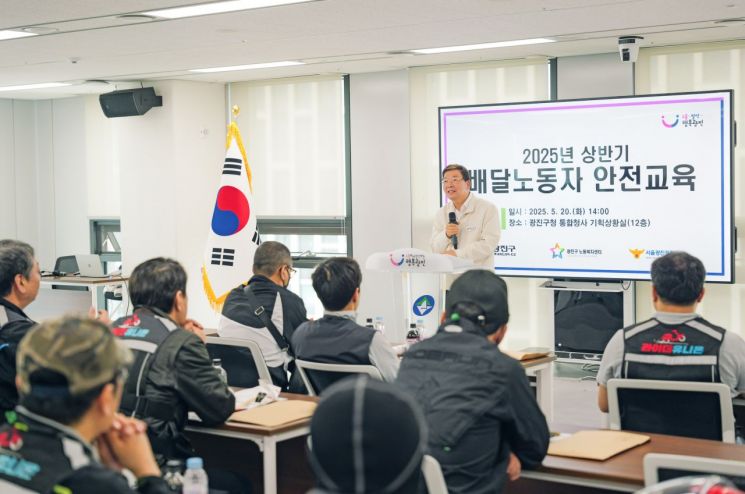 Kim Kyungho, mayor of Gwangjin District, is giving a greeting speech at a delivery workers' training session. Provided by Gwangjin District Office.
The district has set its policy vision as "Gwangjin where working people are happy and respected," and has established three key strategies: creating a safe and healthy working environment; protecting workers' rights and promoting welfare through tailored measures; and strengthening the social safety net for workers in blind spots. Based on this, 18 detailed action plans have been selected to systematically address labor issues.
First, the district is focusing on creating safe workplaces. It will establish a comprehensive plan for the prevention of serious accidents and build an integrated safety and health management system through safety and health activities and inspections. Safety inspections and training will be conducted at public job sites and construction sites where accidents are a concern. The rest areas for security guards and cleaning staff in apartment complexes will also be improved to boost worker morale.
The district is also working to provide tailored protection for workers. The living wage system will guarantee a minimum standard of living for workers, and the Labor Welfare Center will offer services such as labor and legal consultations. Welfare for mobile workers will also be addressed. The "Mobile Workers' Rest Area," which opened in May, is equipped with amenities such as heating and cooling facilities, massage chairs, water purifiers, and phone chargers, making it an oasis for delivery workers and substitute drivers.
The rest area operates with an unmanned security system from 9 a.m. to 10 p.m. on weekdays and is closed on Saturdays, Sundays, and public holidays. The rest area for the early morning labor market, which supports day laborers seeking work in the early hours, has also received a positive response.
The district will also improve the treatment of workers in blind spots. Welfare points and meal allowances will be provided to social workers, childcare teachers, village bus workers, and long-term care institution employees to strengthen the social safety net. By making tangible improvements in working conditions, the district aims to enhance service quality as well as workers' sense of belonging and pride.
Kim Kyungho, mayor of Gwangjin District, stated, "As the economic downturn persists, many workers are facing difficulties. We have prepared Gwangjin-style labor measures that support workers outside the institutional framework and reflect local characteristics and resident demand." He emphasized, "The value of labor deserves respect. We will continue to develop and implement policies that solve complex labor issues and provide practical assistance to vulnerable workers."
© The Asia Business Daily(www.asiae.co.kr). All rights reserved.

















