Healing Through Reading and Meditation in Donghae
Dynamic Experiences and Exploration in Samcheok with the Sea-Tox Journey
Mukho in Donghae, Gangwon Province, literally means "ink lake," referring to a lake as dark as ink. Contrary to the somewhat eerie nuance of its Chinese characters, Mukho has been depicted in novels and films as a romantic and comforting space.
Shim Sangdae, a novelist from Gangneung, published his debut short story "Do You Know Mukho?" in 1990. The protagonist, "I," returns to his hometown Mukho after a divorce to heal from a weary life. Mukho also appears in director Hur Jinho's 2001 film "One Fine Spring Day." The female lead, Eunsoo (played by Lee Youngae), lives in Sambeon Apartment near Mukho Port. The male lead, Sangwoo (played by Yoo Jitae), who dreams of romantic love, visits Eunsoo after her feelings change and asks her against the backdrop of Sambeon Apartment, "How can love change?"
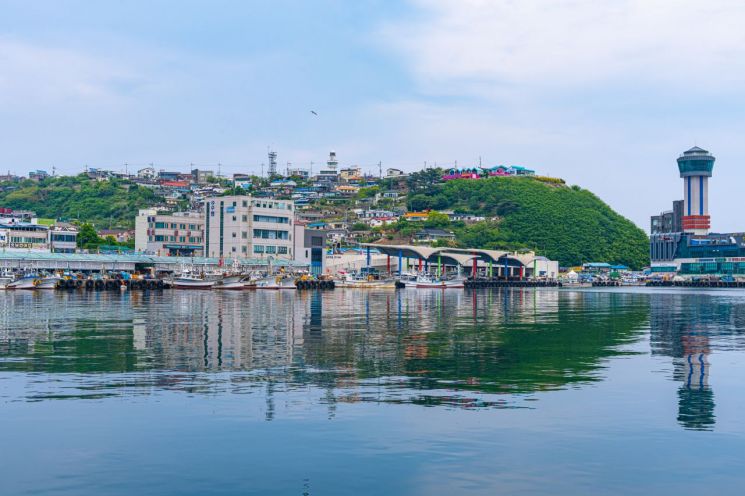
In May, which was designated as the "Month of the Sea," the Korea Tourism Organization introduced the "East Sea Sea-Tox Journey," a travel program that offers romance and comfort against the backdrop of the East Sea. Sea-Tox is a compound word of "sea" and "detox," referring to a journey that restores the body and mind through the East Sea.
The Korea Tourism Organization recruited about 20 participants for each trip and offered a two-day, one-night healing journey in Donghae and Samcheok. In Donghae, the "Horizon Donghae" program provided a tranquil "Shellness" (a blend of "rest" and "wellness") experience along the East Sea horizon, including activities like gazing at the waves and reading. In Samcheok, the "Wave Samcheok" program focused on active experiences for marine detox. On June 12-13, the "Dive, Donghae-Samcheok" program will allow participants to enjoy a day each in Samcheok and Donghae. While the meeting point for "Horizon Donghae" and "Wave Samcheok" in May was Sports Complex Station on Seoul Subway Line 2, the meeting point for "Dive, Donghae-Samcheok" is Gyeongju in North Gyeongsang Province. With the opening of the Gangneung Line in January this year, connecting Gangneung Station and Bujeon Station in Busan, participants will travel to Donghae on the ITX-Maum train.
The Korea Tourism Organization explained that Donghae and Samcheok were selected as Sea-Tox destinations because "the opening of the Donghae Line has improved accessibility, and both Donghae and Samcheok are well-known marine tourist destinations that embody the unique identity and history of each region."
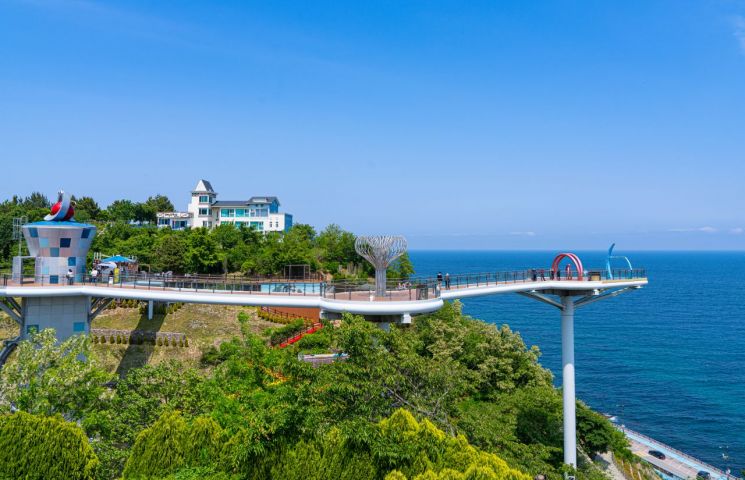 Travelers are enjoying the wide-open East Sea at Dojjaebigol Sky Valley.
 Photo by Jo Youngkwon, provided by Korea Tourism Organization (c)
The number of participants in Horizon Donghae and Wave Samcheok was 23 and 26, respectively. Families, friends, and couples of all ages, from elementary school students to those in their 70s, enjoyed the romantic scenery of the East Sea for two days and one night, soothing and comforting their weary bodies and minds.
Participants in Horizon Donghae explored the 34th section of the Haeparang Trail (Nongoldamgil to Mukho Lighthouse), Mangsang Beach, Dojjaebigol Sky Valley and Haerang Observatory, Hapyeong Beach, Mukho Port, Mukho Market, and the Pencil Museum. They experienced coastal trekking, singing bowl meditation, local tours with a travel writer, and activities like gazing at the sea and reading by the water.
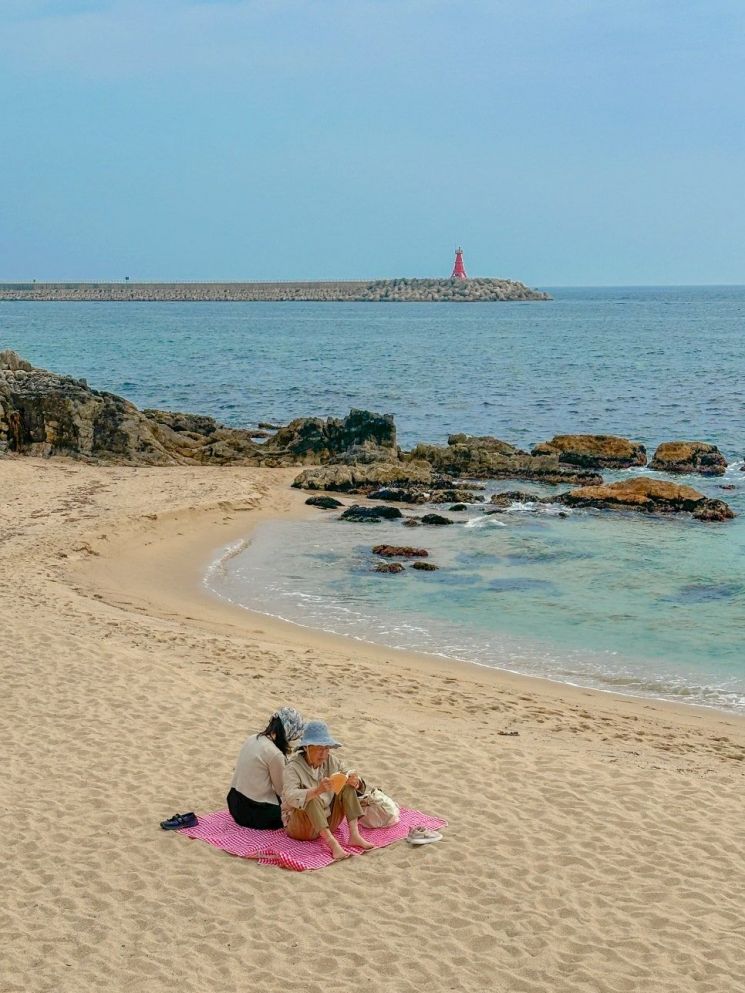
At Dojjaebigol Sky Valley, they enjoyed the thrill of walking on a skywalk with a transparent glass floor, and at the Haerang Observatory, shaped like a goblin's club, they watched the waves of the East Sea beneath their feet. "Dojjaebi" is a dialect word for "goblin" in Gangwon Province. On the white sands of Hapyeong Beach, participants read books they brought or reflected while gazing at the blue sea.
Kim Kwangsoo (male, 45), who participated in Horizon Donghae, said, "Just reading a book and sitting quietly in front of the sea brought me great comfort."
Participants relieved their travel fatigue by enjoying the hot springs at Donghae Boyang Oncheon Hotel. On the morning of the second day, they participated in a singing bowl meditation session at a meditation center with panoramic sea views. Singing bowls, meaning "singing vessels," are meditation tools from the Himalayan region. The local brand tour of Mukho alleys continued with travel writer Chae Jihyung. Participants visited bookstores, cafes, and accessory shops that add charm to Mukho's alleys, and also toured the Pencil Museum, which covers everything about pencils, including their production process and history.
Chae Jihyung, a travel writer who settled in Donghae out of love for the city, shared, "It was a travel program that allowed me to quietly comfort my heart and be immersed in happiness." She added, "I was especially moved when, at the end of the trip, travelers shared their stories about Donghae at the Pencil Museum overlooking Nongoldamgil. It felt as if we were all connected in front of the sea."
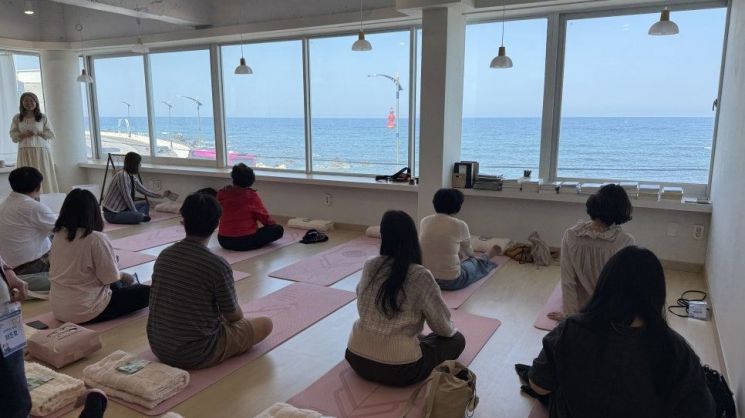 Travelers are experiencing singing bowl meditation while listening to the sound of waves.
 Photo by Korea Tourism Organization
While Horizon Donghae focused on calming activities such as reading and meditation, Wave Samcheok centered on dynamic physical activities. Participants visited Naritgol Sensibility Village, Isabu Dokdo Memorial Hall, Jukseoru, Janghohang Fishing Village, Chogok Yonggul Candle Rock Path, and Deokbongsan Ecological Trail. They enjoyed transparent canoeing, learned hula dancing on the beach, and participated in beachcombing upcycling workshops.
Participants rode transparent canoes at Janghohang Port and admired the scenic beauty of Jangho Beach. With its shallow waters, large and small coastal rocks, and islets, Jangho Beach is often called the "Naples of Korea."
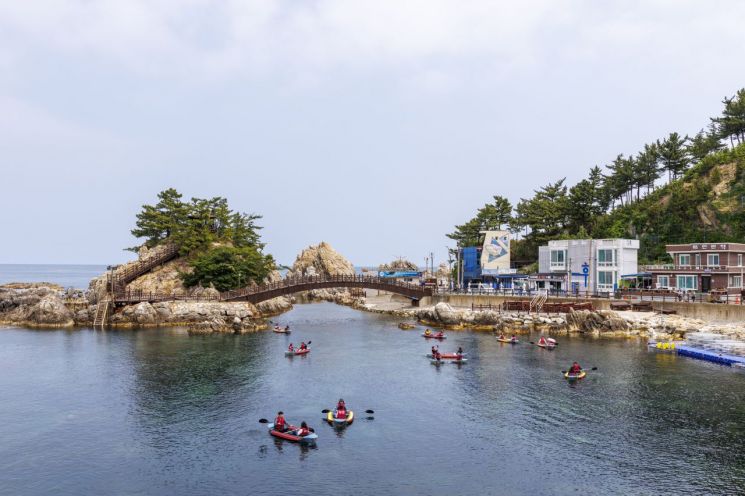 Travelers are enjoying transparent canoes in the clear and transparent Janghohang Port.
 Photo by Son Myungkwon, provided by Korea Tourism Organization (c)
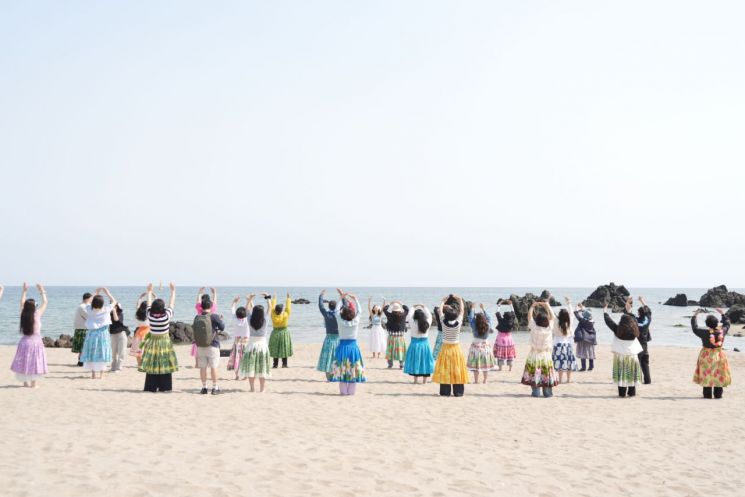 Experiencing Hawaiian hula dance while feeling the sand of Maengbang Beach barefoot
 Photo by Son Myungkwon, provided by Korea Tourism Organization (c)
At Maengbang Beach, participants took a Hawaiian hula class, feeling the fine sand beneath their bare feet. Lee Youngran (female, 54), who learned Hawaiian hula for the first time, said, "Looking out at the blue Samcheok sea from Maengbang Beach, wearing a floral skirt and moving together to the music, I felt incredibly free. It was truly healing."
In addition, participants visited Chogok Yonggul, known as the place where a serpent ascended to become a dragon, Deokbongsan, which was once an island but is now connected to the land by sand and sediment, and Jukseoru, the largest pavilion among the Eight Scenic Views of the East and a national treasure.
The final activity of the trip was a beachcombing upcycling workshop. Using sea glass and shells collected from the beach, participants created their own accessories to forever remember their trip to Samcheok.
The Korea Tourism Organization stated, "In the second half of the year, we will continue to promote tourism in Donghae Line train stop areas, and develop and promote customized marine tourism products and content tailored to each region's characteristics, so that people can enjoy even more diverse and enriching marine tourism experiences in Gangwon Province."
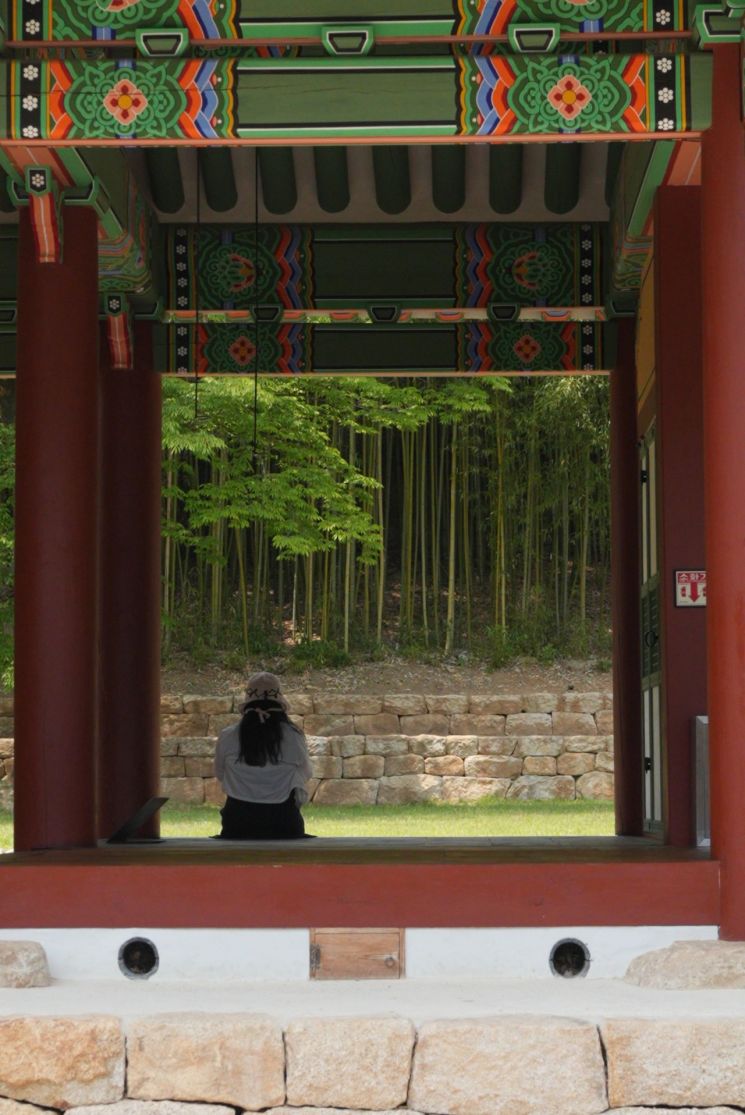 Travelers enjoying the serene scenery of Jukseoru
 Photo by Korea Tourism Organization, (c) Son Myungkwon
Park Soyoung, Cooperation Officer: "From elementary school students to those in their 70s... Creating memories for everyone"
"The composition of participants was diverse, including families, friends, and couples, and the age range spanned from elementary school students to people in their 70s. It seems that the theme of 'East Sea Healing' was appealing to everyone, regardless of age or gender."

Park Soyoung, Gangwon Tourism Cooperation Officer at the Korea Tourism Organization, who planned and prepared the "East Sea Sea-Tox Journey," said she felt proud of the diversity among the participants. She explained that the travel content itself was so attractive that they promoted the East Sea Sea-Tox Journey program without limiting it to any specific group.
Among the various programs, singing bowl meditation and Hawaiian hula in particular stood out as unique experiences.
Park Soyoung said, "Hula and meditation are unique experiences that can be enjoyed by the sea, and we prepared them to offer participants a true Sea-Tox." She added, "I wanted to suggest new and fresh destinations and programs, not just the typical tourist spots along the East Coast. I tried to create positive impressions of Gangwon Province by encouraging participants to experience the sea with their bodies, not just with their eyes."
The theme that Park Soyoung set as an important concept for this Sea-Tox journey, along with "experience," was "small city travel." She said, "Among travel agencies specializing in small city travel, we selected operators who communicate well with travelers and effectively showcase the charm of each region. We also differentiated the program concepts for each area, offering tranquil relaxation in Donghae and dynamic enjoyment of the sea in Samcheok."
© The Asia Business Daily(www.asiae.co.kr). All rights reserved.