Stone Cultural Heritage Suffers from Weathering, Cracking, and Exfoliation
Climate Data Precision Needed for Quantitative Assessment
Rising Winter Temperatures Increase Termite Problems
National Research Institute of Cultural Heritage Seeks Scientific Response Strategies
The rocks that make up stone cultural heritage may appear to be materially stable, but they can deteriorate rapidly over time. Most are located outdoors, making them vulnerable to weathering, cracking, exfoliation, flaking, and porosity. Damage may occur more frequently due to climate change. For example, increased precipitation can remove surface contaminants but also accelerates biological weathering by promoting microbial growth. Heavy rainfall can pose risks of disasters. Lee Myungseong, a curator at the National Research Institute of Cultural Heritage, expressed concern, stating, "Domestic stone cultural heritage may experience both gradual deterioration and sudden damage due to rising temperatures, increased precipitation, and the growing frequency of extreme weather events."
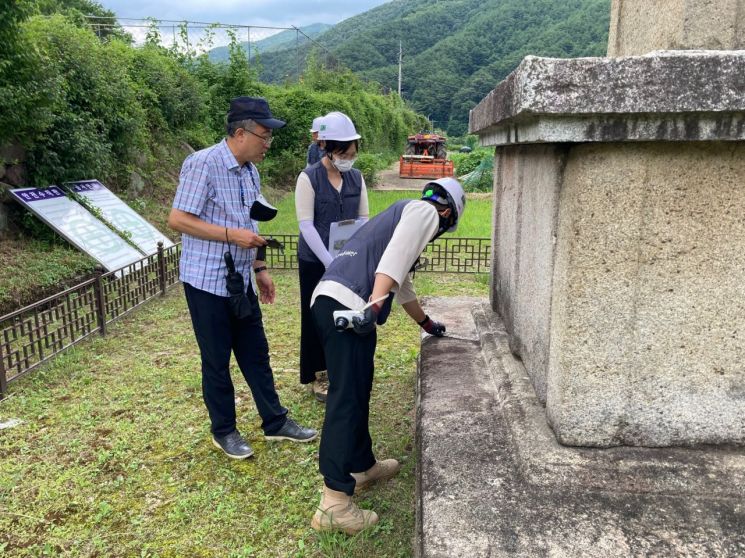 For systematic monitoring of stone cultural heritage, baseline data are required to verify changes in surface deterioration conditions.
There is currently no systematic assessment method in place to address these challenges. This makes it difficult to develop effective conservation measures. To overcome these obstacles, the National Research Institute of Cultural Heritage will hold an academic conference titled "Conservation Technologies for Outdoor Cultural Heritage in Response to Climate Change" at 1 p.m. on June 12 at the HwaBaek Convention Center in Gyeongju. Experts will be invited to identify the impacts of climate change on cultural heritage damage and to explore long-term, scientific response strategies. The event will also share customized conservation technologies that take into account the material characteristics and damage vulnerabilities of stone, wood, metal, and composite cultural heritage, as well as the latest research cases.
Lee will present the results of a foundational study on the effects of climate change on outdoor stone cultural heritage and methods for their assessment. In Korea, the annual average temperature has risen by 1.6 degrees Celsius over the past 30 years since 1991. This temperature increase has had a positive effect in reducing freeze damage to stone cultural heritage on a broad scale. However, changes in the number of freeze days vary greatly by region, and some areas may continue to experience similar levels as in the past. In particular, non-urban areas are more affected by temperature changes than urban areas, making it necessary to develop response strategies that reflect local climate characteristics.
The core challenge of related research is the precision of climate data for quantitative assessment. Weathering caused by freezing is influenced by various climate factors, including moisture supply, freezing temperature, duration, and freeze-thaw cycles. To conduct precise analysis that takes these variables into account, future climate data at least on an hourly basis is required. The process from setting climate scenarios to analyzing the data is complex and extensive, requiring collaboration among conservation scientists, climate experts, meteorologists, and data analysis specialists.
There is already data available to drive progress. Since 2001, the Cultural Heritage Administration has accumulated 25 years of stone cultural heritage damage history data through conservation management surveys, regular inspections, comprehensive assessments, and focused monitoring projects. Lee emphasized, "Based on this data, we must identify damage factors and establish practical measures to respond to climate change through expert collaboration." He added, "We are currently exploring non-destructive methods for analyzing the surface condition of outdoor stone cultural heritage. At this conference, we plan to discuss not only the potential of digital image analysis but also the applicability and technical review of hyperspectral imaging analysis."
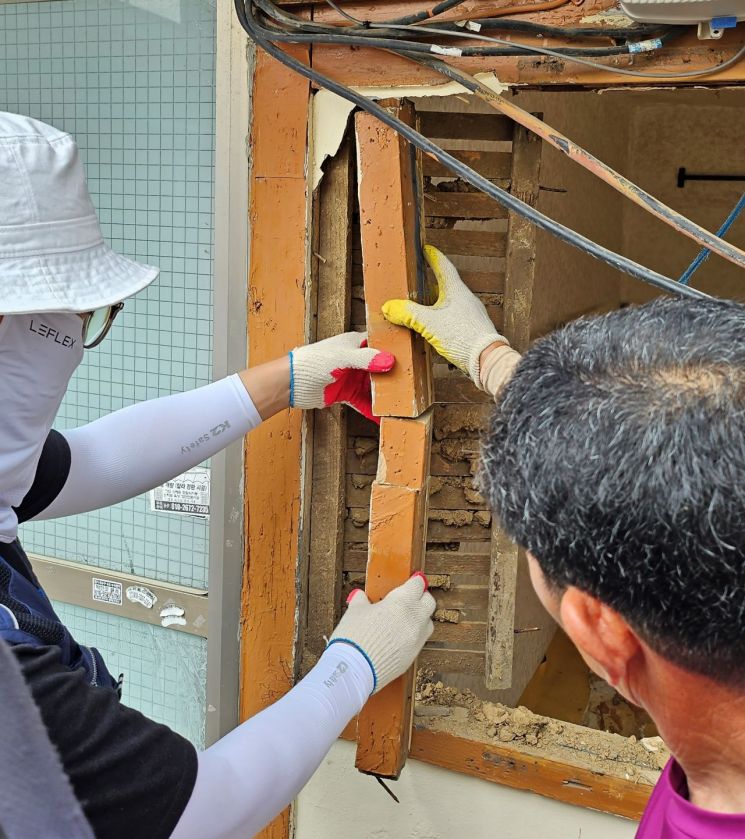 The western drywood termite (Incisitermes minor) discovered in Changwon in 2023 may expand its range of activity due to climate change.
In addition to Lee, participants in the conference will include Cho Hanna, research fellow at the Korea Environment Institute; Beom Daegun, curator at the National Museum of Modern and Contemporary Art; Park Hyeongho, CEO of Modern Heritage; Kim Yunsang, professor in the Department of Architectural Engineering at Jeonbuk National University; and Kim Sihyun, curator at the National Research Institute of Cultural Heritage. They will present strategies for responding to climate change with a focus on cultural heritage.
One of the presentations attracting as much academic attention as that on outdoor stone cultural heritage is Kim's "Increasing Risk of Termite Damage to Wooden Architectural Heritage Due to Climate Change and Future Response Strategies." Termites use wood and other plant-based materials as a food source. While they serve as decomposers in the ecosystem, they are pests to humans, causing damage to wooden buildings and structures, street trees, and crops. In particular, termite damage to wooden heritage is so severe that it undermines the authenticity of cultural heritage and compromises structural stability, making proactive and vigorous action essential.
Kim explained, "Termite damage to domestic wooden heritage is expected to continue increasing overall due to climate change, the influx of invasive termites, and urbanization. The increased activity of native termites and the establishment of invasive termite species in Korea could become significant issues." In fact, termite activity tends to increase in proportion to temperature. Especially when winter minimum temperatures rise, the activity period lengthens and the amount of wood consumed increases.
This trend also applies to termites introduced from the United States, China, Japan, and Southeast Asia through imports of various agricultural products and wood. As winter temperatures rise, the risk of naturalization of species such as the western drywood termite and the Formosan subterranean termite is increasing. Kim stressed, "It is necessary to implement responses tailored to Korea's situation and the characteristics of wooden architectural heritage. Institutional and administrative support is urgently needed for termite control technology application, area-wide pest management, and raising awareness among cultural heritage stakeholders."
© The Asia Business Daily(www.asiae.co.kr). All rights reserved.


















