Despite Overall Inflation at 1%, Processed Food Prices Surge by 4.1%
Lee Jaemyung Orders Report Before Next Meeting
Government Scrambles to Prepare Short-Term Measures, Including Supplementary Budget
President Lee Jaemyung raised concerns over the sharp rise in processed food prices, asking, "Is it true that a single pack of ramen now costs 2,000 won?" Immediately following his remarks, the government has accelerated efforts to devise short-term measures to curb inflation. The Ministry of Economy and Finance and other relevant ministries are planning to meet with the food industry soon to review factors driving price increases, such as raw material costs and labor expenses. They are also considering discount policies that could be included in the second supplementary budget.
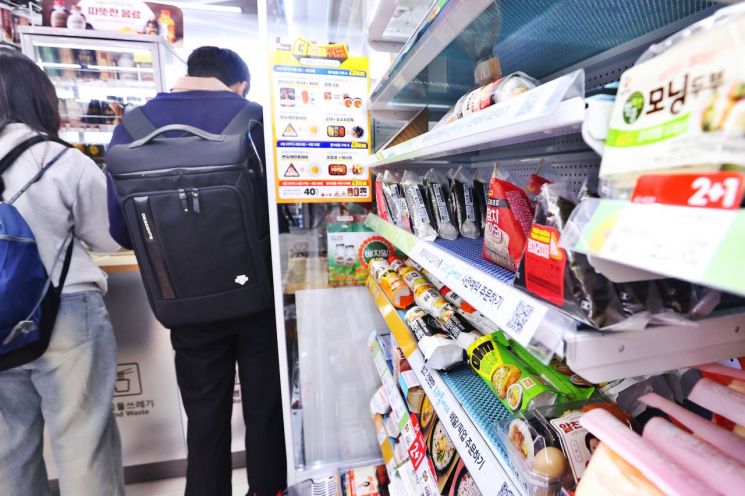
According to relevant ministries on June 10, the government has begun preparing these short-term inflation measures. This move follows President Lee's directive at the Emergency Economic Task Force meeting held on June 9, where he stated, "Inflation is causing significant hardship for the public," and instructed, "Report the current situation and possible countermeasures before the next meeting." Since the president has personally requested a report before the next meeting, key ministries such as the Ministry of Economy and Finance and the Ministry of Agriculture, Food and Rural Affairs have entered an emergency response mode to prepare countermeasures.
Given the need to prepare measures before the "next meeting," the government is focusing on prompt, short-term solutions. In particular, as prices of processed foods with high consumer sensitivity?such as ramen, coffee, and chocolate?have surged recently, the government is planning to hold a meeting with the food industry to examine the reasons behind these price increases. There are also expectations that the Fair Trade Commission will soon launch an investigation to identify any artificial price hikes caused by collusion within the industry.
The government is also reportedly considering consumer support measures such as discount coupons, which could be linked to the second supplementary budget proposal. On the same day, the Democratic Party of Korea announced the launch of its own "Inflation Management Task Force" to coordinate with the government. Park Chandae, the Democratic Party's floor leader, emphasized, "Six out of ten citizens cite price stability as the most urgent livelihood issue," and added, "Through consultations with the government, we will soon introduce tangible measures that the public can feel."
Food Industry Raises Prices Amid Martial Law
The government's move to address inflation comes against the backdrop of a sharp rise in processed food prices. According to Statistics Korea, consumer prices in May rose by 1.9% year-on-year, dropping into the 1% range. However, processed food prices rose by 4.1%, contributing 0.35 percentage points to the overall inflation rate. Notably, the price increases were pronounced for chocolate (22.1%), seasoning sauces (17.1%), and dried squid (50.5%). The price of livestock products also rose by 6.2% compared to the same month last year.
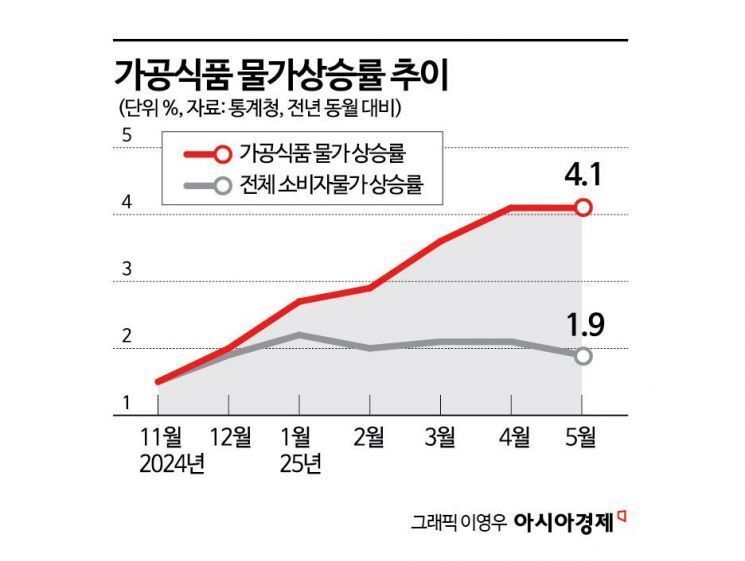
Most of the price hikes in the food industry occurred over the past six months, during a period of heightened political uncertainty under former President Yoon Sukyeol's martial law. According to the National Statistical Portal (KOSIS), from November last year?just before the martial law?to May this year, prices rose for 52 out of 73 processed food items (71%), with 19 items seeing increases of more than 5%. Chocolate prices rose by 10.4%, while coffee prices increased by 8.2%.
The industry cites the sharp rise in exchange rates, increased costs of imported raw materials, and higher electricity and labor costs as major factors. Additionally, they argue that price hikes following the martial law were due to excessive price controls imposed by the Yoon Sukyeol administration. However, the government believes that, with the exchange rate stabilizing recently and the risks from political uncertainty subsiding, there are currently few factors that would justify further price increases. As government price controls are expected to be strengthened, it appears that the industry will find it difficult to raise prices in the near future.
© The Asia Business Daily(www.asiae.co.kr). All rights reserved.


















