Climate Solutions' National Survey on Climate Change and Energy
92.6% Support "Overall Expansion of Renewable Energy"
73.8% Expect "Fossil Fuel Costs to Rise Due to Carbon Neutrality Regulations"
50.1% Will "Accept Rate Increases from Carbon Neutrality Policies"
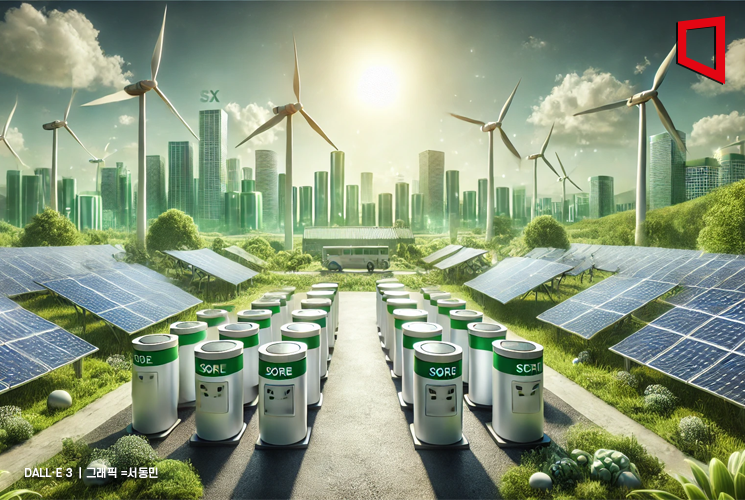
Regarding the rise in electricity rates due to carbon neutrality policies, such as closing thermal power plants and expanding renewable energy, half of the public responded that they could accept it. However, one in three people maintained a neutral stance. While nine out of ten people expressed principled support for expanding renewable energy, the challenge remains of overcoming the hurdle of higher electricity rates.
According to the results of the "Public Perception Survey on Climate Change and Energy" commissioned by Climate Solutions to Korea Research and released on June 10, 84.1% of respondents viewed renewable energy positively. Additionally, 92.6% said they supported the overall expansion of renewable energy.
As for the reasons for their support, respondents perceived renewable energy as "environmentally friendly" (88.3%) and a "sustainable" (85.7%) energy source. The results also showed optimistic expectations that renewable energy would contribute to energy security (75.6%) and long-term cost savings (74.1%).
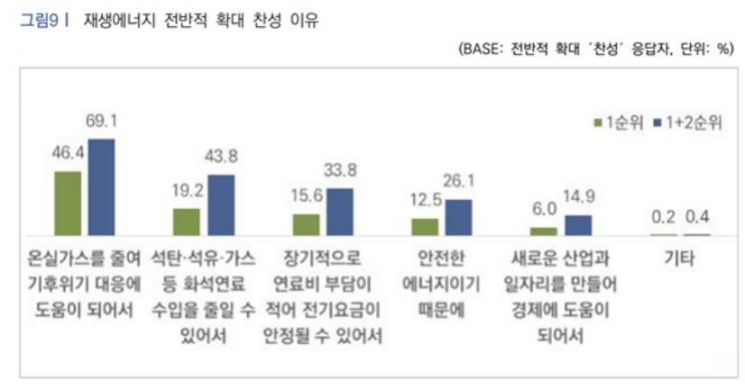
The specific reasons why the public supports the expansion of renewable energy (multiple responses for first and second priorities) were: responding to the climate crisis by reducing greenhouse gases (69.1%), reducing imports of fossil fuels such as coal, oil, and gas (43.8%), and stabilizing electricity rates in the long term due to lower fuel costs (33.8%). These were the most frequently cited reasons.
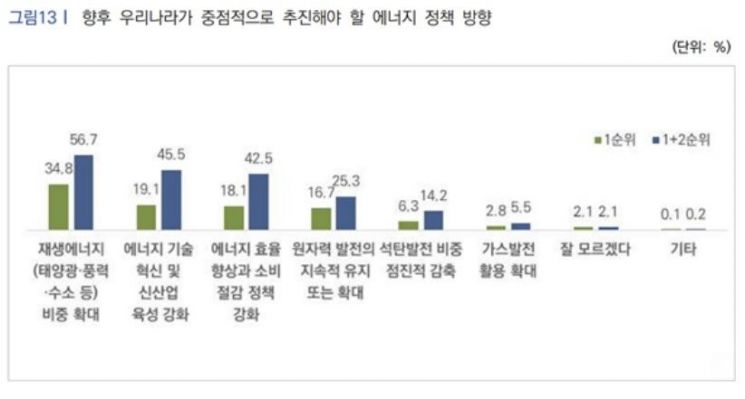
When asked about the energy policies that should be prioritized in the future (multiple responses for first and second priorities), the top choice was expanding the supply of renewable energy (56.7%). This was followed by strengthening innovation in energy technology and fostering new industries (45.5%), enhancing energy efficiency and policies to reduce consumption (42.5%), maintaining or expanding nuclear power generation (25.3%), gradually reducing the share of coal-fired power (14.2%), and expanding the use of gas-fired power (5.5%). The public thus recognizes energy technology innovation and energy consumption reduction as being just as important as expanding the supply of renewable energy.
Renewable energy is also viewed optimistically in terms of economic viability. In the short term, 77.7% of respondents said that the socioeconomic benefits of renewable energy outweigh the initial costs. (See Figure 60.) In the medium to long term, 77.7% also responded that renewable energy would become more economically viable than fossil fuels.
Regarding the outlook that fossil fuel costs will rise due to carbon neutrality regulations, 73.8% agreed. However, when it comes to burdens such as electricity rate hikes during the implementation of carbon neutrality policies, only half of the public (50.1%) indicated a willingness to accept them. A significant proportion of respondents (36.1%) remained neutral on this issue.
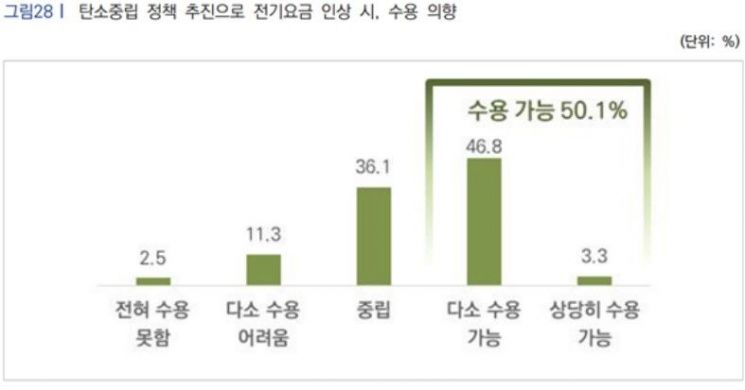
It can be interpreted that while the public supports responding to the climate crisis and transitioning to renewable energy, they believe a cautious and fair approach is necessary regarding the burdens that may arise during the transition process.
Jo Jungho, a researcher at the Power Market and System Team of Climate Solutions, stated, "Since these policies affect household expenses, future policy implementation should proceed through transparent communication and social consensus, and policy design must ensure equity and fairness. When minimum safeguards such as protection for low-income groups, support for industrial competitiveness, and regional assistance are in place, public trust and the sustainability of the energy transition will be further strengthened."
© The Asia Business Daily(www.asiae.co.kr). All rights reserved.



















