Production of Fighter Jets Disrupted by Chinese Export Controls
Difficult to Find Alternatives Due to High Costs and Environmental Regulations
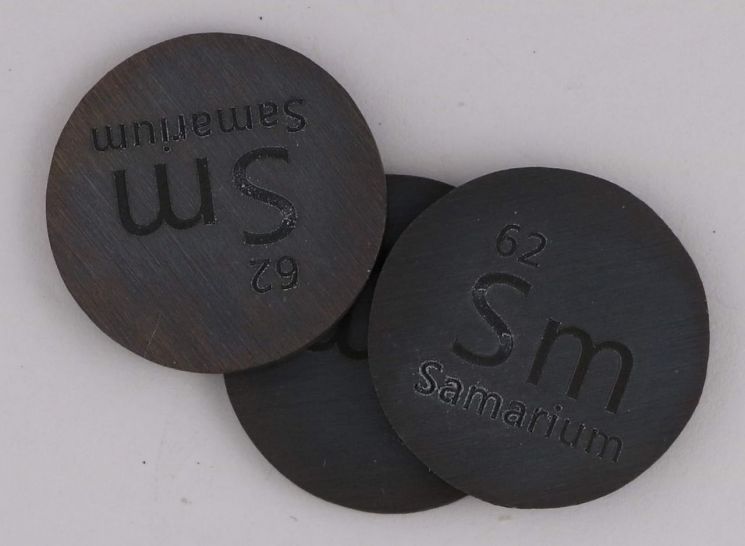
Although a provisional agreement was reached in the second round of trade negotiations between the United States and China, the ongoing restrictions on rare earth exports have deepened concerns among U.S. and Western authorities. In particular, since China imposed rare earth export controls in April, the supply of samarium?a key material for military magnets?has become increasingly difficult to secure, raising fears of shortages. Samarium is essential for expanding military capabilities, including the production of fighter jets and missiles, but no alternative supply chain has yet been found. If a clear breakthrough is not achieved in future trade negotiations with China, there are growing concerns that the military buildup efforts of the U.S. and Europe could be hampered.
Shortage of 'Samarium' Worsens as China Blocks Rare Earth Supply Chains... Essential Mineral for Military Magnets
According to The New York Times (NYT), the United States and Western countries are currently struggling with a shortage of samarium, the main raw material for military magnet production. This shortage has been caused by China's rare earth export controls implemented since April, which have cut off imports for more than two months, resulting in depleted inventories. Since April 4, the Chinese government has prohibited domestic companies from selling seven rare earth elements?including samarium, gadolinium, terbium, dysprosium, lutetium, scandium, and yttrium?to other countries without special export permits from the authorities.
Even in the trade negotiations resumed by the United States and China in London on the 9th (local time), China's rare earth export controls have not been fully resolved. The Chinese government announced that it would temporarily lift export permits for rare earths for six months. This means that, depending on how future trade negotiations proceed, China could use its resources as a bargaining chip at any time. Michael Hart, president of the American Chamber of Commerce in China, stated at a press conference, "Although some Chinese suppliers have received permission to resume rare earth exports for the next six months, this will not be enough to meet demand," adding, "Since there is a possibility that rare earths could be diverted to U.S. defense contractors, Chinese companies are reluctant to apply for large-scale export permits."
Samarium, in particular, is subject to even stricter regulations because it is used mostly for military purposes. The NYT pointed out, "In the past, it was possible to export raw samarium to private U.S. magnet manufacturers, who would then supply military magnets to the U.S. military in a roundabout way. However, now, even the export of raw samarium to private U.S. companies requires government approval, effectively blocking the export route."
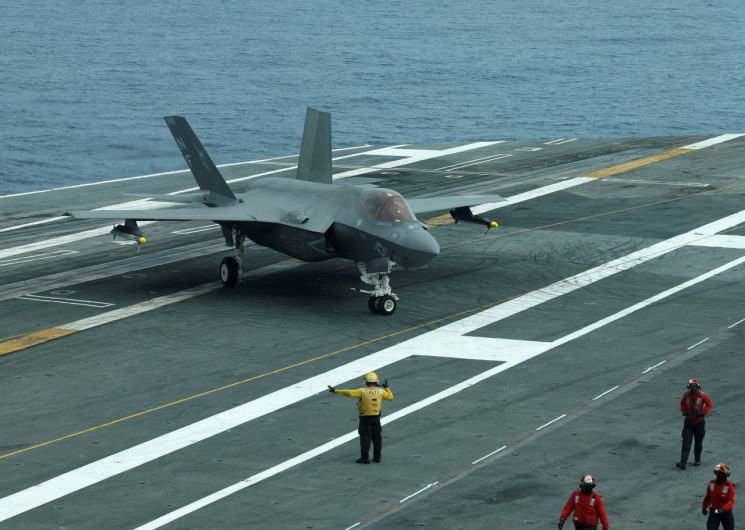
Samarium is alloyed with cobalt to produce military magnets, which can retain their magnetic properties at temperatures up to 350 degrees Celsius, making them essential for fighter jets, rockets, and missile engines. Because of its ability to absorb electromagnetic waves, it is also used as a coating material for stealth fighter exteriors. According to the NYT, each F-35, the latest U.S. stealth fighter jet, contains about 23 kilograms of samarium.
U.S. Attempts to Secure Alternative Supply Chains... Production Costs and Environmental Regulations Pose Obstacles
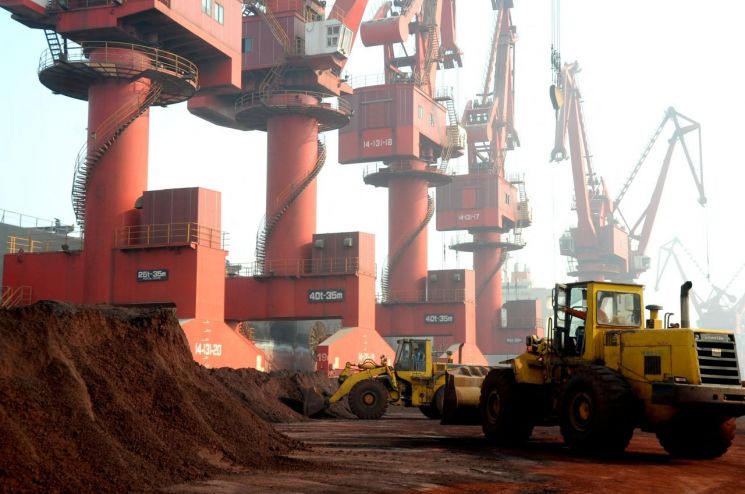
The U.S. government is focusing on securing alternative supply chains for samarium outside of China, but faces numerous obstacles such as high production costs and strict environmental regulations. While the U.S. is supporting domestic mining companies and seeking cooperation with allied countries, it remains difficult to replace the Chinese supply chain in the short term.
According to a recent report by the International Energy Agency (IEA), as of 2023, China controls 61% of rare earth mining and 92% of processing and refining. For the seven rare earths, including samarium, that have been subject to export controls since April, China accounts for 99% of global production and processing. The remaining 1% is produced in Vietnam.
Until the 1970s, before China's reform and opening up, French refineries processed samarium ore mined in Australia and supplied it to the U.S. military. However, since the 1990s, resource depletion and environmental regulations have led to the closure of all such mines and refineries. In contrast, after its reform and opening up, the Chinese government has focused on dominating the rare earth market. Gavin Harper, a professor at the University of Birmingham in the UK, explained in an interview with the BBC, "Since the 1990s, China has focused on developing rare earth mining and processing capabilities based on lower environmental standards and cheap labor compared to other countries. China now holds a monopolistic position across the entire rare earth value chain, from mineral extraction and refining to the manufacture of finished products such as military magnets."
There is also criticism that the U.S. government failed to respond adequately, having long relied on cheap Chinese samarium imports. Stanley Trout, a professor at Metropolitan State University of Denver, told the NYT, "U.S. Department of Defense regulations specify that the casting or refining of military magnets must take place in the U.S. or allied countries, but they allow the raw rare earth materials for military magnets to be imported from anywhere. Because samarium produced in China's Inner Mongolia Autonomous Region was much cheaper than in other regions, the U.S. military has depended on it for a long time."
There are growing concerns that, unless China's rare earth export controls are fully lifted, it will become increasingly difficult for the U.S. and Europe to expand their military capabilities. The Center for Strategic and International Studies (CSIS), a U.S. think tank, warned, "The United States and European countries have already depleted much of their military magnet stockpiles due to military support for the war in Ukraine and the conflict in the Middle East. China is already acquiring advanced weapons and equipment at a rate five to six times faster than the U.S., and with export controls on critical minerals, the gap in the pace of defense production will only widen."
© The Asia Business Daily(www.asiae.co.kr). All rights reserved.
![Clutching a Stolen Dior Bag, Saying "I Hate Being Poor but Real"... The Grotesque Con of a "Human Knockoff" [Slate]](https://cwcontent.asiae.co.kr/asiaresize/183/2026021902243444107_1771435474.jpg)

















