Survey of Parents, Residents, and Education Staff Shows 'Positive' Evaluation
Student Education Allowance Eases Education Cost Burden
Residents of Jeonnam Province, parents, and education staff have given an overall positive assessment of the '4th Civil-Elected Term' education policies of the Jeonnam Provincial Office of Education. In particular, there has been an increase in responses indicating that changes in the educational field are being tangibly felt, and demands for reform of the university entrance examination system have become more pronounced.
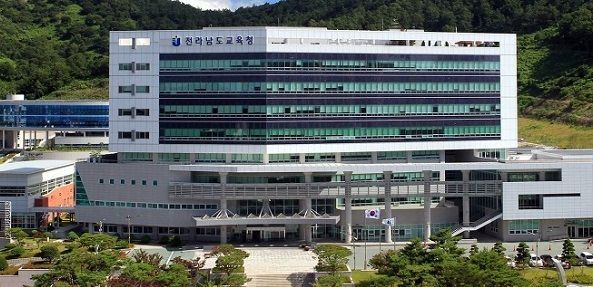
The Jeonnam Education Policy Research Institute announced on June 9 the results of a public opinion survey conducted in May 2025 by Hangil Research, targeting residents, parents, and education staff.
According to the survey results, parent satisfaction with education policies reached 62.2%, an increase of 8.8 percentage points compared to the previous year. Resident satisfaction was 53.9%, up by 13.0 percentage points. Education staff satisfaction was the highest at 76.4%, rising by 9.2 percentage points from last year.
The Provincial Office of Education analyzed that the successful hosting of the '2024 Korea Glocal Future Education Expo', the provision of the Jeonnam Student Education Allowance, the implementation of the 2030 Classroom initiative, and efforts to attract international students all contributed to the rise in satisfaction. More than half of parents reported that they felt the Jeonnam Student Education Allowance helped reduce education expenses. However, there were simultaneous calls for 'expanding the range of eligible uses' and 'strengthening economic education for students', as the allowance is currently limited in where it can be used.
Regarding the establishment of Jeonnam Future International High School, scheduled to open in 2026, 73.8% of residents and parents expressed a positive view. Parental expectations were particularly high at 74.9%. Among education staff, 65.8% responded positively, but 24.6% responded negatively, indicating the need to gather more input from staff as the policy moves forward.
Throughout the survey, demands for reform of the university entrance examination system were strong. A total of 87.5% of residents and parents and 94.2% of education staff agreed on the need for reform, with 66.6% of education staff responding that it is 'very necessary'. The suggested directions for reform included: stable operation of the entrance exam system; expansion of local talent selection; normalization of education focused on academic records and student portfolios; expansion of absolute evaluation; and expansion of integrated admissions processes. Many respondents emphasized the need to move away from competition-oriented education toward assessments that focus on creativity and competency.
Problems with the current evaluation method and the disclosure of analysis data for the College Scholastic Ability Test (CSAT) were also highlighted. 71.1% of parents and 68.1% of education staff believe that the current system causes academic ranking and called for improvements. This aligns with Superintendent Kim Daejung's argument for 'CSAT reform and the abolition of ranking', raised at the National Council of Provincial and Metropolitan Superintendents of Education meeting.
Regarding the '2030 Classroom' policy, a future-oriented learning space, 70.3% of residents and parents gave a positive evaluation. Education staff responded that 'student-led participatory classes' were what they most looked forward to, stressing the need not only for improvements in the digital environment but also for a transformation in teaching methods.
Perceptions of the 'small school' policy varied somewhat by group. Residents and parents preferred 'maintaining small schools and guaranteeing region-specific education' (52.8%) over 'maintaining appropriately sized schools' (38.2%). Among education staff, 'maintaining and integrating appropriately sized schools' (47.3%) and 'guaranteeing region-specific education' (45.2%) showed similar levels of support. This suggests that both the balance of educational opportunities and administrative efficiency should be considered when implementing small school policies.
This survey was conducted with 800 residents and 800 parents (via mobile responses), and 1,690 education staff (via online responses). The margin of error is ±2.5 percentage points for residents and parents, and ±2.4 percentage points for education staff, at a 95% confidence level.
Meanwhile, the Jeonnam Provincial Office of Education plans to actively reflect the results of this survey in the formulation and operation of future education policies.
© The Asia Business Daily(www.asiae.co.kr). All rights reserved.
![Clutching a Stolen Dior Bag, Saying "I Hate Being Poor but Real"... The Grotesque Con of a "Human Knockoff" [Slate]](https://cwcontent.asiae.co.kr/asiaresize/183/2026021902243444107_1771435474.jpg)















