Noticeable Decrease in Proportion of Lower-Performing Students Across All Subjects
Superintendent Kim Daejung: "Ranking-Based Announcement Method Must Be Improved"
The academic performance of high school students in the Jeonnam region has been found to be gradually improving. In particular, the proportion of students below the basic academic level has noticeably decreased, leading to evaluations that the Jeonnam Provincial Office of Education's policies to strengthen basic academic skills have proven effective.
The Ministry of Education announced on June 9, 2025, that it had released the analysis results of the 2025 College Scholastic Ability Test (CSAT) approximately six months earlier than in previous years.
According to the analysis, the academic performance of Jeonnam students has gradually increased compared to the national average. Notably, the proportion of lower-performing students has shown a significant decrease. By subject, the proportion of lower-performing students in Korean decreased by 6.9 percentage points, while the proportion of top-performing students increased by 0.5 percentage points. In mathematics, the lower-performing group decreased by 5.3 percentage points, and in English, the lower-performing group decreased by 0.5 percentage points, while the top-performing group increased by 1.0 percentage point.
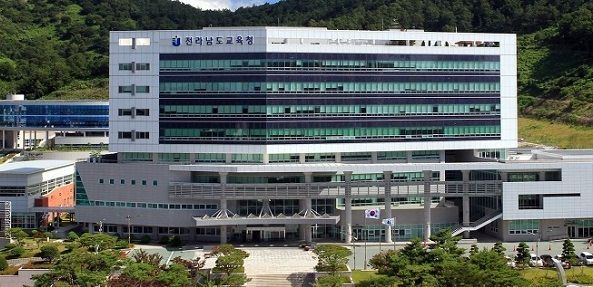
The Jeonnam Provincial Office of Education analyzed that these achievements are the result of consistent policy efforts to bridge the educational gap in rural and fishing communities, as well as the effectiveness of programs aimed at improving basic academic skills. In particular, the increase in the proportion of top-performing students in Korean is attributed to policies focused on improving classes through reading and humanities education.
In Jeonnam, more than 60% of all high schools are located in towns and rural areas, resulting in a high proportion of rural students. Nevertheless, a comparison of the CSAT results from the 2021 and 2025 academic years shows that the academic performance of Jeonnam students is approaching the national average, indicating an overall trend of improvement.
However, a score gap between metropolitan and rural areas still exists, and the continued strength of graduates (so-called "repeaters") is raising concerns about educational inequality between regions. In fact, the analysis showed that the average standardized scores for students in metropolitan areas were 98.6 in Korean and 98.8 in mathematics, while students in towns and rural areas scored 92.9 in Korean and 93.6 in mathematics, indicating that the gap persists.
In this context, Superintendent Kim Daejung, at the National Council of Provincial and Metropolitan Superintendents of Education General Assembly held on March 27, officially requested improvements, pointing out that the current method of disclosing CSAT analysis data could entrench educational inequality between regions.
Superintendent Kim emphasized, "The current method of disclosing CSAT analysis data causes a sense of relative deprivation and anxiety among students and parents in rural areas with insufficient educational infrastructure, and this could even be linked to the issue of regional population decline. The announcement method, which simply focuses on ranking, must be improved."
© The Asia Business Daily(www.asiae.co.kr). All rights reserved.
![Clutching a Stolen Dior Bag, Saying "I Hate Being Poor but Real"... The Grotesque Con of a "Human Knockoff" [Slate]](https://cwcontent.asiae.co.kr/asiaresize/183/2026021902243444107_1771435474.jpg)















