Surge in Demand Before Tariff Suspension Ends
May Issuance Reaches $31 Billion, Highest Since October
Warning Over Widening Spread
According to JP Morgan, companies with low credit ratings raised a total of $31 billion in the junk bond market in May alone, marking the highest level since October of last year. In just the first week of June, $8.6 billion worth of junk bonds were sold, already surpassing the total issuance in April. Junk bonds are bonds issued by companies with low credit ratings, which carry a relatively high risk of bankruptcy but offer higher interest (returns) in exchange. These are typically used to raise funds when bank loans are difficult to obtain, when interest rates are high, or when a company’s low credit rating makes it hard to access capital through regular bonds.
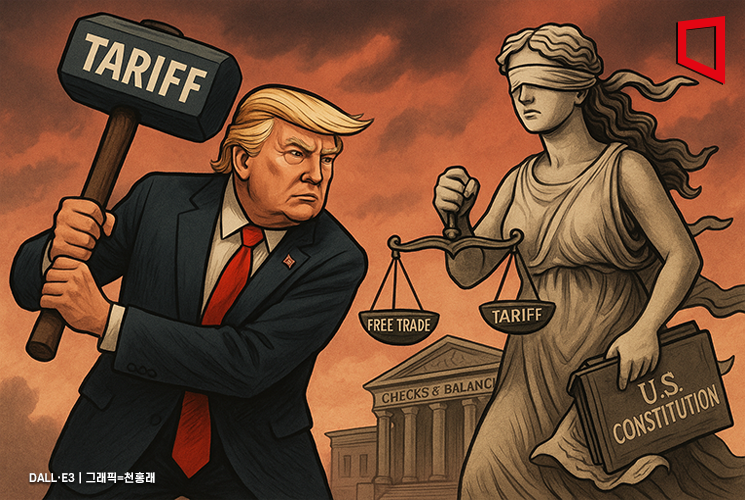
Experts believe that, given the strong demand and relatively low market uncertainty at present, new bond issuances are likely to continue steadily through this month and next month. However, there are concerns that market uncertainty could rise again when President Donald Trump’s tariff suspension period ends on Liberation Day early next month. There is also the possibility that the turmoil in the leveraged debt market, which paralyzed the market in early April, could reoccur.
David Fogarty, a portfolio manager at PIMCO, warned, “The market may be lulled into a false sense of calm and move ahead of itself, only to see volatility explode in July.”
In fact, the spread?the additional interest rate that high-risk companies pay compared to U.S. Treasury bonds?soared from 3.5 percentage points on April 1 to 4.61 percentage points as of June 7. FT analyzed that this phenomenon occurred as investors began demanding a higher risk premium following President Trump’s tariff announcement. The spread is the difference between the interest rate on high-risk corporate bonds and U.S. Treasury bonds, serving as an indicator of how much credit risk the market perceives for those companies. A widening spread means investors are demanding higher returns in exchange for taking on more risk. After signs of progress in U.S.-China trade negotiations, the spread declined again, but it has not returned to the historical lows (below 3%) recorded at the end of 2024 and the beginning of 2025.
Not only the unpredictable tariff policy but also rising geopolitical risks have been cited as reasons for the increase in junk bond issuance. A leveraged finance banker told FT, “Higher-than-expected tariffs or new geopolitical conflicts could act as significant obstacles for the market,” adding, “While the market may not come to a complete halt as it did in April, there is a high possibility that the spread will widen again.”
Demand for high-quality investment-grade bonds also remains strong. Bank of America (BoA) strategists forecast that investment-grade bond issuance this month will reach $110 billion to $120 billion, which would be the highest level for the same month since 2021.
Kyle Stegemeyer, head of fixed income at U.S. Bank, predicted, “Companies will continue to issue bonds to take advantage of the current period of low volatility, before volatility increases due to tariff and tax bill negotiations.”
He further explained, “If the issuance environment is favorable and the market window is open, companies are increasingly deciding there is no reason to wait until maturity dates draw near.”
© The Asia Business Daily(www.asiae.co.kr). All rights reserved.
![Clutching a Stolen Dior Bag, Saying "I Hate Being Poor but Real"... The Grotesque Con of a "Human Knockoff" [Slate]](https://cwcontent.asiae.co.kr/asiaresize/183/2026021902243444107_1771435474.jpg)
















