Beverage Consumption in South Korea Up by Over 20% in Five Years
Teenagers Have Highest Sugar Intake from Drinks
Unsweetened Coffee Most Popular; Shift Away from Sugary Beverages
Sugar Intake from Beverages Slightly Down, but Remains High Among Youth
KDCA Urges Efforts to Reduce Sweetened Beverage Consumption in Children and Adolescents
The amount of beverages consumed by South Koreans has increased by more than 20% over the past five years, with teenagers drinking the most sugar-sweetened beverages and also having the highest sugar intake from beverages.
The Korea Disease Control and Prevention Agency (KDCA) announced the current status of beverage consumption among South Koreans on June 9 through the in-depth analysis report "National Health Statistics Plus," which is based on the National Health Survey.
Beverages are liquid foods consumed for hydration and are classified as either unsweetened or sweetened, depending on whether sugars such as sucrose or high-fructose corn syrup are added. Among these, sweetened beverages are known to be a risk factor for chronic diseases, as they enable easy intake of energy and sugar, contributing to obesity, diabetes, and cardiovascular diseases.
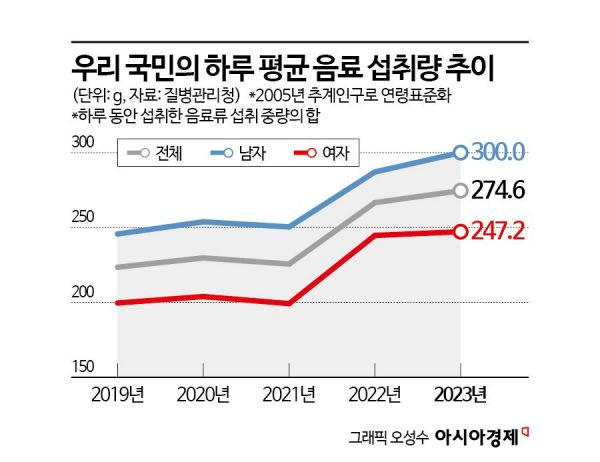
According to the results calculated using the National Health and Nutrition Examination Survey, which the KDCA conducts annually with about 10,000 participants, the average daily beverage intake among South Koreans (aged 1 year and older, standardized) in 2023 was 274.6g, representing a 22.7% increase compared to 223.5g in 2019. In addition, men (300.0g) consumed 23.4% more beverages than women (247.2g).
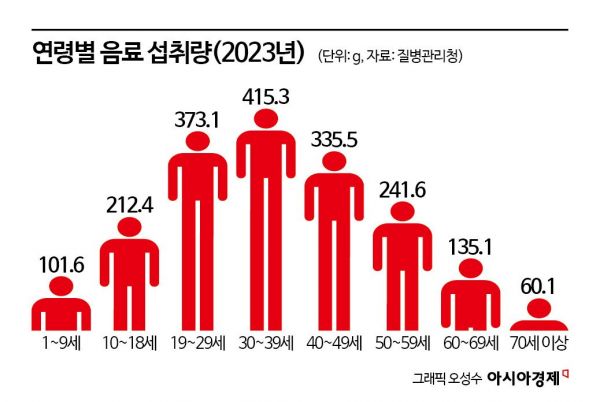
The age group that consumed the most beverages was those in their 30s (415.3g), drinking an average of more than two cups per day (based on 200ml per cup), followed by those in their 20s and 40s, who consumed more than 1.5 cups of beverages per day on average.
The most commonly consumed beverage was unsweetened coffee, such as Americano (112.1g), followed by carbonated beverages (48.9g). Over the past five years, the consumption of unsweetened coffee and low-calorie carbonated beverages has increased, while the consumption of sugar-sweetened carbonated beverages has decreased.
Children and adolescents primarily consumed sugar-sweetened beverages. Children mainly drank fruit and vegetable beverages and carbonated beverages, while adolescents had the highest intake of carbonated beverages. Among adults, the consumption of unsweetened coffee and low-calorie carbonated beverages increased significantly, but young adults aged 19 to 39 consumed not only unsweetened coffee but also a considerable amount of sugar-sweetened carbonated beverages.
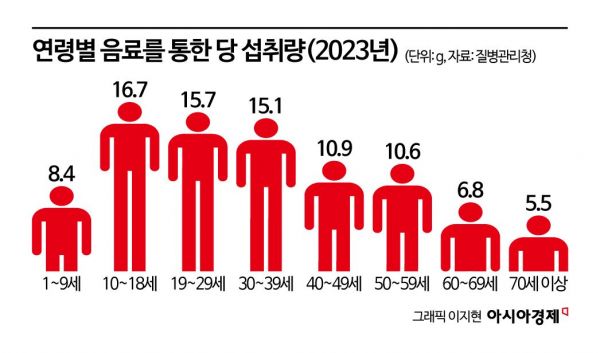
In contrast to the increasing trend in beverage consumption, the amount of sugar intake from beverages decreased slightly from 13.3g in 2019 to 12.3g in 2023. This decrease in sugar intake is interpreted as a result of changes in beverage choices, such as increased consumption of unsweetened coffee and low-calorie carbonated beverages. However, although those in their 30s had the highest beverage intake, the age group with the highest sugar intake from beverages was teenagers, who mainly consumed sweetened beverages. People in their 20s and 30s also had higher sugar intake from beverages compared to other age groups.
People who drank beverages were more likely to consume excessive amounts of sugar than those who did not. In particular, among children, adolescents, and people in their 20s who consumed large amounts of sweetened beverages, the proportion of excessive sugar intake among beverage drinkers was more than twice as high as that among non-drinkers.
Ji Youngmi, Commissioner of the KDCA, pointed out, "For children and adolescents, obesity caused by the consumption of sweetened beverages can lead to chronic diseases in adulthood, so active attention and efforts from the government, schools, and families are needed to reduce the consumption of sweetened beverages." Commissioner Ji also stated, "While the increase in low-calorie and low-sugar beverage consumption among adults may be positive in terms of reducing energy and sugar intake, people in their 20s and 30s are still consuming a large amount of carbonated beverages," and recommended, "For hydration, it is best to drink plenty of water instead of beverages."
© The Asia Business Daily(www.asiae.co.kr). All rights reserved.
![Clutching a Stolen Dior Bag, Saying "I Hate Being Poor but Real"... The Grotesque Con of a "Human Knockoff" [Slate]](https://cwcontent.asiae.co.kr/asiaresize/183/2026021902243444107_1771435474.jpg)

















