Presiding Over the Second Emergency Economic Task Force:
Second Extra Budget Projected at '20 Trillion Won Plus Alpha'
Local Currency Vouchers and Livelihood Support Payments Expected in This Supplementary Budget
Three Consecutive Years of Tax Revenue Shortfalls Also Under Discussion
President Lee Jaemyung is accelerating the early implementation of a supplementary budget (extra budget) aimed at boosting domestic demand. The scale of the extra budget is being discussed at between 20 trillion won and as much as 30 trillion won. Most of the funds are expected to be allocated to stimulate domestic consumption, including nationwide support payments and local currency vouchers worth 250,000 won per person.
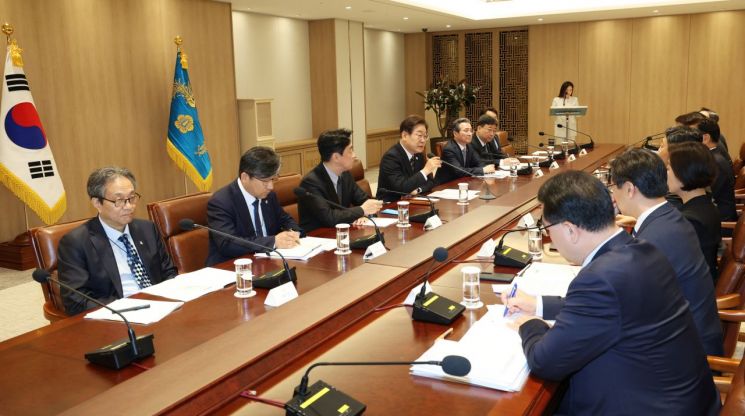
On his inauguration day, June 4, President Lee convened the first meeting of the Emergency Economic Task Force as his first official administrative order. Just five days later, on June 9, he held the second meeting. From 10 a.m. that day, President Lee presided over the second Emergency Economic Task Force meeting at the presidential office in Yongsan. The meeting was attended by officials from relevant ministries, including the Vice Minister of Economy and Finance, as well as the Ministry of Trade, Industry and Energy, the Ministry of Land, Infrastructure and Transport, the Ministry of SMEs and Startups, and the Financial Services Commission. Notably, the so-called "Presidential Office Economic Team"-including Policy Chief Kim Yongbeom, Chief Economic Growth Advisor Ha Junkyung, and Fiscal Planning Advisor Ryu Deokhyeon-also participated in the second meeting.
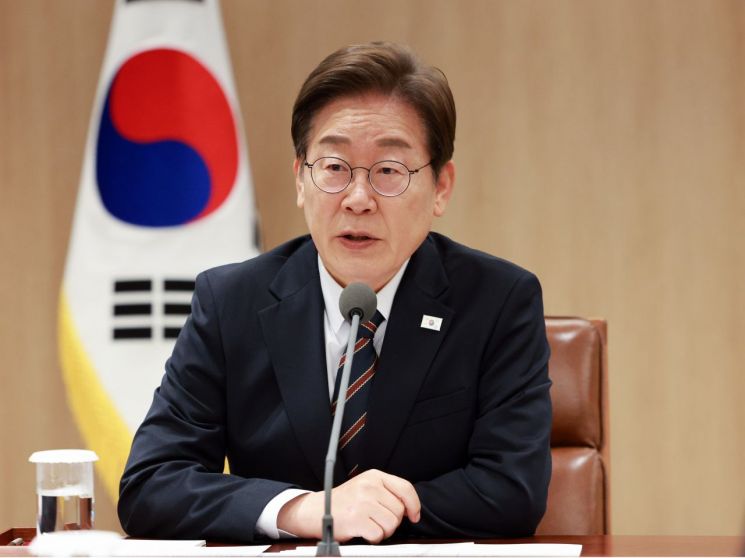
At the second meeting, President Lee reviewed the status of the first extra budget, which had been implemented at a scale of 13.8 trillion won, and also discussed plans for the second supplementary budget. The Ministry of Economy and Finance reportedly provided a briefing on the scale and fiscal capacity for the second extra budget. In the first task force meeting, President Lee had also inquired about the fiscal capacity for an extra budget and its potential economic stimulus effects, emphasizing the need for proactive measures and risk management.
The scale of the second extra budget is likely to be "20 trillion won plus alpha (α)," with the clear goal of revitalizing domestic demand. As a presidential candidate, Lee repeatedly stated that an extra budget of more than 30 trillion won was necessary. Specifically, key pledges made by President Lee-such as local currency vouchers and support payments for livelihood recovery-are expected to be substantially reflected in this supplementary budget. In addition to boosting domestic demand, the budget may also include allocations for social overhead capital (SOC) and investments in semiconductors and artificial intelligence (AI).
In fact, domestic demand had the most significant negative impact on economic growth in the first quarter of this year. Domestic demand dragged down the first quarter's economic growth rate by 0.5 percentage points, marking its most negative contribution since the first quarter of 2022, when it contributed minus 1.2 percentage points. This was due to a 0.1 percentage point decrease in private consumption and a 0.4 percentage point decrease in the construction sector. Although net exports contributed a positive 0.2 percentage points, their overall impact on growth was minimal. An official from the presidential office stated, "A supplementary budget focused on people's livelihoods is urgently needed to overcome internal sluggishness," adding, "President Lee is concentrating on resolving livelihood issues."
The ongoing shortfall in national tax revenue, with tax receipts falling short of budget estimates for a third consecutive year, was also a topic of discussion at the meeting. There is a need for revenue adjustment. Accordingly, a revised supplementary budget of up to 10 trillion won is being considered to address discrepancies in tax revenue forecasts through the issuance of deficit-financing government bonds this year. Global investment bank Goldman Sachs recently estimated the size of the second extra budget at about 25 trillion won, or roughly 1% of GDP. Some observers predict that the supplementary budget could increase to 30 trillion won or even reach 40 trillion won.
An official from the presidential office said, "At the first meeting, there were instructions regarding the possibility of an extra budget and the need to prepare countermeasures for the economic situation," adding, "There will be another report on this, and I expect that a concrete schedule may be announced after the second meeting."
© The Asia Business Daily(www.asiae.co.kr). All rights reserved.
![Clutching a Stolen Dior Bag, Saying "I Hate Being Poor but Real"... The Grotesque Con of a "Human Knockoff" [Slate]](https://cwcontent.asiae.co.kr/asiaresize/183/2026021902243444107_1771435474.jpg)
















