GTX-A Opens: 16 Minutes from Kintex in Goyang to Seoul Station
Transfer Parking Lots and Arterial Road Expansion Propel the City Toward Becoming a Transportation Hub
Accelerating New Lines Such as Goyang-Eunpyeong Line and Incheon Line 2 Extension
Citywide "Penta Station Area" Emerges with the Opening of GTX-A, Seohae Line, and Gyeo-ui Line
Goyang Special City in Gyeonggi Province (Mayor Lee Dohwan) is transforming into a city with a highly connected transportation network. The expansion of metropolitan railway lines such as GTX-A, transfer infrastructure, and road networks has dramatically improved commuting and inter-regional travel convenience for citizens.
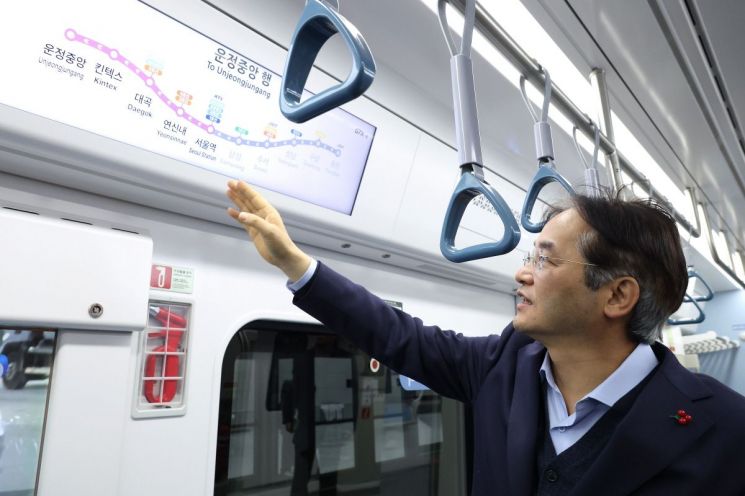
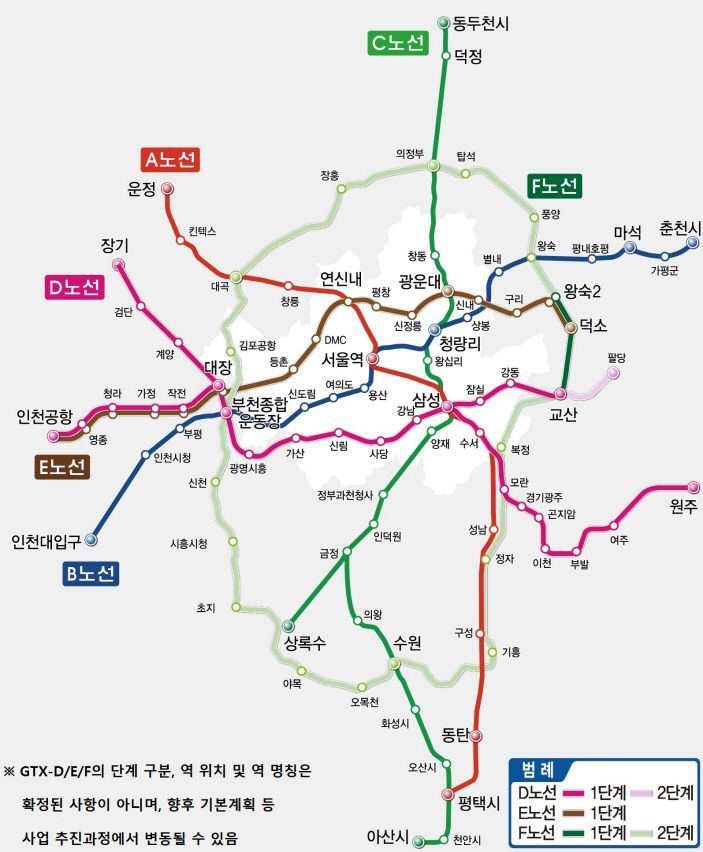
According to Goyang Special City on June 9, the city is reorganizing the entire urban area into a "Penta Station Area" centered around five metropolitan railway lines extending in all directions and 31 stations. The city is also accelerating the establishment of a multi-layered transportation network by linking road and parking infrastructure.
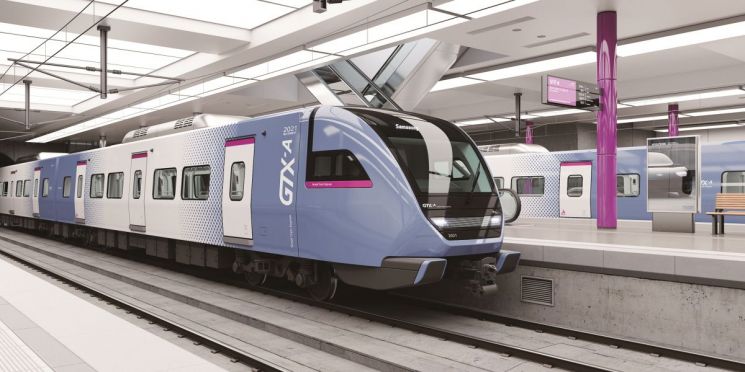
The GTX-A line section between Unjeong Jungang and Seoul Station, which opened on December 28 last year, surpassed 3.6 million users within three months of operation. The travel time from Kintex to Seoul Station, which previously took more than 50 minutes, has been drastically reduced to 16 minutes, bringing about a transportation revolution for commuters.
In March this year, the number of train operations was increased, and the current interval between trains has been shortened from the previous 10 minutes to 6.25 minutes. When non-stop service through Seoul Samseong Station is implemented next year, the entire 82.1 km section from Unjeong in Paju to Dongtan in Hwaseong will be connected. When Samseong Station opens in 2028, it will be possible to travel from Kintex to the heart of Gangnam in just 20 minutes.
Access to the airport has also become more convenient. In 2023, with the opening of six new stations on the Seohae Line extending to Ilsan Station, travel time from Daegok to Gimpo Airport was reduced from 40 minutes to 9 minutes. Travel between Ilsan and Bucheon Sosa can now be completed in 29 minutes, improving access to the western metropolitan area. Once the currently under-construction Seohwa-seong to Wonsi section is completed, the entire line will connect the Seoul metropolitan area to the Chungcheong region, including Hongseong in South Chungcheong Province, within about one hour.
In January, the Gyeo-ui Line, connecting Daegok and Wonheung stations to Yangju and Uijeongbu, resumed service for the first time in over 20 years, revitalizing tourism in northern Gyeonggi Province. The number of daily train operations, which was eight at the beginning of the year, was increased to 20 in April, resulting in a roughly 1.5-fold increase in average daily passengers. The city also introduced the "Gyoeoi Haru" free travel pass, allowing unlimited rides on the entire line in one day. The city has proposed the electrification of the Gyeo-ui Line in the 5th National Rail Network Construction Plan and is conducting a feasibility study for additional stations, including Byeokje Station.
The transportation network connecting new residential districts to Seoul is also becoming denser. The Goyang-Eunpyeong Line, a metropolitan transportation improvement plan for Changneung New Town, received final approval for its basic plan from the Ministry of Land, Infrastructure and Transport in November last year, and bids for design and construction for three sections are currently being announced. For the Daejang-Hongdae Line, a new station within Deogeun District has been confirmed, and the implementation plan is under discussion. The extension of Incheon Line 2 to Goyang is also undergoing a preliminary feasibility study by the Korea Development Institute (KDI).
Major station areas are being equipped with transfer and public parking facilities, and connecting bus routes are being operated to enhance parking convenience. At GTX-A Kintex Station, a temporary public parking lot with 189 spaces was completed at the end of last month. Grass blocks were used near Exit 2, pedestrian paths were secured within the lot, and landscaping with flowers was added around the parking area to create an eco-friendly green parking lot.
The Kintex Station public parking lot will be operated free of charge on a trial basis this month and will become a paid facility starting in August. Public transportation transfer passengers will receive a 50% parking fee discount. Previously, in March, a transfer parking lot with 226 spaces was built at Daegok Station, where GTX-A users are already receiving a 50% transfer discount. Currently, 18 bus routes are connected to both GTX-A Kintex Station and Daegok Station, making public transportation more convenient.
Transfer parking lots will be established in Jichuk, Samsong, and Changneung districts by 2027. Construction of the Jichuk Station transfer parking lot, with a total of 170 spaces, is underway with the goal of opening in February next year. Near Wonheung Station, a city-operated transfer parking lot with 149 spaces is planned, and an additional Wonheung No. 1 public parking lot with 186 spaces will open this year. At Korea Aerospace University Station in Changneung District, a new transfer parking lot with 100 spaces will be built, with construction scheduled to begin next year.
In Hyangdong District, a public parking lot with 94 spaces was established as an eco-friendly parking lot last year and is currently in operation. The city also plans to purchase land for parking in Deogeun and Janghang districts to expand transportation infrastructure in newly developed residential areas.
The city is also working to expand road infrastructure to promote balanced regional development. From 2022 to last month, four major arterial roads (totaling 1.5 km) were constructed, including the expansion of the Samseongdang Village to Neunggok Samgeori road, the opening of the Saemaeul Seongdong Village road, and the expansion of the Park Jaegung Village road. Additionally, six roads (totaling 2.2 km) were built in non-urban areas such as Wonheung-dong and Wonheung-dong-gil.
In January, the Hangju-ro to 2nd Jayu-ro connection road, Hangjunaru IC Seoul-bound link, was opened first, alleviating traffic congestion for local residents during commuting hours. In the Sarihyun IC area, where factories and residential facilities are concentrated and traffic has increased due to the opening of the Seoul-Munsan Expressway, City Road No. 82 was expanded and opened last month. By the end of the year, the southern section of City Road No. 81 will also be expanded and opened, which is expected to further ease traffic congestion.
The urban planning road connecting Seongseok-dong and Munbong-dong partially opened section 2-1 at the end of last year, widening the previously narrow road to 10 meters and improving comfort and safety for road users. When the entire section, including section 2-2, opens in the first half of next year, it is expected to improve logistics for small business owners and contribute to revitalizing the local economy.
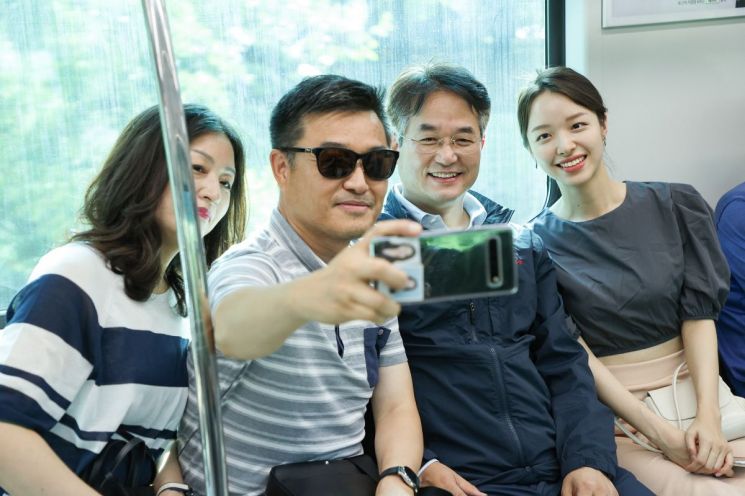 Lee Donghwan, mayor of Goyang Special City, boarded the Seohae Line together with citizens. Photo by Goyang Special City
Notably, the Seongseok-Munbong road was the first to apply the "Goyang Special City Sidewalk Improvement Guidelines" established last year. Large sidewalk blocks with high flatness were used for pedestrian safety and urban aesthetics, and curbstones were lowered.
Lee Dohwan, Mayor of Goyang Special City, stated, "As the metropolitan transportation network spreads like a spider web, Goyang is emerging as a major transportation hub. We will also strive to ensure that the express extension of Line 9 to Daegok, the express extension of Line 3, the Goyang-Eunpyeong Line extension to Ilsan, and the Shinbundang Line extension to Ilsan are included as new lines in the 5th National Rail Network Construction Plan and the 5th Metropolitan Area Transportation Implementation Plan, both of which will be established this year."
© The Asia Business Daily(www.asiae.co.kr). All rights reserved.
![Clutching a Stolen Dior Bag, Saying "I Hate Being Poor but Real"... The Grotesque Con of a "Human Knockoff" [Slate]](https://cwcontent.asiae.co.kr/asiaresize/183/2026021902243444107_1771435474.jpg)

















