11.36 Million Won per Pyeong in 2015... 23.7 Million Won from January to May This Year
Gap Between Seoul Metropolitan Area and Non-Metropolitan Regions Widens from 2.88 Million to 6.79 Million Won
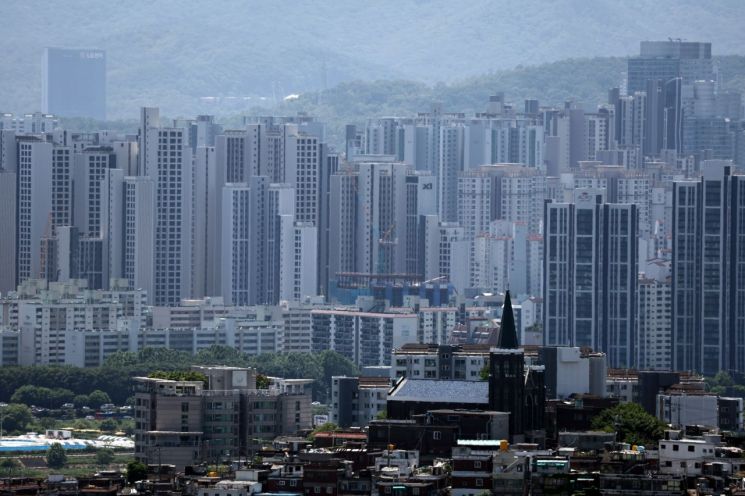
The average pre-sale price of private apartments in the Seoul metropolitan area has more than doubled compared to ten years ago. The pre-sale price per pyeong exceeded 23 million won, and the gap with non-metropolitan regions has widened further this year.
According to a survey conducted by Real Estate R114 on the trend of pre-sale prices for private apartments in the Seoul metropolitan area, the average pre-sale price per pyeong rose from 11.36 million won in 2015 to 23.7 million won between January and May of this year, marking a 2.09-fold increase.
The pre-sale price per pyeong in the Seoul metropolitan area surpassed 20 million won in 2023, reaching 20.61 million won. Last year, it stood at 23.24 million won, an increase of 2.63 million won in just one year.
For private apartments in non-metropolitan regions, the pre-sale price per pyeong increased from 8.48 million won in 2015 to 16.91 million won between January and May of this year, representing a 1.99-fold rise.
In 2015, the difference in pre-sale price per pyeong between the Seoul metropolitan area and non-metropolitan regions was 2.88 million won, but last year it grew to 5.12 million won. Between January and May of this year, the gap widened further to 6.79 million won. Last year, the pre-sale price per pyeong in non-metropolitan regions was 18.12 million won, but it dropped to 16.91 million won between January and May of this year, further increasing the regional disparity.
Meanwhile, the nationwide average pre-sale price for private apartments rose from 9.88 million won in 2015 to 19.81 million won between January and May of this year, nearly doubling.
The main reasons for the increase in pre-sale prices include the rise in construction material costs and labor costs. The increase in costs is placing a greater burden not only on homebuyers but also on construction companies as suppliers.
According to Real Estate R114, the cost-to-sales ratio for the top 10 construction companies by construction capability assessment last year reached 92.98%. For Hyundai Engineering, the cost-to-sales ratio last year was 105.36%, while Hyundai Construction recorded 100.66%. The cost-to-sales ratio refers to the proportion of cost of sales relative to total sales.
© The Asia Business Daily(www.asiae.co.kr). All rights reserved.
![Clutching a Stolen Dior Bag, Saying "I Hate Being Poor but Real"... The Grotesque Con of a "Human Knockoff" [Slate]](https://cwcontent.asiae.co.kr/asiaresize/183/2026021902243444107_1771435474.jpg)















