GLP-1 Class Drugs May Weaken the Effectiveness of Oral Contraceptives
"Unintended Pregnancies Possible"
"Should Not Be Abused for Cosmetic Purposes"
In the United Kingdom, regulatory authorities have issued a warning that some weight loss drugs, known as "weight loss injections," may affect the efficacy of oral contraceptives. This could reduce the effectiveness of oral contraceptives and lead to unintended pregnancies.
According to Yonhap News, citing BBC and The Guardian, the UK's Medicines and Healthcare products Regulatory Agency (MHRA) announced new guidelines on June 5 (local time) for glucagon-like peptide-1 (GLP-1) class drugs, which are used for weight loss and diabetes treatment.
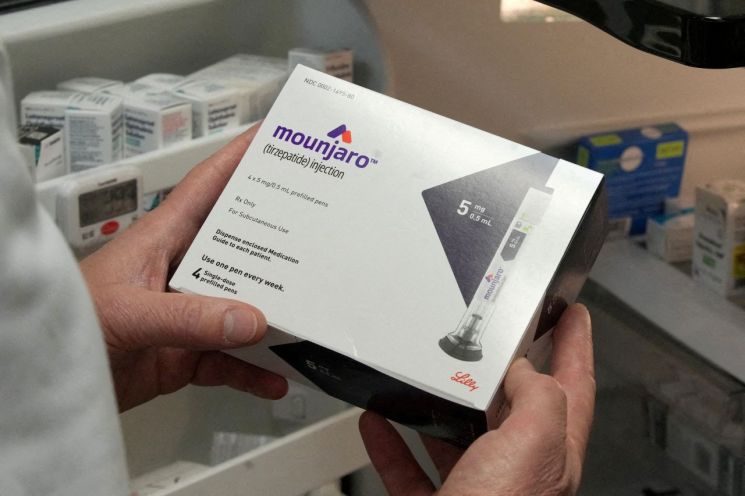 A pharmacist is standing holding a box of Maunzo, known as the 'weight loss injection.' Photo by Reuters Yonhap News
GLP-1 helps the pancreas secrete insulin and suppresses the secretion of glucagon, which raises blood sugar, resulting in reduced appetite. This makes people feel full and satisfied for longer, even when eating the same amount of food.
However, media outlets such as Sky News have reported that a significant number of users of GLP-1 class drugs have shared online accounts of becoming unexpectedly pregnant. Babies born as a result have even been nicknamed "Ozempic baby" and "Maunzo baby" after the names of the drugs.
The MHRA's adverse drug reaction reporting system has received 40 reports related to pregnancy among users of GLP-1 class drugs. Some of these cases were known to be unintended pregnancies.
Specifically, there were 26 reports related to Maunzo, a drug containing tirzepatide as its main ingredient, with one case of unintended pregnancy. Drugs containing semaglutide, such as Ozempic and Wegovy, accounted for 8 cases, while Victoza and Saxenda accounted for 9 cases, with one user in this group also reporting an unintended pregnancy.
The MHRA pointed out that, in the case of Maunzo, the effectiveness of oral contraceptives may be reduced in people who are overweight or obese, and therefore recommended the use of additional contraceptive methods such as condoms.
In its latest guidelines, the MHRA stated that there is insufficient data to determine whether GLP-1 class drugs are harmful to fetuses. It advised against using these drugs during pregnancy, when trying to conceive, or while breastfeeding.
 A notice saying "Wegovy Stocked" is posted at a pharmacy in Jongno-gu, Seoul, last October when the global pharmaceutical company Novo Nordisk's obesity treatment drug Wegovy was launched in Korea. Photo by Kang Jinhyung
Additionally, the MHRA recommended that people should wait one month after stopping Maunzo, and two months after stopping Ozempic or Wegovy, before attempting to conceive.
Alison Cave, MHRA's Chief Safety Officer (CSO), stated, "These products are medicines and should not be used for cosmetic purposes," emphasizing that "they have not been proven to be safe as weight loss drugs."
Park Taeseon, President of the Korean Diabetes Association and professor of endocrinology at Chonbuk National University Hospital, also expressed concerns at a joint symposium held in December last year by the Korean Diabetes Association and the Korea Medical Bio Journalists Association that GLP-1 class drugs could be misused as obesity drugs rather than diabetes treatments.
Park said, "There may be cases where people who do not need these drugs, such as those seeking cosmetic effects, misuse them," adding, "If people use these drugs without proper indications, the side effects could be severe."
© The Asia Business Daily(www.asiae.co.kr). All rights reserved.
![Clutching a Stolen Dior Bag, Saying "I Hate Being Poor but Real"... The Grotesque Con of a "Human Knockoff" [Slate]](https://cwcontent.asiae.co.kr/asiaresize/183/2026021902243444107_1771435474.jpg)
















