On the 5th, Daishin Securities released a report titled "Gold in the Spotlight, but Blocked by the Chinese Government and Bitcoin," noting that while demand for safe-haven assets is surging ahead of the end of the U.S. tariff suspension in July and gold prices are rebounding, attention should be paid to the Chinese government's efforts to curb individual gold purchases and the strengthening capital inflows into Bitcoin, which competes with gold.
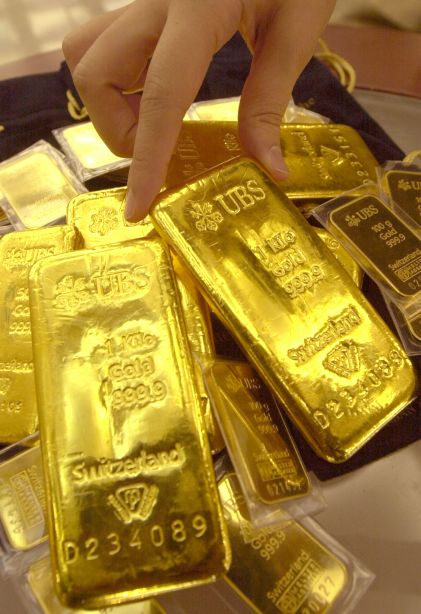
Recently, gold prices have been attempting a rebound. Demand for safe-haven assets began to attract attention after the Chinese side criticized U.S. President Trump for "violating the Geneva Agreement (tariff war truce)." The Chinese authorities have also stated that they will actively retaliate if their national interests are harmed. In response, President Trump has doubled tariffs on imported steel and aluminum, further increasing uncertainty. As the end of the tariff suspension approaches, investor preference for safe-haven assets is once again on the rise.
However, Choi Jinyoung, an analyst at Daishin Securities, predicted that "the upward trend that has continued so far will slow down in the second half of the year." First, there is a possibility that Chinese individual demand will decrease. Chinese individuals have been the main drivers of this year's gold price rally. As recently as April, amid concerns over the tariff war, they bought 70 tons of gold through ETFs alone. This accounted for more than 50% of global inflows into gold ETFs, which is 25 times the amount purchased by the People's Bank of China (PBOC). The Chinese government has decided to restrict gold purchases through credit card cash services at commercial banks. This is because if individual funds flow excessively into gold, it could make it difficult for listed companies to raise capital and hinder the recovery of the real estate market (domestic demand).
In addition, gold prices are inevitably expected to see a slowdown in their pace of increase during periods when its competitor, Bitcoin, is leading. Bitcoin lags behind the global liquidity index. This year alone, China has injected $1.3 trillion in liquidity, including new debt. The European Central Bank (ECB) continues to lower its policy rate. The U.S. Federal Reserve (FED) has stated there will be no early policy rate cuts, but it holds the option of easing the Supplementary Leverage Ratio (SLR) regulation, which could induce about $2 trillion in leverage. South Korea, Japan, and Germany are seeking to strengthen fiscal policy, and $7.2 trillion is waiting in U.S. money market funds (MMFs) alone. Choi explained, "Gold attracts attention through increased central bank purchases just before the FED cuts its policy rate, but in times of abundant liquidity like now, Bitcoin becomes stronger." Already, the pace of capital inflows into gold spot ETFs is slowing, while capital inflows into Bitcoin spot ETFs are strengthening.
Meanwhile, Daishin Securities remains optimistic about gold from a long-term perspective. The speed at which the U.S. is issuing debt is accelerating to an unprecedented degree, which means governments holding U.S. Treasuries will inevitably become more concerned about the value of their assets.
Choi emphasized, "Although central banks are buying gold, the situation contrasts with 2023-2024, and if Chinese individuals also exit, gold could be pressured down to $3,000 per ounce. A conservative approach to gold is required at this time."
© The Asia Business Daily(www.asiae.co.kr). All rights reserved.
![Clutching a Stolen Dior Bag, Saying "I Hate Being Poor but Real"... The Grotesque Con of a "Human Knockoff" [Slate]](https://cwcontent.asiae.co.kr/asiaresize/183/2026021902243444107_1771435474.jpg)















