"Welcome President Lee Jaemyung...
Urgent Need for Supply Expansion and Deregulation"
On June 4, the construction and real estate industries issued statements welcoming Lee Jaemyung as the 21st President and called on him to focus on deregulation and expanding housing supply to revitalize the sluggish construction market.
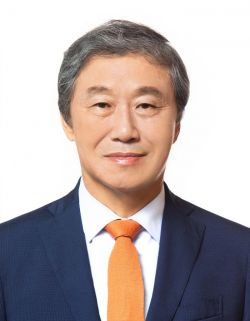 Seunggu Han, President of the Korea Construction Association
The Korea Construction Association stated, "We sincerely congratulate President Lee Jaemyung on his election and will do our utmost to contribute to the success of the new administration," adding, "Extraordinary measures and bold regulatory reforms are needed to revive the stagnant construction market."
Seunggu Han, President of the Korea Construction Association, said, "The number of construction companies that have closed nationwide has reached its highest level in 19 years, and leading regional mid-sized companies are being pushed into court receivership." He called for tax relief, compensation for appropriate construction costs, revision of the Serious Accidents Punishment Act, and easing of land use regulations.
Han also stated, "To stimulate demand in the housing market, it is necessary to ease the heavy acquisition tax rate, apply the basic capital gains tax rate, and abolish the heavy comprehensive real estate holding tax." He further emphasized, "It is urgent to normalize the housing market by reducing the acquisition tax on unsold homes in provincial areas by 50%, granting a full exemption from capital gains tax for five years, expanding the scale and area of unsold apartment purchases, and adjusting purchase prices to reflect reality."
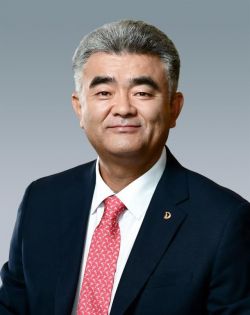 Wonju Jeong, President of the Korea Housing Builders Association
The Korea Housing Builders Association stated, "It is most important to pursue market-friendly housing policies based on the principles of supply and demand."
Wonju Jeong, President of the Korea Housing Builders Association, said, "First and foremost, housing supply must be expanded to stabilize home prices." He stressed the urgency of institutional reforms such as adjusting the commercial ratio for mixed-use complexes in commercial zones, regularizing increases in standard construction costs, allowing early conversion to sales for private rental housing, and easing requirements for donating land for schools.
He added, "Financial and tax improvements must also be implemented, including a temporary exemption from capital gains tax when purchasing unsold homes, reintroducing the apartment purchase-lease registration system, relaxing loan regulations and lowering interest rates, and easing requirements for converting interim loans to final loans." He also called for "emergency support to normalize real estate project financing (PF), and raising the mortgage guarantee limit at the Korea Housing and Urban Guarantee Corporation (HUG)."
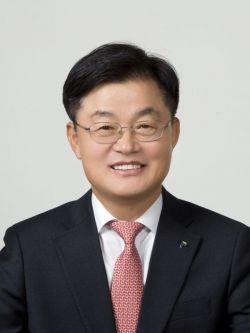 Seungbae Kim, President of the Korea Real Estate Development Association
The Korea Real Estate Development Association identified expanding construction investment as its top priority. Seungbae Kim, President of the Korea Real Estate Development Association, said, "Construction investment has significant effects on job creation and industry linkages, but it has contracted sharply, lowering the overall national economic growth rate." He emphasized the urgent need for policy improvements such as short-term supply expansion, establishing a system for converting non-residential facilities to residential use, and relaxing the debt service ratio (DSR) by 10 percentage points.
Kim stated, "The main reason previous administrations have struggled to solve housing problems is that they overlooked the four- to five-year lag between groundbreaking and actual supply and focused only on short-term remedies." He called for a long-term and principled approach to housing issues. He added, "The industry will also do everything possible to achieve the shared goal of revitalizing the economy and ensuring stable housing for the public."
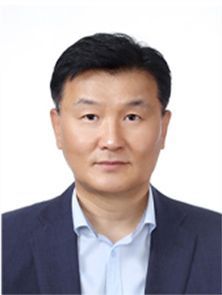 Jung Byungyun, Chairman of Korea REITs Association
The Korea REITs Association stated, "We hope REITs (Real Estate Investment Trusts) will be actively utilized to increase national income and support housing for ordinary citizens." During the presidential campaign, President Lee pledged to expand housing REITs not only in the public sector but also in the private sector to ensure stable housing supply. The plan is to allow tenants to pay for homes with REIT shares instead of cash as a deposit, receive tax deductions on monthly rent, and accumulate REIT shares over 10 years to eventually gain home ownership. The association said, "Introducing REITs into the housing supply process can expand the supply base while reducing fiscal burdens," and "Investment opportunities in stable assets such as high-quality officetels should also be broadened."
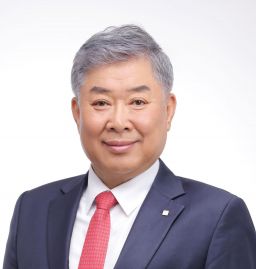 Jae Rok Kim, President of the Korea Institute of Registered Architects
The Korea Institute of Registered Architects, representing the domestic architectural sector, stated, "A sharp decline in demand for small-scale construction is causing significant difficulties for local construction businesses and small-scale home builders." The association proposed introducing a 'flexible residential zone' to replace the current Class 1, 2, and 3 general residential zones, granting local governments the authority to adjust floor area ratios, and easing sunlight rights regulations. The association also called for securing the independence of architectural policy and establishing a 'Ministry of Urban Housing,' adding, "In the long term, the permit system for construction, which is currently regulation-focused, should be transformed into an administrative service, and a national vision should be developed for the globalization of K-architecture."
© The Asia Business Daily(www.asiae.co.kr). All rights reserved.
![Clutching a Stolen Dior Bag, Saying "I Hate Being Poor but Real"... The Grotesque Con of a "Human Knockoff" [Slate]](https://cwcontent.asiae.co.kr/asiaresize/183/2026021902243444107_1771435474.jpg)















