Korea Economic Association Presents "Ten Outstanding Cases of ESG Management in Japan"
Analysis of Companies Awarded the "ESG Finance Awards Japan"
The Korea Economic Association (KEA) stated that Japanese companies practicing exemplary ESG (Environmental, Social Responsibility, and Corporate Governance Improvement) management have commonly enhanced both corporate and social value through methods such as implementing their own certification systems, driving technological innovation for carbon reduction, and fostering sustainable local ecosystems. The association emphasized that these cases should serve as models to follow.
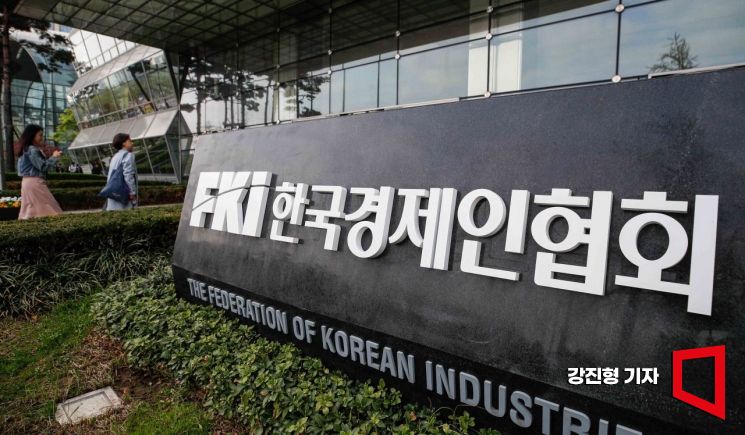
On June 4, KEA announced these findings in its report "Ten Outstanding Cases of ESG Management in Japan," which analyzed the cases of ten companies that received the "ESG Finance Awards Japan" from the Ministry of the Environment of Japan between 2022 and 2024.
As a representative example, food and pharmaceutical group Meiji Holdings has introduced the "Meiji Sustainable Product Certification System," which certifies products that contribute to solving social issues throughout the entire value chain, from development to consumption, based on its own criteria. To receive certification, a product must meet at least four out of five standards, including contributing to healthy eating habits, improving nutritional value, and using eco-friendly packaging materials.
Comprehensive chemical company Sumitomo Chemical has established the "Sumika Sustainable Solution" (SSS) Certification Committee, which independently certifies its products and technologies that contribute to addressing climate change and resource recycling. In addition, the company sets the sales of SSS-certified products as a key performance indicator and reflects the degree of contribution to social value creation in employee evaluations. As of 2023, 81 products had been certified, achieving sales of 588.7 billion yen (approximately 5.7 trillion won). The company has set a sales target of 1.2 trillion yen by 2030.
Shipping company Mitsui O.S.K. Lines is partially converting ship propulsion to wind power through its wing-shaped wind-assisted propulsion system, the "Wind Challenger." During an 18-month trial voyage ending in April last year, the system achieved up to 17% fuel savings. The company plans to install this technology on 25 vessels by 2030 and 80 vessels by 2035.
Construction company Daito Trust Construction developed Japan's first life cycle carbon-minus (LCCM) rental apartment complex. This is a "fully decarbonized residence," where the amount of carbon dioxide reduced through renewable energy production, such as solar power generation, exceeds the total emissions generated throughout the building's entire lifecycle.
Shizuoka Bank, a regional bank in Shizuoka Prefecture, has fully opened its cloud-based emissions calculation platform, "Shizuoka GX Support," to all financial institutions in the prefecture to promote decarbonization across the region. The bank also supports the calculation of greenhouse gas emissions and the establishment of reduction plans through its own "sustainability consultants."
This is regarded as a case in which regional finance has gone beyond simple funding to lead the ESG ecosystem in the region.
KEA explained that, based on its analysis of Japanese companies, ESG management is being realized in concrete terms through institutionalized systems led by private companies, technological innovation, and efforts to spread ESG practices throughout local and industrial ecosystems, rather than remaining a mere slogan.
Lee Sangyun, Head of the Sustainable Growth Division at KEA, stated, "These cases can provide valuable insights for Korean companies to use ESG as a strategic tool for enhancing corporate value."
© The Asia Business Daily(www.asiae.co.kr). All rights reserved.
![Clutching a Stolen Dior Bag, Saying "I Hate Being Poor but Real"... The Grotesque Con of a "Human Knockoff" [Slate]](https://cwcontent.asiae.co.kr/asiaresize/183/2026021902243444107_1771435474.jpg)















