Top Priority: The Economy... Imminent Tariff Negotiations with Trump
Korea-U.S. Alliance Faces a "Quiet Crisis"... Concerns Over Policy Clashes with China
The Center for Strategic and International Studies (CSIS), a U.S. think tank, has analyzed that President Lee Jaemyung is facing the most difficult challenges among all presidents since former President Kim Dae-jung.
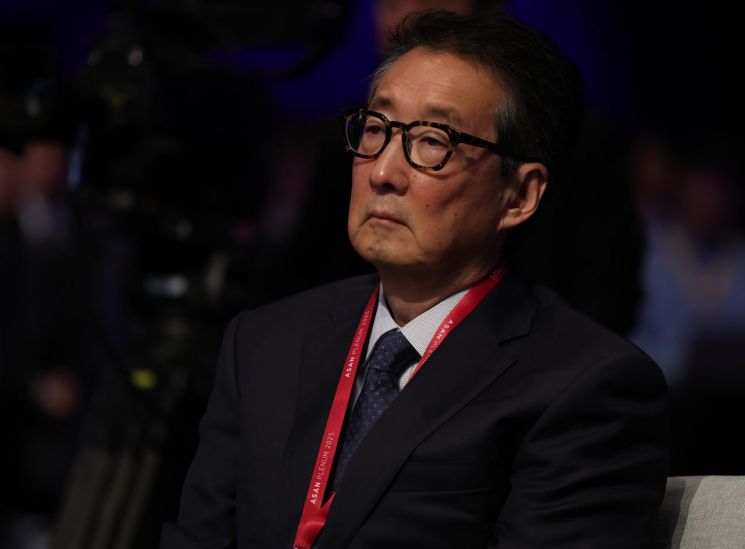
On June 3 (local time), Victor Cha and Andy Lim, Korea Chairs at CSIS, made this assessment in an article titled "Korea's New President: Frying Pan to Fire" (Frying Pan to Fire·Out of the Frying Pan Into the Fire).
They stated, "Due to the unique circumstances of this early presidential election, President Lee will be inaugurated just four days after the election without a transition period and must immediately address domestic and international policy challenges." They added, "While this election has closed the chapter on impeachment, it has opened a new and even more difficult chapter."
They emphasized, "It is no exaggeration to say that President Lee is facing the most difficult challenges among all presidents since Kim Dae-jung was elected during South Korea's liquidity crisis in 1997." They explained that during the two previous impeachment crises (in 2004 and 2017), the economic downturn was mitigated by China's economic boom in 2004 and South Korea's semiconductor export boom in 2017. However, there are currently no such favorable factors.
Furthermore, they noted, "On the contrary, President Lee will face a much harsher external environment." They added, "The wars in Ukraine and Gaza, U.S. tariffs, Chinese export controls, and North Korea-Russia relations are all acting as negative factors for South Korea's economic recovery."
They identified the economy as President Lee's top priority. They pointed out that since U.S. President Donald Trump imposed reciprocal and item-specific tariffs, there has been no progress in Korea-U.S. trade negotiations. "Each country must submit its best trade proposal by June 4, and with just over a month left until the 90-day tariff suspension period ends on July 8, President Lee will have almost no time during his early days in office to conclude the crucial negotiations with President Trump," they said.
They also mentioned that a quiet crisis is looming over the Korea-U.S. alliance, citing the review of U.S. troop reductions in South Korea and the fact that U.S. Secretary of Defense Pete Hegseth skipped South Korea during his Indo-Pacific tour.
However, they noted, "President Lee has emphasized that the Korea-U.S. alliance is the foundation of South Korea's diplomacy," and expected that the two leaders would hold their first summit at the Group of Seven (G7) summit to be held in Alberta, Canada, at the end of this month. They predicted that tariffs, U.S. troop reductions in South Korea, and North Korea policy would be discussed at this meeting.
They also mentioned that President Lee highlighted Korea-U.S.-Japan trilateral security cooperation as a key foreign and security policy during the presidential campaign and predicted that he would seek common ground with the Trump administration.
Regarding President Lee's policy toward China, they analyzed that he is pursuing a pragmatic and balanced approach, but such a policy could clash with the Trump administration. They stated, "The Trump administration has made it clear that allies cannot maintain economic relations with China while cooperating with the U.S. on security."
On North Korea, they said, "President Trump may someday resume relations with North Korea, but in the process of direct negotiations with the North Korean leader, he could bypass Seoul (South Korea)."
© The Asia Business Daily(www.asiae.co.kr). All rights reserved.
![Clutching a Stolen Dior Bag, Saying "I Hate Being Poor but Real"... The Grotesque Con of a "Human Knockoff" [Slate]](https://cwcontent.asiae.co.kr/asiaresize/183/2026021902243444107_1771435474.jpg)















