Xiaomi Hit by U.S. EDA Supply Halt
U.S. Auto and Aviation Industries Suffer from China’s Rare Earth Export Controls
Both Countries Accuse Each Other of "Reneging on Trade Agreement"
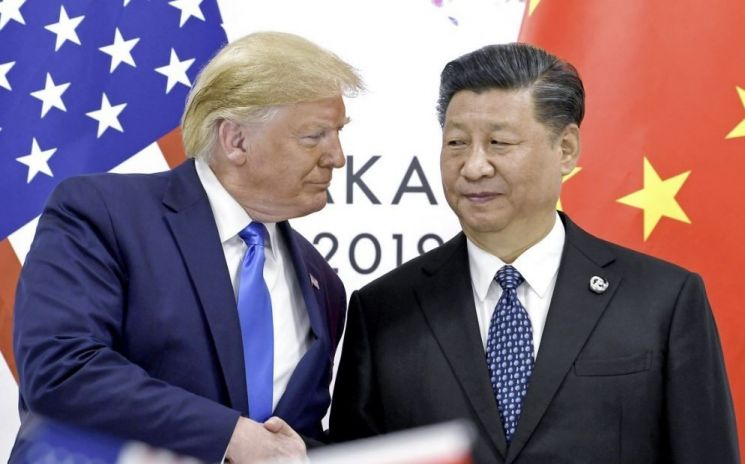
The "tariff war" between the United States and China is escalating into a "supply chain war." Amid stalled trade negotiations, it has become apparent that the information technology (IT) and automotive industries in both countries are taking a direct hit from supply chain disruptions.
On June 3 (local time), the UK’s Financial Times (FT), citing sources, reported that among Chinese IT companies, smartphone manufacturer Xiaomi is expected to be the first to suffer from the recent tightening of U.S. export controls on China.
Last month, the Trump administration ordered domestic Electronic Design Automation (EDA) software companies to halt supplies to China. As a result, Xiaomi’s production of its own semiconductor chips?developed in collaboration with Taiwan’s semiconductor company TSMC?is now expected to be impacted. Xiaomi had planned to first install these chips in select premium smartphones and later expand their use to all high-end smartphones and tablets, but now faces the risk of halting the project due to the U.S. ban on EDA technology.
In the United States, the automotive industry is voicing its concerns. Reuters reported that on May 9, the Alliance for Automotive Innovation (AAI) and the Motor & Equipment Manufacturers Association (MEMA) jointly sent a letter to the Trump administration warning of a crisis stemming from China’s restrictions on rare earth exports. The two organizations stated that if stable access to rare earth magnets and elements is cut off, it could make the production of key components?including automatic transmissions, motors, sensors, cameras, and power steering?impossible, raising concerns that automobile factories in the U.S. could come to a halt.
The aviation industry is no exception. Disruptions in the supply of rare earth elements, which are essential for jet engine development, are also putting pressure on the defense and aerospace sectors. The New York Times (NYT) reported that government authorities are closely monitoring bottlenecks in other strategic industries such as pharmaceuticals and shipping. This reflects growing vigilance over "weak links" where China could exert control.
After the bilateral trade agreement in Geneva, Switzerland on May 10-11, hopes for a truce in the tariff war had risen, but recently those hopes have faded. Both countries continue to exchange accusations, each claiming the other has reneged on the trade agreement. The NYT reported that the Trump administration is considering additional sanctions, with adding subsidiaries of Chinese IT companies such as Alibaba, Tencent, and Baidu to the "entity list" for trade restrictions emerging as a likely option.
There is also a clear gap between the U.S. and China regarding the possibility of a summit between the two leaders. On June 1, Kevin Hassett, Chairman of the White House National Economic Council (NEC), said, "A conversation between the two leaders could take place as early as this week," adding that "both sides are talking every day." U.S. Treasury Secretary Scott Besant expressed similar optimism on the same day. In contrast, a spokesperson for China’s Ministry of Commerce stated on June 2 that if the U.S. insists on its own interests, "China will take firm and strong measures to defend its legitimate rights and interests," making it clear that China is not willing to readily agree to a leaders’ summit.
© The Asia Business Daily(www.asiae.co.kr). All rights reserved.

















