KDCA Reports Over 3,800 Cumulative Cases This Year
2.5 Times Increase Compared to Same Period Last Year
This year, as the number of scarlet fever patients and suspected cases has surged, health authorities have called for heightened prevention and management measures, particularly in child group facilities such as daycare centers, kindergartens, and schools.
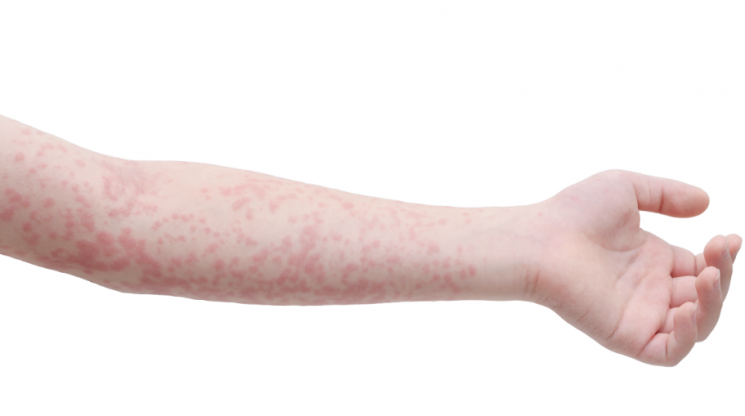
According to the Korea Disease Control and Prevention Agency (KDCA) on June 4, there were a total of 3,809 reported cases of scarlet fever from January 1 to May 24 this year. This represents a 2.5-fold increase compared to the same period last year, when there were 1,506 cases.
Scarlet fever is an acute febrile illness caused by Group A Streptococcus (Streptococcus pyogenes). It typically begins with sudden fever, headache, vomiting, abdominal pain, and sore throat, followed by a characteristic rash that appears 12 to 48 hours later. The disease mainly affects children during the winter and spring seasons, and each year, more than 80% of all cases occur in children under the age of 10. So far this year, 86.8% of reported cases have been in children under 10 years old.
When infected with scarlet fever, a fine, sandpaper-like rash appears across the body, except around the mouth and on the palms and soles, within 1 to 2 days and typically disappears after 3 to 4 days. In some cases, the skin may peel around the fingertips, palms, or soles. In particular, the tongue initially appears grayish white with prominent papillae, then after 2 to 3 days becomes swollen and bright red, resembling a strawberry.
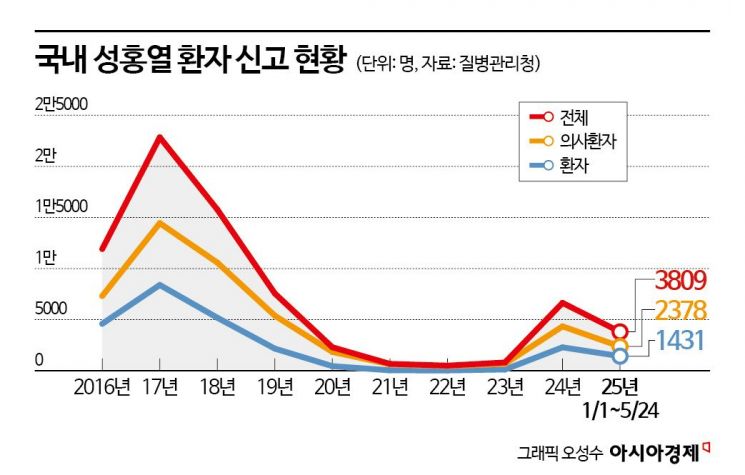
The last time the highest number of scarlet fever cases was reported in South Korea was in 2017, with 22,838 cases that year. While it is generally known that large-scale outbreaks occur every 3 to 4 years, the KDCA explained that social distancing measures implemented during the COVID-19 pandemic may have disrupted this epidemic cycle.
The KDCA has issued guidance to local governments and frontline medical institutions regarding precautions in response to the increase in scarlet fever cases, emphasizing prevention and management. The agency also plans to continuously monitor the current status and characteristics of scarlet fever outbreaks.
In group facilities for children, such as kindergartens, daycare centers, and schools, authorities requested strict adherence to infectious disease prevention guidelines, including frequent handwashing and proper cough etiquette, as well as regular disinfection of frequently touched surfaces. Parents were also advised to seek prompt medical attention if their child shows suspected symptoms of scarlet fever, and, if diagnosed, to keep the child out of group facilities such as kindergartens for at least 24 hours after starting antibiotic treatment.
Ji Youngmi, Commissioner of the KDCA, stated, "It is most important for parents and group facilities to strictly follow prevention and management guidelines," and emphasized, "Scarlet fever is a common childhood disease that can be easily treated with antibiotics, so please ensure that your child receives prompt treatment if they show signs of infection."
© The Asia Business Daily(www.asiae.co.kr). All rights reserved.
![Clutching a Stolen Dior Bag, Saying "I Hate Being Poor but Real"... The Grotesque Con of a "Human Knockoff" [Slate]](https://cwcontent.asiae.co.kr/asiaresize/183/2026021902243444107_1771435474.jpg)

















