Goyang Announces 1st Carbon Neutral Green Growth Master Plan
Aims for 36% Emissions Reduction by 2030
Goyang Special City in Gyeonggi Province (Mayor Lee Donghwan) announced on June 3 that it had officially declared the "1st Goyang Special City Carbon Neutral Green Growth Master Plan (2025?2034)" on May 30, with the goal of achieving carbon neutrality by 2050 and transitioning to a sustainable city.
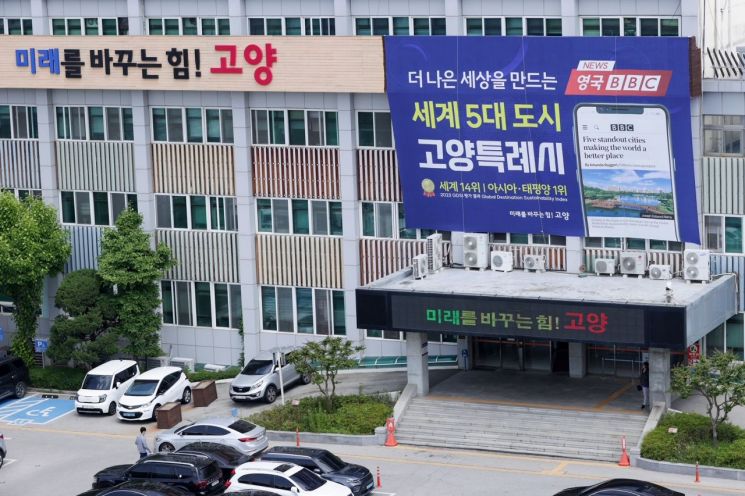
This plan is based on the vision of "Goyang, a carbon-neutral city changing the future together with its citizens," and includes a target to reduce greenhouse gas emissions under city control by 36% from 2018 levels by 2030, as well as detailed implementation plans for 2025 to 2034.
The master plan was established in accordance with the "Framework Act on Carbon Neutrality and Green Growth for Coping with Climate Crisis." Over the 10-year planning period, the city aims to transition to a sustainable urban environment through sector-specific reduction projects.
This master plan serves as a mid- to long-term roadmap to address the global climate crisis and achieve a sustainable, carbon-neutral city. The national government and Gyeonggi Province each announced detailed implementation plans in April 2023 and April 2024, respectively, targeting a 40% reduction in greenhouse gas emissions by 2030 compared to 2018 levels. All local governments nationwide were required to announce their own master plans by May of this year.
To formulate this plan, Goyang Special City incorporated feedback from department-level project managers starting last year, and actively gathered citizen input through two roundtable discussions and a public hearing.
Under this master plan, Goyang Special City has set a goal to reduce greenhouse gas emissions by 36% from 2018 levels by 2030, and by 39% by 2034. The plan will be implemented through a total of five sectors, 19 strategies, and 105 detailed projects. Approximately KRW 1.89 trillion will be allocated by 2030, with a total budget of KRW 2.83 trillion by 2034.
The Goyang City master plan sets a slightly lower reduction target than those of the national government or Gyeonggi Province. However, it fully satisfies the detailed project requirements of both the national and provincial plans, thereby contributing to the achievement of their greenhouse gas reduction goals. In particular, the city aims to enhance effectiveness by focusing on realistic reduction targets and actionable plans, rather than setting excessively ambitious and less feasible goals.
Furthermore, the Goyang City master plan is tailored to the city's urban emission profile, where 90% of greenhouse gases are emitted from the building and transportation sectors. Accordingly, the main strategies focus on these two sectors.
The building sector comprises seven strategies and 29 detailed projects, with key initiatives including: improving building energy efficiency; expanding green lifestyle practices for energy savings; and promoting renewable energy, such as the Mini Hydrogen City project.
The transportation sector consists of four strategies and 36 detailed projects. Major response strategies include: establishing a rail-centered transportation system with projects like GTX-A and Incheon Line 2; expanding the adoption of eco-friendly vehicles; and improving public transportation services.
In addition, the plan includes response strategies and implementation plans for the waste, agriculture and livestock, and carbon sink sectors. As many of these detailed projects require citizen participation, the city plans to actively promote public engagement moving forward.
Mayor Lee Donghwan of Goyang Special City stated, "The Carbon Neutral Green Growth Master Plan is the first step toward achieving carbon neutrality by 2050," adding, "We will overcome the climate crisis and create a sustainable future together with our citizens."
Meanwhile, the city previously established a greenhouse gas reduction plan in 2019, which included 92 detailed projects, and has since operated an effective monitoring system based on that plan. The new plan also aims to enhance feasibility through rigorous implementation monitoring and increased citizen participation.
© The Asia Business Daily(www.asiae.co.kr). All rights reserved.
![Clutching a Stolen Dior Bag, Saying "I Hate Being Poor but Real"... The Grotesque Con of a "Human Knockoff" [Slate]](https://cwcontent.asiae.co.kr/asiaresize/183/2026021902243444107_1771435474.jpg)















